

WeVote

Bill

Bill

HB 807

Noncriminal Traffic Infractions Resulting in Vehicle Crashes

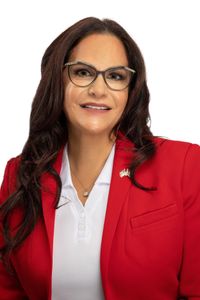
2026 Regular Session Introduced by Yvette Benarroch and 2 co-sponsors

HB 807 raises NC teacher pay, enhances disability funding, guarantees universal free breakfast and lunch, and funds a one-to-one device refresh plus scholarship tweaks.

Now in Insurance & Banking Subcommittee
0
WeVote Research Nonpartisan
Bill Summary · HB 807

HB 807 — Strong Public Schools for a Strong NC

Status: Passed first reading; introduced during the 2025 session (filed for the 2025–26 budget cycle).
Primary purpose: to increase educator pay, change funding for students with disabilities, provide universal school meals at no cost based on school food authority evaluations, perform a one‑to‑one device refresh for public schools, and revise the Opportunity Scholarship Program.

Main provisions

  1. Teacher pay increases (effective 2025–2026)
    • Establishes a new 2025–26 monthly “A” teacher salary schedule based on years of experience. Example steps shown in the bill range from $4,450 (step 0) up to $5,795 (25+ years).
    • Supplements:
      • National Board Certified teachers: +12% of monthly “A” salary.
      • “M” (master's) teachers: +10% of monthly “A” salary.
      • Additional fixed supplements for six‑year and doctoral degree credentialing ($126 and $253 monthly respectively).
      • Certified school nurses: +10% monthly supplement.
      • School counselors with master’s degree or higher: +$100 monthly.
      • School psychologists, speech pathologists (master’s+), audiologists (master’s+) have special schedule placement and supplements (includes 10% plus $500, eligibility for academic preparation supplements, and a higher maximum step).
    • Formula ensures teachers receive the greater of the new schedule amount or specified historical‑based protections for longevity/bonus‑eligible teachers.
  • Fiscal appropriation: $406,300,000 recurring (General Fund) to DPI for 2025–26 to implement the raises.
  1. Funding for children with disabilities

    • Changes statutory language so allocations are to be made “on the basis of the reported cost of the services provided” (moving away from the prior per‑child or 13% cap language).
    • Fiscal appropriations:
      • $89,400,000 recurring (General Fund) for 2025–26.
      • $109,200,000 nonrecurring for 2025–26; these nonrecurring funds do not revert and remain available through end of FY 2027–28.
    • Department of Public Instruction to begin distributing under the weighted/cost‑based model starting 2025–26 (as developed under prior legislative direction).
  2. Universal breakfast and lunch at no cost to students

    • Amends school nutrition statute to require school food authorities to offer two meals per day (breakfast and lunch) at no cost to students, consistent with USDA program rules.
    • Directs the State Board of Education to allocate funds to school food authorities “to the extent funds are made available.” Allocation amounts are to be determined using an evaluation of each authority’s nutrition services; the Board must develop the evaluation method and allocation process.
    • (Scripted statutory text emphasizes federal compliance and that allocation methodology will be developed by the State Board.)
  3. One‑to‑one device refresh & Opportunity Scholarship Program

    • The bill title and summary indicate provisions for a one‑to‑one device refresh (technology devices for students/staff) and revisions to the Opportunity Scholarship Program. The text excerpts provided in the materials are truncated and do not include detailed statutory language for these components; the bill directs funding and program changes consistent with those goals.

Who is affected

  • Teachers and instructional support personnel (salary increases and supplements).
  • Specialized school staff (psychologists, speech pathologists, audiologists, nurses, counselors).
  • Students with disabilities and local school administrative units (changes to funding model and increased state funding).
  • All public school students (access to breakfast and lunch at no cost where funding is provided).
  • School food authorities (subject to evaluation and allocation).
  • State budget and taxpayers (new recurring and nonrecurring appropriations).

Fiscal and timing notes

  • Major recurring appropriation for teacher raises: $406.3 million (FY 2025–26 onward).
  • Disability funding: $89.4M recurring + $109.2M nonrecurring (nonrecurring funds available through FY 2027–28).
  • Teacher pay and disability funding changes are slated to begin in the 2025–26 school year.
  • The State Board will develop the school nutrition allocation methodology; availability of funds will determine scope of universal meals.
  • Other components (device refresh, Opportunity Scholarship revisions) require reference to fuller bill text for exact fiscal effects and implementation timelines.

Procedural status (summary)

  • Passed first reading and referred to Appropriations (per provided bill information). Implementation depends on appropriation language and budget approval. For specific amendment history and final status, consult the North Carolina General Assembly bill tracking page and enrolled bill text.

Compiled from official sources — confirm details with the bill’s official record.

Sign in to ask a question.