

WeVote

Bill

Bill

HR 7371

No Flight, No Fight Act of 2026

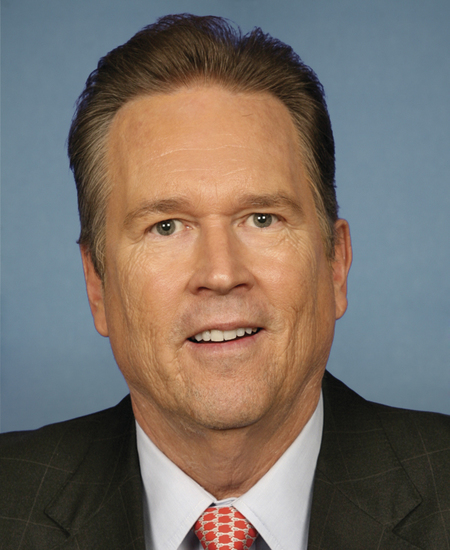
119th Congress Introduced by Vern Buchanan and 20 co-sponsors

Prohibits transporting adult roosters by air across state or international lines, with exemptions only for qualifying commercial farms and legitimate agricultural purposes.

Referred to the Subcommittee on Aviation.
0
WeVote Research Nonpartisan
Bill Summary · HR 7371

No Flight, No Fight Act of 2026 (HR 7371) – Summary

Purpose and intent

  • Proposes to restrict the air transportation of adult roosters in interstate and foreign commerce.
  • Aims to enhance aviation safety, protect biosecurity, and improve operational efficiency in civil aviation by limiting non-essential shipments of certain live animals, while preserving exemptions for legitimate agricultural operations.

Key provisions

  • General prohibition

    • Section 4(a): Prohibits knowingly transporting an adult rooster as cargo on any aircraft engaged in interstate or foreign air transportation (by air carrier or other operator).
  • Exceptions for commercial farms

    • Section 4(b): Exemptions exist if both conditions are met: 1) The rooster transport originates from or is destined for a commercial farm. 2) The transport is for legitimate agricultural purposes.
  • Certification requirement

    • Section 4(c): To claim an exemption, a party must provide documentation certifying that the farm involved qualifies as a commercial farm. This includes evidence such as financial records or attestations consistent with USDA Economic Research Service guidelines.
    • Air carriers may not accept an adult rooster for transport without this certification.
  • Definitions

    • Adult rooster: A sexually mature male chicken (often with spurs, large comb, crowing) generally at least 6 months old.
    • Air carrier: As defined in 49 U.S.C. § 40102.
    • Commercial farm: Any farm with annual gross cash farm income of $350,000 or more (per USDA ERS classification).
    • Interstate or foreign air transportation: As defined under the present law (includes foreign air commerce).
  • Codification and enforcement

    • Section 5: The Secretary of Transportation is charged with enforcing the Act, in coordination with the FAA, and may promulgate necessary regulations. Violations would be subject to civil penalties under 49 U.S.C. § 463.
  • Preemption and state law

    • Section 6: The Act does not preempt state laws that provide greater aviation safety protections or stricter restrictions on the air transportation of live animals.
  • Effective date

    • Section 7: The Act takes effect 180 days after enactment.
  • Administrative additions

    • Section 4(a) adds a new enforcement pathway under Chapter 449 of title 49, U.S.C., specifically “Restriction on air transportation of adult roosters.”

Who would be affected

  • Air carriers and aircraft operators: Required to verify exemptions and certification before transporting adult roosters; otherwise prohibited from loading such shipments.
  • Commercial farms: Potentially involved in exemptions if they meet the $350,000+ annual gross cash farm income threshold and engage in legitimate agricultural transport.
  • Shippers/brokers of live poultry: Must obtain and provide appropriate certification documentation to air carriers when attempting to ship adult roosters.
  • Regulators and law enforcement: Federal Aviation Administration and Department of Transportation coordination for enforcement and rulemaking.

Practical implications and potential impact

  • Reduces non-essential air movement of adult roosters, which could mitigate aviation safety risks (stress, behavior changes), biosecurity concerns (disease transmission), and operational disruptions.
  • Specifically targets activities linked to illegal cockfighting and related illicit networks by restricting rapid air transport of roosters.
  • Balances public safety with agricultural supply chains by preserving exemptions for large commercial farms engaged in legitimate farming operations.
  • Implementation would require carriers to implement certification checks, potentially adding administrative workflow and verification requirements.

Timeline and next steps

  • If enacted, the Act would take effect 180 days after enactment.
  • The Secretary of Transportation, in coordination with the FAA, would establish implementing regulations as needed to carry out the statute.

Note on scope

  • The bill focuses on adult roosters and does not address other live animals.
  • State-level aviation safety laws could provide stronger protections, and the bill explicitly preserves such state authority where applicable.

Compiled from official sources — confirm details with the bill’s official record.

Sign in to ask a question.