

WeVote

Bill

Bill

S 5010

NO BOSS Act

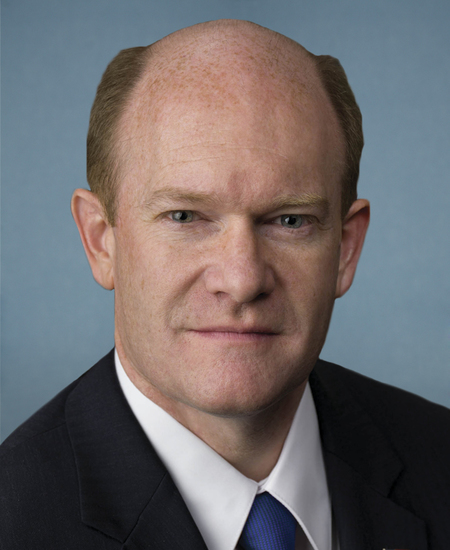
119th Congress Introduced by Chris Coons and 2 co-sponsors

Shifts SEA eligibility to support self-employment via state-approved entrepreneurial activities or a state-approved business plan with a market feasibility study.

Introduced in Senate
0
WeVote Research Nonpartisan
Bill Summary · S 5010

Summary of Bill: S.5010 – New Opportunities for Business Ownership and Self-Sufficiency Act (NO BOSS Act)

Purpose and intent

  • The NO BOSS Act aims to modify how states administer self-employment assistance (SEA) programs under the Internal Revenue Code, with the goal of expanding and improving pathways to self-employment and business ownership for workers who are eligible for unemployment benefits.

Key provisions and changes

  1. Elimination of certain eligibility prerequisite

    • Replaces the current rule that participants must be “likely to exhaust regular unemployment compensation.”
    • Specifically, it strikes subparagraph (B) of IRC 3306(t)(3) and renumbers subsequent subparagraphs, altering how eligibility for SEA is determined.
  2. Revised participation requirements for SEA activities

    • The eligibility criterion for SEA now requires participants to be engaged in activities approved by the state agency that meet one of the following:
      • (i) SEA activities include entrepreneurial training, business counseling, and technical assistance; or
      • (ii) SEA activities are performed under a business plan and a market feasibility study submitted by the individual and approved by the state or an agency designated by the state.
    • In short, SEA participation can be predicated either on structured entrepreneurial supports or on a state-approved business plan with a market feasibility assessment.
  3. Effective date

    • The amendments become effective two years after enactment.
    • States may still amend their own laws sooner if they choose within that 2-year window.
  4. Regulations and guidance

    • The Secretary of Labor must issue regulations to administer the changes, following public notice and comment and subject to OMB approval.
  • The Secretary must also provide guidance to state workforce agencies, including:
    • A model list of self-employment activities that satisfy the SEA requirements.
    • Best practices for verifying completion of such activities.

Who is affected

  • State workforce agencies that administer SEA programs under state and federal unemployment insurance laws.
  • Individuals receiving unemployment benefits who participate in SEA activities as part of their reemployment strategy.
  • Entrepreneurship-support providers (e.g., organizations delivering entrepreneurial training, counseling, and technical assistance) and entities involved in approving business plans and market studies.
  • States, which must adjust their SEA eligibility criteria and program administration within the 2-year timeline and implement new reporting/guidance requirements.

Procedural and timeline aspects

  • Introduction in the Senate on July 16, 2026; referred to the Senate Finance Committee.
  • Effective date is two years from enactment, with a provision allowing earlier state action.
  • Requires formal regulatory action by the Department of Labor and issuance of formal guidance to states.

Overall impact

  • The bill shifts SEA eligibility away from a rigid exhaustion-language trigger to a more flexible framework emphasizing entrepreneurial supports or state-approved business planning with market analysis.
  • Aims to broaden access to SEA by accommodating individuals pursuing self-employment through structured training and/or validated business plans.
  • Introduces formal regulatory and guidance processes to standardize implementation across states.

Compiled from official sources — confirm details with the bill’s official record.

Sign in to ask a question.