

WeVote

Bill

Bill

S 4976

Native Children’s Commission Implementation Act of 2026

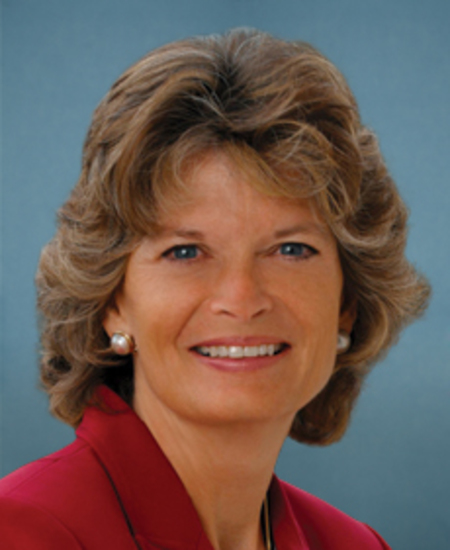
119th Congress Introduced by Lisa Murkowski and 1 co-sponsor

Creates a comprehensive framework to advance justice, health, education, and services for Native children and families, boosting sovereignty and cross-agency collaboration.

Introduced in Senate
0
WeVote Research Nonpartisan
Bill Summary · S 4976

Summary of Bill: Native Children's Commission Implementation Act of 2026 (S.4976, 119th Congress)

Purpose and intent

  • Aims to improve outcomes for Native children by empowering Tribal communities, strengthening families, and increasing access to critical services.
  • Seeks to advance justice, health, education, research, nutrition, housing, and data coordination for Native children, youth, and families through a comprehensive, multi-title framework.

Key provisions and changes by title

TITLE I — Justice for Children, Youth, and Families

  • Establishes an Advisory Committee on Tribal Juvenile Justice within existing Juvenile Justice framework.
    • Notable duties: evaluate effectiveness of federal programs grants for Tribal youth, identify barriers (jurisdiction, funding, data), improve coordination across Federal/State/Tribal justice systems, advise on regulations and data collection, strengthen aftercare after detention, and coordinate with related Federal Juvenile Justice bodies.
    • Composition: at least 16 members including Tribes from diverse regions, an Alaska Native activist, an urban Indian/Native Hawaiian representation, and a Tribal youth with juvenile justice experience.
    • Timing and reporting: initial report within 1 year of enactment; biennial updates; agency response required within 45 days.
    • Funding: authorized $200,000 annually (FY2027–2032).
  • DOJ and DOI study on Native missing children cases
    • Requires a coordinated study on number and status of Native American missing children and youth, with emphasis on cases involving juvenile justice, child welfare, kidnapping, domestic violence, sexual assault, homicide, trafficking, etc.
    • Report to Congress within 180 days after study completion, with recommendations to address reporting gaps and training.
  • Alaska Native Victim Services Fund at the Denali Commission
    • Creates a dedicated Alaska Native Victim Services Fund and advisory committee.
    • Grants/loans to eligible entities (Alaska Native Tribes/organizations) to support victim services, including housing and service infrastructure.
    • Emphasizes culturally appropriate programs, coordination with other federal programs, and ongoing community input.
    • Authorization: $5,000,000 annually (FY2027–2032).
  • Alaska Native and American Indian Family Violence, Prevention, Services, and Treatment
    • Extends and standardizes terminology to consistently reflect Tribal contexts (Tribe/Tribal rather than tribe/tribes).
    • Updates definitions in the Family Violence Prevention and Services Act to explicitly include Native Hawaiian organizations, Alaska Native groups, and Tribal coalitions.
    • Adds new Tribal Domestic Violence Center and Native Hawaiian Resource Center provisions within the National Resource Centers framework to address domestic violence and disparities.
    • Requires grants to Alaska Native Tribal Resource Centers on domestic violence and Native Hawaiian Resource Centers with culturally appropriate programming, alignment with existing centers, and coordination with other federal agencies and tribal programs.
  • Grants to State Domestic Violence Coalitions and Tribal Coalitions
    • Creates opportunities for state-level coalitions to collaborate with Tribes/Native groups to address needs of Native victims.
    • Establishes Tribal Domestic Violence Coalitions as grant recipients to support tribal-level prevention, policy development, training, coordination with law enforcement, and cross-entity collaboration.
  • National Indian Domestic Violence Hotline Grant (new Sec. 313A)

    • Establishes a 24-hour national Indian domestic violence hotline and digital services with federal funding through 5-year grants.
    • Requirements on service delivery: culturally competent advocacy, multilingual and accessible formats, public outreach, and the ability to refer calls to tribal providers.
    • Allows referrals for victims, dependents, and (at discretion) perpetrators in appropriate cases; safety concerns may limit referrals.
    • Reporting and evaluation required to assess effectiveness.
  • Tiwahe Initiative (Sec. 105)

    • Purpose: strengthen Tribal families, reduce out-of-home placements, improve cross-agency coordination, promote tribal self-determination, and expand the Tiwahe model beyond pilot sites.
    • Establishes Tiwahe Initiative, including a Tiwahe Advisory Council and a multi-department expansion plan to align federal resources with tribal delivery.
    • Requires a strategic plan from eligible entities focusing on family-centered services and long-term outcomes; emphasizes whole-of-Government responses and tribal governance principles.
    • Pilot program expansion and interagency coordination with an initial five-year scope; interim and final evaluations with Congress recommendations.
    • Sets aside funding: $100,000,000 for FY2027 and onward (Title II/Section 106 general authorization).
  • Tribal Justice Support (Sec. 106)

    • Amends the Indian Tribal Justice Act to ensure base funding supports tribes regardless of location within states with certain jurisdictional provisions.
    • Ensures recurring funding and adds savings protections for non-participating tribes.

TITLE II — Improving Research and Data

  • NIH Tribal Health Research Office (Sec. 201)
    • Creates a Tribal Health Research Office within NIH led by a director.
    • Responsibilities: coordinate Tribal health research, disseminate accessible information, fund innovative health research including focus on early childhood and youth disparities, build Tribal research capacity (including data liaisons for children), input in grant reviews, and serve as Executive Secretary for the NIH Tribal Advisory Committee.
    • Annual reporting on data interoperability, traditional ecological knowledge, and data sovereignty.
  • NIH Tribal Advisory Committee (Sec. 202)

    • Establishes a National Institutes of Health Tribal Advisory Committee with multi-region Tribal representation, Native Hawaiian and urban Indian representation, and potential youth member.
    • Duties include advising on policies with Tribal implications, facilitating Tribal input into NIH policies, and developing data standards and traditional knowledge integration.
    • Meetings at least twice annually; FACA-exemption for this committee.
  • Native Infant and Maternal Health Data (Sec. 202)

    • Promotes uniform data collection practices, misclassification reduction, and data-sharing agreements among States, Tribes, and organizations to improve Native infant and maternal health data accuracy.

TITLE III — Improving the Physical and Behavioral Health of Native Children

  • HRSA Tribal Advisory Committee (Sec. 301)
    • Creates HRSA Tribal Advisory Committee to facilitate collaboration between Tribal officials and HRSA staff; supports government-to-government consultation.
    • Ensures Tribal representation across the 12 IHS regions and urban Native Hawaiian/urban Indian representation; annual reporting on health challenges and policy recommendations.
  • NIH and CDC data/health activities (Sec. 301, 404P, 404Q cross-reference)

    • Builds NA Tribal liaison capacity, emphasizes data sovereignty, and improves health outcomes for children and youth through coordinated federal efforts.
  • Infant/Maternal Health Data Improvement (Sec. 202 and Sec. 317K reference)

    • CDC-led data improvements, maternal mortality reviews, and tribal consultation to identify barriers to participation in related programs.
  • Perinatal Workforce Grants (Sec. 303)

    • Grants to grow perinatal health workforce for Tribal communities.
  • Behavioral Health and Substance Abuse (Secs. 304–309)

    • Establishes Tribal Technical Advisory Committees within SAMHSA and a Secretary’s Tribal Advisory Committee.
    • Grants for community mental health services, substance use prevention/treatment for Tribes, and a self-governance demonstration program for behavioral health.
  • Self-governance and self-determination emphasis across mental health and crisis services

TITLE IV — Environmental Health Protection

  • Native Children's Environmental Health Protection Task Force (Sec. 401) and primary care integration (Sec. 402)
    • Focus on integrating environmental health considerations into primary care for Native children.

TITLE V — Improving Nutrition Programs for Native Children, Youth, and Families

  • Tribal SNAP administration pilots (Sec. 501)
  • Tribal child nutrition program pilots (Sec. 502)

TITLE VI — Addressing Homelessness in Native Communities

  • Housing assistance programs for homeless American Indians, Alaska Natives, and Native Hawaiians (Secs. 601–603)
  • Tribal Continuum of Care Participation Grant Program and improvements to tribal participation (Sec. 603–604)

TITLE VII — Improving the Workforce for Families

  • Strengthening the 477 Initiative (Sec. 701)
  • Interagency on-site child care in affordable housing (Sec. 702)
  • Child Care and Development Block Grant set-aside for Indian Tribes (Sec. 703)
  • Consultation requirements with Indian Tribes; Native American Advisory Committee on Early Childhood (Sec. 704–705)

TITLE VIII — Education

  • Native teacher training, apprenticeships, after-school programs, native language promotion, BIE homelessness, Behavioral Health and Wellness programs, and Alaska Tribal School Program (Secs. 801–809)

Definitions and general provisions

  • Clarifies that “Indian Tribe” and “Tribal organization” align with the Indian Self-Determination and Education Assistance Act.
  • Several sections emphasize consultation with Tribes, data sovereignty, and explicit Tribal governance roles.

Timeline and funding highlights

  • Authorization of appropriations across multiple sections, often spanning FY2027–2032.
  • Tiwahe Initiative: initial establishment within 30 days of enactment; 5-year interagency pilot with ongoing evaluations and potential continuation.
  • NIH and CDC data/health initiatives include annual reporting and multi-year funding commitments.
  • National Indian Domestic Violence Hotline and Alaska Native centers include multi-year grant authorizations (up to 5 years for hotline; annual appropriations for centers).

Potential impact

  • Expands Tribal sovereignty in health, justice, and social services.
  • Improves data accuracy and research capacity for Native health, infant/maternal health, and youth outcomes.
  • Increases access to victim services, domestic violence prevention, and supported housing.
  • Strengthens cross-agency collaboration to address holistic needs of Native families and communities.
  • Provides targeted funding to Alaska Native and Native Hawaiian programs to reduce disparities.
  • Builds infrastructure for education, mental health, and preventative services with culturally appropriate approaches.

Note: This summary reflects the bill text as introduced and may be amended during the legislative process.

Compiled from official sources — confirm details with the bill’s official record.

Sign in to ask a question.