

WeVote

Bill

Bill

HR 8800

National Defense Authorization Act for Fiscal Year 2027

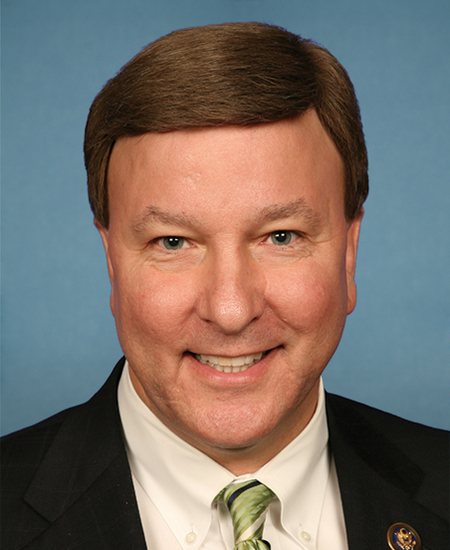
119th Congress Introduced by Mike Rogers and 1 co-sponsor

HR 8800 authorizes FY2027 funding for DoD procurement, RDT&E, and O&M, sets military end-strength levels, and covers defense-related energy programs under the NDAA framework.

Rules Committee Resolution H. Res. 1398 Reported to House. Rule provides for consideration of H.R. 8800, H.R. 8595, H.R. 8884 and H. Res. 1383. The resolution provides for consideration of H.R. 8800 and H.R. 8595 under a structured rule, and H.R. 8884 and H. Res. 1383 under a closed rule. The resolution provides for one hour of general debate on each measure and one motion to recommit on H.R. 8800, H.R. 8595, and H.R. 8884.
5
WeVote Research Nonpartisan
Bill Summary · HR 8800

Summary of HR 8800 (119th Congress) — National Defense Authorization Act for Fiscal Year 2027

Purpose and scope

  • HR 8800 would authorize appropriations for fiscal year 2027 for:
    • Military activities of the Department of Defense (DoD)
    • Military construction
    • Defense activities of the Department of Energy
  • It also sets the military personnel strengths for the fiscal year 2027.
  • The bill is a comprehensive annual NDAA-style authorization bill, guiding funding and policy for DoD, military construction, and defense-related energy programs.

Key provisions and changes

  • Title I — Procurement

    • Sec. 101 authorizes appropriations for procurement for:
    • Army, Navy, Marine Corps
    • Air Force and Space Force
    • Defense-wide activities
    • Funding would be as specified in a funding table in a separate section (section 4101), which would detail program-by-program or itemized procurement allocations.
  • Title II — Research, Development, Test, and Evaluation (RDT&E)

    • Sec. 201 authorizes appropriations for DoD RDT&E for fiscal year 2027.
    • Funding is to be specified in a funding table (section 4201), outlining investment in science, technology, systems development, testing, evaluation, and related activities.
  • Title III — Operation and Maintenance (O&M)

    • Sec. 301 authorizes appropriations for DoD O&M for fiscal year 2027.
    • Covers expenditures for the operating forces and other DoD activities not otherwise provided for, with details in a funding table (section 4301).
  • Personnel strengths

    • The bill would prescribe military personnel strengths for FY2027 (i.e., authorized end-strength levels for active duty members and related personnel categories).
    • This affects staffing, manpower planning, end-strength ceilings, and potentially pay and benefits planning.

Who is affected

  • DoD components: Army, Navy, Marine Corps, Air Force, Space Force, and Defense-wide agencies/programs receive authorization for procurement, RDT&E, and O&M.
  • Defense-related energy programs: Department of Energy defense activities receive funding authorization under the NDAA framework.
  • DoD military personnel: Authorized end-strengths affect recruitment, retention, and compensation planning.
  • Contractors and stakeholders: Defense contractors and industry partners tied to authorized programs would be operating under the funding guidance and program authorizations.

Procedural and timeline aspects

  • Introduced: May 13, 2026 by Rep. Mike Rogers (R-AL) with Rep. Adam Smith (D-WA) as a co-sponsor.
  • Referral: Referred to the House Committee on Armed Services for review and markup.
  • Process: As an NDAA, this bill would typically undergo committee hearings, potential amendments, and floor consideration. It may also interact with Senate NDAA actions and potential conference negotiations before final enactment.
  • Effective timing: The bill authorizes funding levels for FY2027; actual appropriation decisions would follow federal budget and appropriations processes. The precise timing of funding authorizations would depend on enacted sections and appropriations bills.

Notes

  • The text provided includes sections outlining the authorization framework and references to funding tables (sections 4101, 4201, 4301) that would contain the detailed dollar amounts and program-specific allocations.
  • The summary focuses on the substantive authorizations and structural aspects rather than debates or policy specifics that may be added in committee or floor amendments.

Compiled from official sources — confirm details with the bill’s official record.

Sign in to ask a question.