

WeVote

Bill

Bill

HR 7379

NASA C-UAS Act

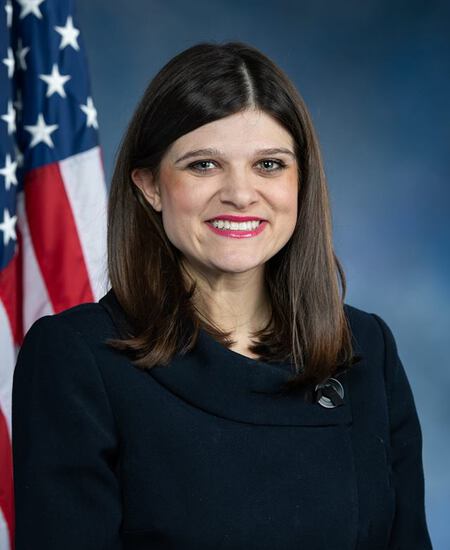
119th Congress Introduced by Haley Stevens

NASA is given temporary authority to detect, monitor, and, if needed for safety or security, intercept UAS threatening NASA facilities, with privacy protections.

Referred to the Subcommittee on Aviation.
0
WeVote Research Nonpartisan
Bill Summary · HR 7379

Overview

  • Bill: H.R. 7379 (NASA Counter-Unmanned Aircraft System Authority Act)
  • Session: 119th Congress, 2nd Session
  • Purpose: Grant NASA authority to detect, identify, monitor, and track unmanned aircraft systems (UAS/unmanned aircraft) posing threats to NASA facilities and assets, and establish related governance, privacy protections, and oversight mechanisms.
  • Introduced: February 4, 2026 by Rep. Haley Stevens (co-sponsor). Referred to Science, Space, and Technology Committee and to Transportation and Infrastructure, Judiciary, and Energy and Commerce committees.

Main purpose and intent

  • Create explicit NASA authority to detect, identify, monitor, and track UAS that threaten NASA facilities or assets, including the ability to intervene during UAS operations without prior consent when necessary for safety or security.
  • Establish a structured framework for identifying high-risk facilities/assets, conducting risk-based assessments, and coordinating with other federal agencies to protect space-related operations and national security interests.
  • Ensure periodic congressional briefings and public reporting on actions taken, privacy protections, and potential impacts on the national airspace.

Key provisions and changes

  • Section 20150 added to Title 51 (NASA authority)
    • General authority for the Administrator to take actions to detect, identify, monitor, and track UAS or threatening unmanned aircraft at facilities/assets designated as covered facilities/assets.
    • Authorities may be exercised without prior consent, including intercept or access to communications used to control the UAS, when necessary to address a credible threat to safety or security.
    • Scope limited to actions needed during operation of a UAS to detect/monitor/identify/track the system.
  • Covered facilities/assets
    • NASA must inventory facilities/assets related to launch/reentry services, protection of space support vehicles/payloads, etc.
    • Conduct a risk-based assessment for each facility/asset, considering threat information and impacts on national airspace, aviation safety, infrastructure, and law enforcement/national security.
    • Designate certain facilities/assets as “covered” if they are high-risk targets for unlawful UAS activity.
  • Research, testing, training, and evaluation
    • NASA may conduct research, testing, and evaluation of approved detection/identification/monitoring equipment, including engaging contractors for non-govern mental duties if properly authorized.
    • NASA must train personnel authorized to take actions described in subsection (b).
    • Coordination with the Secretary of Transportation to ensure safety and continued efficiency of the National Air Space System (NAS).
  • Regulations, guidance, and coordination
    • NASA may issue guidance and regulations as needed; may consult with FCC, NTIA, DOT/FAA, and other agencies.
    • Coordination with the Secretary and possibly other agency heads to prevent interference with airport operations, navigation, air traffic services, and NAS efficiency.
  • Privacy and civil liberties protections
    • Intercepted communications must be handled in a manner consistent with First and Fourth Amendment rights and applicable federal law.
    • Intercepted communications may be maintained up to 180 days unless broader legal reasons apply; restrictions on disclosure to non-NASA entities unless necessary for law enforcement, national security, or related purposes.
  • Assistance to other agencies
    • NASA may provide non-reimbursable support to federal agencies in specified roles (e.g., Section 130i of Title 10, Homeland Security Act provisions, Atomic Energy Defense Act) for actions described in subsection (b), and only for defined time/place with coordination.
  • Semiannual briefings and notifications
    • Starting 6 months after enactment, NASA must brief appropriate congressional committees on actions taken, privacy protections, impacts on NAS, and coordination with other agencies.
    • Briefings must cover instances of actions taken, privacy/civil rights considerations, mitigation options, and whether communications were held or shared beyond 180 days.
  • Scope and limitations
    • The authority is limited to the powers described in subsections (a), (c), and (d); it does not grant NASA broader authority beyond those provisions.
    • Termination: The act’s section expires on September 30, 2031, unless extended or renewed.
    • Construction: Prohibits vesting authority in NASA heads of other agencies or vice versa.
  • Definitions
    • Clarifies terms such as “covered facility or asset,” “electronic/oral/wire interception,” “unmanned aircraft/system,” “launch/reentry/space support vehicle/payload,” “personnel,” and other related terms.
    • Includes definitions of “appropriate congressional committees” and scope of coordination.

Who/what would be affected

  • NASA facilities and assets involved in space launch/reentry and protection of space payloads and assets would be subject to assessment and potential protective actions against UAS threats.
  • NASA personnel and authorized contractors assigned to safety, security, or protection duties could participate in UAS-related actions, training, and operation of detection/monitoring equipment.
  • Other federal agencies (through coordination and potential assistance) and, in certain cases, state/local law enforcement if involved in security operations or investigations.
  • The National Airspace System (NAS) would be considered in evaluating potential impacts and mitigations related to UAS activities near NASA facilities/assets.

Procedural and timeline aspects

  • Effective period: The authorization is temporary, terminating on September 30, 2031, unless extended.
  • Oversight: Semiannual congressional briefings begin six months after enactment; reports cover policy changes, privacy protections, surveillance practices, and potential gaps in existing laws.
  • Compliance and privacy: The act emphasizes constitutional protections and data retention limits (e.g., 180-day retention cap absent exceptions), with specified disclosure controls.
  • Interagency coordination: Requires collaboration with the Secretary of Transportation and potentially other agencies to ensure NAS safety and avoid interference with civilian or national security operations.

Notable considerations

  • The bill grants NASA a unique, time-limited authority to counter UAS threats at critical facilities, balancing security needs with privacy, civil liberties, and NAS safety.
  • It creates a risk-based framework for identifying high-risk facilities/assets and mandates ongoing reporting and evaluation of legal or policy gaps.
  • The authority to intercept or access communications used to control UAS is bounded by constitutional protections and privacy safeguards.

Compiled from official sources — confirm details with the bill’s official record.

Sign in to ask a question.