

WeVote

Bill

Bill

S 4552

Moms Matter Act

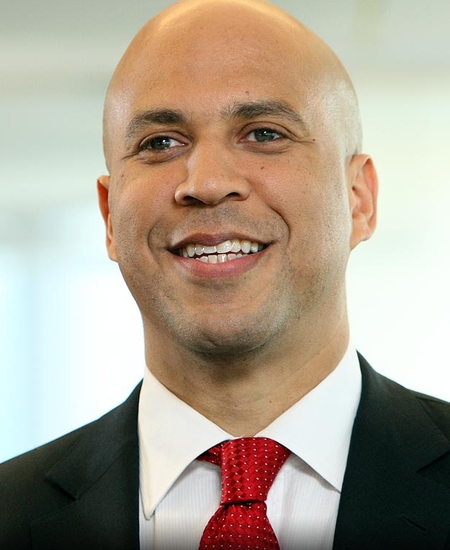
119th Congress Introduced by Cory Booker and 6 co-sponsors

Funds and expands maternal mental health services and workforce, focusing on high-risk areas, integrated care, and equity-driven training.

Introduced in Senate
0
WeVote Research Nonpartisan
Bill Summary · S 4552

Summary of the Moms Matter Act (S. 4552, 119th Congress)

This summary outlines the Act’s main purpose, key provisions, who would be affected, and notable procedural/timeline aspects based on the introduced text dated May 18, 2026.

Purpose and Intent

  • Address maternal mental health conditions and substance use disorders.
  • Improve perinatal outcomes, with emphasis on groups experiencing higher rates of maternal mortality, severe maternal morbidity, and health disparities.
  • Expand the maternal mental and behavioral health workforce and support integrated care models in maternal care.

Key Provisions

1) Maternal Mental Health Equity Grant Program

  • Establishes a grant program administered by the Secretary of Health and Human Services (via the Assistant Secretary for Mental Health and Substance Use).
  • Eligible grantees: entities serving pregnant/postpartum individuals, including community-based organizations, nonprofits with maternal health expertise, maternity care providers, behavioral health providers, state/local government entities, and eligible tribal/Urban Indian organizations.
  • Priorities for grant awards:
    • Partnerships with community-based organizations.
    • Operation in areas with elevated maternal health risks or disparities.
    • Location in health professional shortage areas (HPHAs) designated under the Public Health Service Act.
  • Authorized uses of grant funds (non-exhaustive list):
    • Integrate maternal mental health/behavioral health into primary care for pregnant individuals.
    • Create or expand group prenatal care and postpartum care programs.
    • ExpandExisting programs addressing maternal mental health and substance use during prenatal/postpartum periods.
    • Provide services/refer to evidence-based addiction treatment.
    • Address stigma and raise awareness of warning signs.
    • Programs to prevent suicide/self-harm among pregnant/postpartum individuals.
    • Services at freestanding birth centers.
    • Training for maternity care providers to identify warning signs and refer for care.
    • Develop online resources listing providers treating maternal mental health/substance use disorders.
    • Improve coordination between community care and mental/behavioral health providers (including toll-free hotlines).
    • Implement other evidence-based programs for at-risk groups.
  • Reporting requirements:
    • Annual public reports by grant recipients detailing activities, with quantitative and qualitative evaluations.
    • Secretary to deliver a Congress-facing report by end of FY 2030 summarizing effectiveness, recommendations to expand screenings/treatments, and guidance on continuing activities post-grant.
  • Definitions (selected):
    • Eligible entity includes community organizations, nonprofits, maternity care providers, mental/behavioral health providers, state/local governments, and certain tribal/Urban Indian entities.
    • Maternal mortality: deaths during pregnancy or within 1 year after, related to pregnancy/childbirth or aggravated by related complications (including suicide/overdose linked to mental health or substance use).
    • Maternity care provider: includes physicians, midwives (per international standards), advanced practice nurses, doulas (when reimbursable), and lactation consultants.
    • Freestanding birth center: defined by relevant SSA provision.
  • Authorized funding: $25 million per fiscal year 2027–2031.

2) Maternal Mental and Behavioral Health Care Workforce Grants (Title VII, Public Health Service Act)

  • Adds a new Section 758 to Title VII to grow/diversify the maternal mental and behavioral health workforce.
  • Uses of funds:
    • Establishing or expanding education/training programs for licensing/certification of providers specializing in maternal mental health/substance use disorders.
    • Expanding capacity of existing relevant schools/programs, including scholarships.
  • Priorities for grants:
    • Recruiting/retaining students and faculty from racial/ethnic minority groups.
    • Strategies to diversify the student body and workforce, including underserved populations.
    • Strategies to recruit/retain in health professional shortage areas (HPHAs) and areas with maternal health disparities.
    • Inclusion of bias, racism, and discrimination training in curricula (including implicit bias training).
  • Reporting by grant recipients:
    • An annual report on participant demographics, career placement in shortage areas and disparity-affected regions, and program training on bias/racism; evaluation of training effectiveness.
  • Grant period: up to 5 years.
  • Technical assistance: Secretary to provide support for program development, evaluation, and sustainability.
  • Secretary’s report to Congress: Within 4 years, assess program effectiveness in diversifying the workforce and placing providers in shortage/disparity-affected areas; share outcomes publicly.
  • Authorized appropriations: $15 million annually for FY 2027–2031.

Who Would Be Affected

  • Pregnant and postpartum individuals, especially those in demographic groups with elevated maternal mortality, severe maternal morbidity, or health disparities.
  • Maternity care providers, mental/behavioral health professionals, and birth centers.
  • Community-based organizations and advocacy groups working in maternal health.
  • Educational institutions and training programs that educate maternal mental/behavioral health providers.
  • Regions designated as health professional shortage areas or with significant maternal health disparities.

Procedural and Timeline Highlights

  • Introduction and referral: S. 4552 introduced May 18, 2026; referred to the Senate Health, Education, Labor, and Pensions Committee.
  • Funding horizon: Grants program authorized for fiscal years 2027–2031; two distinct funding streams: $25 million/year for the grants program and $15 million/year for workforce grants.
  • Reporting timeline:
    • Annual reporting by grant recipients.
    • Secretary’s consolidated report to Congress on program effectiveness due by end of FY 2030 for the grants program.
    • Workforce program reporting and a separate Congress-facing evaluation due within 4 years of enactment.
  • Definitions are provided to standardize eligibility, workforce roles, and program scope.

Practical Impact

  • Creates a structured, federally funded approach to both deliver maternal mental health/substance use services and expand the workforce capable of providing these services.
  • Emphasizes equity by prioritizing high-risk areas and minority-serving organizations, and by embedding bias/racism training in curricula.
  • Seeks to reduce adverse perinatal outcomes by integrating mental health services into prenatal/postpartum care and by improving navigation and coordination of care.

Compiled from official sources — confirm details with the bill’s official record.

Sign in to ask a question.