

WeVote

Bill

Bill

S 4906

Milk From Family Dairies Act of 2026

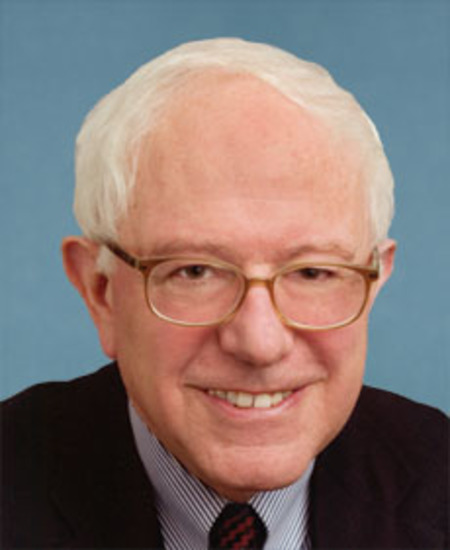
119th Congress Introduced by Bernie Sanders and 1 co-sponsor

Establishes a nationwide Dairy Market Stabilization Program that sets regional production bases, floor prices, and marketings caps to support small, family-operated dairies while s

Introduced in Senate
0
WeVote Research Nonpartisan
Bill Summary · S 4906

Purpose and intent

  • Introduces the Milk From Family Dairies Act of 2026, aiming to establish a Dairy Market Stabilization Program within the Dairy Production Stabilization Act of 1983.
  • The core goal is to create a market stabilization framework for dairy that structures production, pricing, and transfers to support regional, family-oriented or smaller-scale dairy operations, while addressing market balance and rural dairy infrastructure.

Key provisions and changes

  • Congress would add a new Subtitle D (Dairy Market Stabilization Program) to the Dairy Production Stabilization Act of 1983, establishing a national and regional dairy market stabilization regime.
  • Definitions (Section 141) set ground rules for:
    • Allowable milk marketings: a producer’s quarterly production allowed without a market access fee.
    • Alternative market access fee: a fee on production beyond allowable marketings.
    • National Production Base and Regional Production Bases: caps on total milk production nationally and by region.
    • Floor price: minimum pay price for milk, to be determined quarterly.
    • Market access fee dividends: redistributions to producers who stay within allowable marketings.
    • Roles of Milk Handlers, Regional and National Boards, Appeals Committee, and Producer concepts (including exclusions for certified organic farms).
  • Establishment and governance (Section 142):
    • Secretary must publish a proposed order within 60 days of enactment and issue a final order establishing the program within 90 days after public comment.
    • Requires a referendum after 5 years to determine continuation, with a clear voting process (no voting by cooperatives on behalf of their members).
    • Creation of a National Dairy Producer Board (national level advisory body) and Regional Milk Marketing Order Boards (one per region) with specified compositions, terms (National Board: 3-year terms; Regional Boards: 5-year terms), and transparency requirements.
    • Administrative and transfer rules for allowable marketings, with mechanisms to adjust based on regional costs, herd sizes, product quality, and market conditions.
    • Provisions to prevent monetization or trading of marketings, with penalties for violations.
    • An online database to manage information and transfers.
  • Operation of the program (Section 143):
    • Production bases: national and regional bases established annually; first-year rules based on prior marketings; subsequent years adjust bases to align supply with demand and ensure floor price adequacy.
    • Allocation: producers receive quarterly allowable marketings based on regional bases; new producers on waitlists prioritized; transfers of marketings permitted with limits (e.g., max 50% of transferred amount; recipients capped at 50% of prior holdings).
    • Price support: floor price adjustments considered the cost of production, input costs, and market conditions; higher pay rates may be set for higher-quality milk or regional cost differentials.
  • Market access fees and dividends:
    • Fees are designed to discourage overproduction; a portion collected as dividends is redistributed to eligible producers who stay within allowable marketings.
    • Clear payment timelines and requirements for milk handlers to remit assessments.
  • Transitional and large-dairy considerations (Section 143(e)):
    • Large producers exceeding 1,000% of the national average in the first two years face a transition period with no fees or dividends, and may receive incentives to reduce production.
    • The transition authority can use CCC funds to incentivize reductions or restructuring.
  • Import controls reforms (Section 4):
    • Increases dairy import license fees as permitted by trade agreements.
    • Quarterly publication of raw milk import quantities; aligns tariff-rate quotas with the Harmonized Tariff Schedule and seeks to lower quotas where allowed by trade deals.
  • Market consolidation and infrastructure (Section 5 and 6):
    • Annual reports on market consolidation effects on prices for consumers and farm-gate prices for producers.
    • Regional dairy infrastructure reforms:
    • Training programs for small-scale dairy, including land-grant colleges.
    • Grants/loans/technical assistance for dairy workers transitioning to ownership; apprenticeship programs.
    • Authorized funding to support regional small-dairy processing infrastructure, with a 50 million dollar annual appropriation through 2031 for several programs.
    • Expanded Dairy Infrastructure and Grants:
    • Investments to support regional milkshed markets, on-farm processing, cooperatives, co-pack and tolling arrangements, and regional processing capacity.
    • Additional programmatic authorities and cost-sharing for infrastructure.
  • Foreign and domestic market considerations:
    • The bill directs greater emphasis on regional and domestic market stability while shaping import controls to protect domestic dairy production.
  • Availability and scope:
    • The program would apply to all contiguous United States producers, with potential participation by noncontiguous States/territories (Region 7) upon governor notification and Secretary action.

Who and what would be affected

  • Dairy producers (including those not previously marketing milk, new entrants, and producers transitioning to ownership) would be subject to regional bases, allowable marketings, and potential fees or dividends.
  • Milk handlers, dairy consumers, and fluid milk bottlers would interact with the program through fee assessments and dividend distributions.
  • Regional and National Boards, along with the Producer Appeals Committee, would oversee program administration, transparency, and appeals.
  • Large-volume dairies (over 1,000% of national average) would have a transition pathway with possible incentives to downsize.
  • Importers of dairy articles would face revised license fees and potential adjustments to tariff-rate quotas and quotas in line with trade agreements.

Timelines and procedural aspects

  • Immediate actions upon enactment:
    • Secretary must publish a proposed order within 60 days; issue a final order within 90 days after the proposal.
  • Referendum:
    • The program’s continuation would be subject to a referendum at least every five years starting five years after enactment.
  • Seasonal and annual operations:
    • National and regional production bases would be established prior to each calendar year (and adjusted in subsequent years to balance supply and demand).
    • Quarterly price floors and dividend distributions would be set and distributed per the program rules.
  • Funding and authorizations:
    • Infrastructure-related programs would be funded through appropriations (e.g., up to $50 million annually for several programs from 2027 through 2031, with broader infrastructure and training initiatives authorized at similar levels).
  • Compliance and enforcement:
    • Prohibitions on monetization of marketings with penalties, including potential reductions, fines, or other sanctions.

Note: This summary reflects the sponsor-stated framework of the Milk From Family Dairies Act of 2026 as introduced in S.4906 (119th Congress) and does not reflect final legislative amendments or enacted law.

Compiled from official sources — confirm details with the bill’s official record.

Sign in to ask a question.