

WeVote

Bill

Bill

HR 10065

Methane Pollution Accountability Act

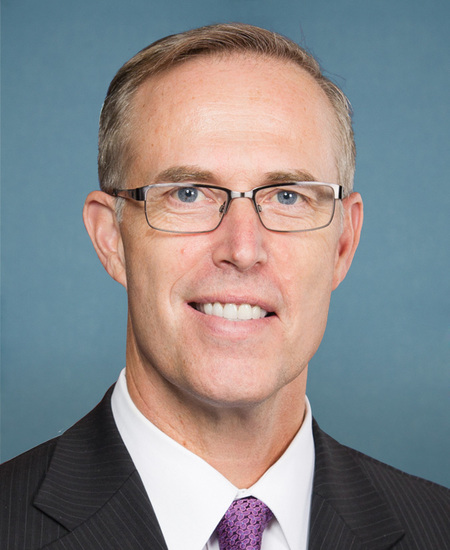
119th Congress Introduced by Jared Huffman and 1 co-sponsor

Requires royalties on all methane produced from federal lands and the OCS, including vented/flared gas, to curb waste and improve air quality.

Introduced in House
0
WeVote Research Nonpartisan
Bill Summary · HR 10065

Bill Summary: Methane Pollution Accountability Act (H.R. 10065, 119th Congress)

Purpose and intent

  • Introduces a directive to ensure royalties paid for gas produced from Federal lands and the outer Continental Shelf (OCS) are assessed on all gas produced, including that which is vented, flared, or released during upstream operations.
  • Aims to strengthen waste prevention and improve environmental/public health outcomes by ensuring more gas production is subject to royalties and related oversight.

Key provisions and changes

  • Royalties on all extracted methane (Sec. 2)

    • For all leases issued after enactment, royalties for gas produced on Federal land and the OCS must be assessed on all gas produced.
    • This includes gas that is consumed, vented, flared, or released through equipment during upstream operations.
    • Exceptions (subsection b):
    • Gas vented or flared for up to 48 hours in an emergency posing danger to health, safety, or the environment.
    • Gas used or consumed within the lease, unit, or communitized area for the benefit of the lease/group.
    • Gas that is unavoidably lost.
  • Waste prevention and royalty enforcement (Sec. 3)

    • Directs the Director of the Bureau of Land Management (BLM) to enforce the final rule titled “Waste Prevention, Production Subject to Royalties, and Resource Conservation” (published April 10, 2024; 89 Fed. Reg. 25378).
    • The bill prohibts finalizing certain pending rules (or revising the final rule) that would reduce royalties or otherwise alter waste-prevention/royalty regimes unless the Director certifies that the alternative rule would further minimize natural gas waste or improve air quality and public health.
    • Specifically, the bill may not finalize: 1) The proposed rule “Royalty for Oil and Gas Lost From Onshore Federal and Indian Leases” (June 24, 2026; 91 Fed. Reg. 37906) unless justified. 2) Any other rule revising the 2024 final rule unless the Director certifies it will further minimize waste or improve health/public outcomes.

Stakeholders affected

  • Primary:
    • Federal oil and gas leaseholders operating on Federal lands and the outer Continental Shelf.
    • The Bureau of Land Management (BLM) as the enforcing agency.
  • Indirect:
    • Tax/royalty collectors and federal revenue associated with methane production.
    • Public health and environmental stakeholders concerned with methane emissions and air quality.
  • Exceptions/Considerations:
    • Operators with emergency or unavoidable losses may be exempt from royalty assessments under specified conditions.

Procedural and timeline aspects

  • Effective date: The act applies to all leases issued after the date of enactment.
  • Enforcement and rulemaking: The Director of the BLM is tasked with enforcing the 2024 final rule and faces constraints on finalizing certain proposed or revised rules unless certifications are issued.
  • Legislative status: Introduced in the House on August 6, 2026; referred to the Committee on Natural Resources. Co-sponsors include Jared Huffman and Eleanor Holmes Norton.

Potential impacts and considerations

  • Likely increase in royalty revenue for the federal government related to methane gas production on Federal lands/OCS due to inclusion of gas that was previously not fully taxed (vented/flared/released).
  • Stronger incentive for operators to minimize venting and flaring, improving air quality and reducing methane waste.
  • Administrative burden on operators to document and report venting, flaring, and other losses beyond traditional royalty calculations.
  • Policy alignment with broader waste-prevention and methane mitigation efforts in federal natural resource management.
  • Impact depends on future rulemakings and the Director’s certifications regarding revisions to the 2024 rule.

Compiled from official sources — confirm details with the bill’s official record.

Sign in to ask a question.