

WeVote

Bill

Bill

HB 164

Medical prescriptions-off-label purposes.

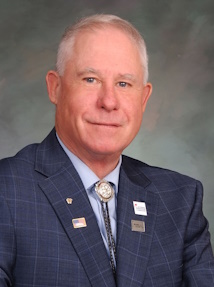
2025 Regular Session Introduced by Bill Allemand and 15 co-sponsors

HB 164 requires parental consent to release autopsy records for under-18 deaths, with limited public-interest exceptions and a court process to compel disclosure when justified.

Assigned Chapter Number 164
0
WeVote Research Nonpartisan
Bill Summary · HB 164

Summary — HB 164: Parental Consent to Release Child Autopsies

Status: Introduced (2025 session) — passed first reading (per docket).
Primary subject area: Medical examiners; confidentiality; public records; child death investigations.

Purpose / intent

HB 164 creates a parental-consent requirement for disclosure or release of autopsy-related materials compiled by the Office of the Chief Medical Examiner (OCME), county medical examiners, investigating medical examiners, pathologists, or autopsy centers in cases where the decedent was under 18. The bill intends to protect the privacy of families after the death of a child while preserving limited, defined public‑interest exceptions and a judicial mechanism to seek release when necessary.

Key provisions

  • Creates new confidentiality rule (G.S. 130A‑385(d1)):

    • All records, worksheets, reports, photographs, tests, analyses, and audio/video recordings prepared in connection with the death of a person under 18 are confidential.
    • Such materials may be disclosed or released only with the prior written consent of the deceased child’s parent, guardian, or person standing in loco parentis, with two explicit exceptions:
    • The custodian may provide a copy of the finalized autopsy report to the personal representative of the decedent’s estate (at a time/location set by the custodial agency) to allow estate administration.
    • The OCME (or related examiners/autopsy centers) may disclose without parental consent when necessary for public health or safety, public health surveillance/investigations/interventions/evaluations, to facilitate research, to comply with state/federal reporting or grant duties, or to satisfy any other legal duty.
    • Willful, knowing disclosure, release, possession, or dissemination of protected child autopsy materials in violation of this subsection is a Class 1 misdemeanor (with a provision that multiple occurrences involving the same item are not charged as separate offenses).
  • Judicial special‑proceeding pathway (G.S. 130A‑385(d2)):

    • If parents/guardians withhold consent, a party seeking disclosure may file a special proceeding in superior court where the death occurred.
    • The court may conduct an in‑camera review and, upon a showing of good cause, order disclosure/release and impose restrictions/conditions.
    • Required notice must be given (in writing) to the deceased child’s parents/guardian (or person in loco parentis), the OCME, the district attorney in the county of death, and the decedent’s personal representative (if any).
    • Factors the judge must consider in deciding good cause include: necessity for public evaluation of government performance, intrusion on family privacy, whether the request is the least intrusive means, impact on criminal investigations/prosecutions and defendants’ rights, public interest, and availability of similar information elsewhere.
  • Amendment to G.S. 130A‑389.1:

    • Confirms that autopsy photographs/audio/video are generally available for supervised inspection, but materials protected under the new child‑confidentiality rule are excluded.
    • Provides, for persons denied access, a special‑proceeding route (via clerk) to seek authorization to copy or disclose autopsy images, subject to a good‑cause test (similar privacy/public‑interest balancing).

Who is affected

  • Primary: parents/guardians of deceased children, OCME and county/autopsy offices, pathologists and investigating medical examiners.
  • Secondary: personal representatives of estates, public health authorities, researchers, journalists, defense/prosecution in criminal investigations, and others who may request autopsy materials.
  • Custodial agencies will have new responsibilities to obtain parental consent, manage restricted access, and follow the judicial notice/response procedures.

Procedure & enforcement

  • Disclosure generally requires prior written parental consent.
  • Custodian may release a finalized autopsy report to an estate representative at agency‑determined time/location.
  • If consent withheld, requesters must petition superior court; the court can order disclosure upon good cause and may set limits.
  • Criminal penalty for prohibited disclosures: Class 1 misdemeanor.

Fiscal/legal notes

  • The bill text does not include a fiscal note. Potential court workload (special proceedings) and compliance administration for OCME/custodial agencies could have small operational impacts; none are specified in the bill language.

If you want, I can:
- Draft a one‑page handout highlighting stakeholder impacts (media, researchers, law enforcement, families).
- Produce suggested amendments or alternative language to clarify exceptions or notice procedures.

Compiled from official sources — confirm details with the bill’s official record.

Sign in to ask a question.