

WeVote

Bill

Bill

HR 9831

Medicaid Dental Benefit Act of 2026

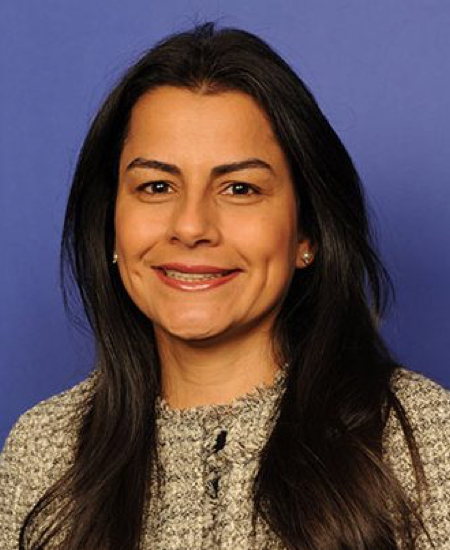
119th Congress Introduced by Nanette Barragán and 19 co-sponsors

Expands Medicaid to mandatorily cover adult dental/oral health services (including dentures and implants) starting 2027, with 100% FMAP for related costs for 12 quarters.

Introduced in House
0
WeVote Research Nonpartisan
Bill Summary · HR 9831

Overview

  • Bill: HR 9831
  • Session: 119th Congress, 2nd Session
  • Title: Medicaid Dental Benefit Act of 2026
  • Purpose: Amend Title XIX (Medicaid) to improve coverage of dental and oral health services for adults enrolled in Medicaid, and to establish quality/equity measures, reporting, and outreach related to adult oral health.

What the bill would do

1) Mandatory coverage of dental and oral health services for adults

  • Adds mandatory coverage of dental and oral health services for adults under Medicaid.
  • Defines dental and oral health services to include: dentures and denture services, implants and implant services, and services to prevent oral disease, restore health and function, reduce pain, and treat emergency oral conditions. These must be furnished by providers legally authorized under state law.
  • Applies to expenditures for medical assistance in calendar quarters beginning on or after January 1, 2027.
  • Ensures coverage aligns with the broader definition of dental/oral health services (not limited to traditional “dental services” alone).

2) Benchmark and optional expansion

  • Benchmark coverage (Section 1937(b)(5)) is amended to incorporate dental and oral health services beginning January 1, 2027.
  • States would have an optional provision to add additional dental and oral health benefits beyond those defined in the bill (subsection allowing State flexibility to specify additional items/services).

3) Increased Federal matching (FMAP) for dental/oral health expenditures

  • Creates a new FMAP adjustment (section 1905(mm)) for expenditures related to dental and oral health services.
    • For the 50 states and DC: a 100% FMAP for the 12 quarters starting January 1, 2027, for amounts expended on eligible dental/oral health services (not to exceed 100%).
    • For territories (Puerto Rico, Virgin Islands, Guam, Northern Mariana Islands, American Samoa): 100% FMAP for the same period, limited to items/services included in dental/oral health services.
  • Excludes amounts attributable to the increased FMAP from federal payment caps under subsections (f) and (g) of Section 1108.
  • Adds an exclusion from caps for amounts attributable to the FMAP increase in territories.

4) Adult oral health quality and equity measures

  • Establishes a new section, 1139C, in Title XI to create a core set of adult oral health quality and equity measures.
  • Key elements:
    • Development of a core set of adult oral health quality/equity measures for Medicaid-enrolled adults (over 21), aligned where possible with existing adult core sets.
    • Process includes input from States, providers, patient representatives, dental professionals, and national organizations with oral health quality/equity expertise.
    • Deadlines:
    • Within 1 year: identify and publish a recommended core set of measures for comment.
    • Within 1 year: disseminate an initial core set of measures.
    • Within 2 years: develop a standardized reporting format and guidelines to collect and report data (including stratification by race, ethnicity, language, disability, sexual orientation, gender identity).
    • Every 3 years: require a Congress-report update with measures and related information.
    • Example measures include utilization, evaluations during medical visits, ED visits for non-traumatic dental conditions, follow-up care after ED visits, counseling, anesthesia/sedation access, caries risk screening and treatment, periodontal evaluations, and denture/extraction needs.

5) Annual state reporting on adult oral health quality/equity (Medicaid)

  • States with approved Medicaid plans or waivers must annually report:
    • State-specific adult oral health quality/equity measures applied.
    • Data on quality and equity of oral health care provided, including disaggregated data (race, ethnicity, language, disability, sexual orientation, gender identity).
    • Information on dental benefits available, limits, and reimbursement levels.
    • State plans to address health disparities related to age, sex, race, ethnicity, language, sexual orientation, gender identity, and disability.

6) Outreach, education, and coordination

  • Establishes an oral health outreach and education program to be implemented via contracts with entities that fund/provide oral health care.
  • Objectives include:
    • Providing culturally competent and linguistically appropriate information about adult oral health coverage.
    • Assisting eligible/enrolled adults in connecting with care.
    • Educating dental, oral health, and medical professionals to improve culturally competent care for adults.
    • Delivering education to promote good oral health practices among diverse Medicaid beneficiaries.

7) Reporting and oversight provisions

  • Requires reporting by Medicaid and CHIP (CHIP reporting required for 1139C(c)) to Congress.
  • Creates a statutory mechanism for public reporting of state-level data and measures.

8) Authorization of funding

  • Provides an authorized appropriation of $10,000,000 to carry out Section 1139C (oral health quality/equity measures, reporting, and related activities), available until expended.

Who would be affected

  • Adults enrolled in Medicaid (and those in Medicaid waivers) would gain expanded mandatory dental/oral health coverage.
  • States administering Medicaid programs (and territories) would implement expanded benefits and reporting requirements.
  • Dental and medical providers would be involved in delivering expanded services and reporting data.
  • Communities and patient representatives, particularly across racial, ethnic, language, disability, and gender identity groups, would be tied to the proposed equity-focused measures and outreach efforts.

Key timelines and procedural notes

  • Effective date for new coverage and FMAP changes: expenditures in calendar quarters beginning January 1, 2027.
  • Design and publication of adult oral health quality/equity measures: within 1 year (for core set) with ongoing updates; standardized reporting format within 2 years.
  • Annual state reporting requirement begins after enactment, continuing annually.
  • Congress-required report on adult oral health (via MHPAC) due within 2 years and every 3 years thereafter.

Summary of potential impact

  • Expands Medicaid to provide comprehensive adult dental and oral health coverage, including dentures, implants, and preventive/emergency services.
  • Improves federal financial support for states’ expanded dental coverage for the specified period (100% FMAP for the covered expenditures for 12 quarters).
  • Establishes a standardized framework to measure, report, and address adult oral health quality and equity, with strong emphasis on disparities and data-driven improvement.
  • Adds outreach and education programs to facilitate access and utilization among underserved populations.
  • Introduces state-level reporting and public transparency on adult oral health coverage and outcomes.

If you’d like, I can tailor this summary to a specific audience (e.g., policymakers, advocates, or the general public) or extract a concise one-page briefing.

Compiled from official sources — confirm details with the bill’s official record.

Sign in to ask a question.