

WeVote

Bill

Bill

S 4132

Maternal Vaccinations Act

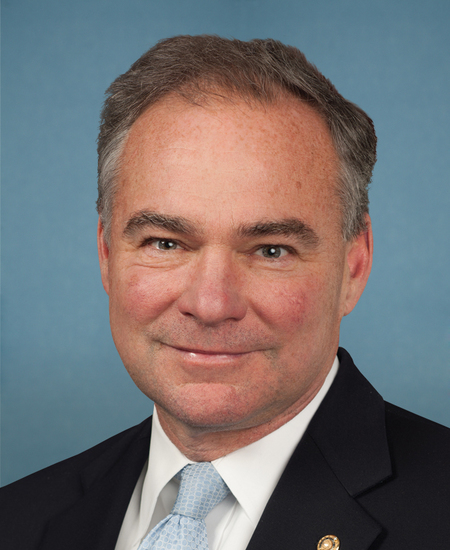
119th Congress Introduced by Tim Kaine

The bill expands maternal vaccination campaigns and funding to increase vaccination rates among pregnant/postpartum individuals and their children, with explicit focus on racial an

Introduced in Senate
0
WeVote Research Nonpartisan
Bill Summary · S 4132

Summary of Bill S.4132 (119th Congress) – Maternal Vaccinations Act

Purpose

The Maternal Vaccinations Act aims to amend the Public Health Service Act in order to increase vaccination rates among pregnant and postpartum individuals, including those from racial and ethnic minority groups, and to extend related activities and funding to support these efforts.

Key Provisions

1) Maternal Vaccination Awareness and Equity Campaign

  • The bill amends Section 313 of the Public Health Service Act (42 U.S.C. 245) to expand the focus of vaccination awareness campaigns.
  • Specific additions specify messaging and outreach to include pregnant and postpartum individuals, aiming to address low vaccination rates in this population.
  • Adjustments to the campaign’s scope emphasize prenatal, obstetric, and pediatric contexts (see below).

Technical edits to Section 313:

  • Subsection (a): Adds emphasis on “and among pregnant and postpartum individuals” to the aims regarding combating low rates of vaccination.
  • Subsection (c)(3): Replaces the phrase “prenatal and pediatric” with “prenatal, obstetric, and pediatric,” broadening the clinical contexts recognized in the campaign.
  • Subsection (d)(4)(B): Expands composition or participants included in the program to explicitly include “pregnant and postpartum individuals and” additional groups (as drafted).
  • Subsection (g): Adjusts funding authorization for the campaign from $15,000,000 per fiscal year (2021–2025) to $17,000,000 per fiscal year (2027–2031), signaling a plan for higher ongoing funding in the later years.

2) Expanded Activities Under Section 317(k)(1)(E)

  • The bill amends Section 317(k)(1)(E) of the Public Health Service Act to broaden the scope of activities supported under the program.
  • New language adds a dedicated purpose to:
    • Increase vaccination rates of pregnant and postpartum individuals, including individuals from racial and ethnic minority groups, and their children.
  • This codifies targeted efforts to improve maternal vaccination uptake and addresses equity concerns in outreach and program design.

Affected Parties

  • Pregnant and postpartum individuals: Primary beneficiaries through increased vaccination outreach, education, and access.
  • Racial and ethnic minority communities: Explicit inclusion in the targeted equity-focused vaccination efforts.
  • Children of pregnant/postpartum individuals: Included in the expanded objective to improve vaccination rates within the family unit.
  • Public health programs and facilities: National campaigns and federal funding administered under the Public Health Service Act would be adjusted to implement these changes.
  • Public Health Service Act programs: Revisions affect program design, messaging, outreach, and funding levels.

Funding and Timeline Considerations

  • Funding adjustments:
    • For the Maternal Vaccination Awareness Campaign: annual funding increases from $15,000,000 (fiscal years 2021–2025) to $17,000,000 (fiscal years 2027–2031). This implies a phased or phased-in enhancement of resources over time.
  • Effective dates:
    • The bill text introduces the changes but does not specify an immediate start date beyond enactment, so implementation would align with standard federal appropriation cycles following passage.
  • Administration:
    • Changes are proposed to be implemented through the Department or relevant federal agencies administering the Public Health Service Act programs, with oversight by the Committee on Health, Education, Labor, and Pensions.

Note on Status

  • As of the provided text, S.4132 was introduced on March 18, 2026, and referred to the Senate Committee on Health, Education, Labor, and Pensions. No final passage or enactment date is indicated.

If you’d like, I can provide a plain-language briefing for policymakers or a side-by-side comparison with current law to highlight all substantive changes.

Compiled from official sources — confirm details with the bill’s official record.

Sign in to ask a question.