

WeVote

Bill

Bill

S 4986

Mamas First Act

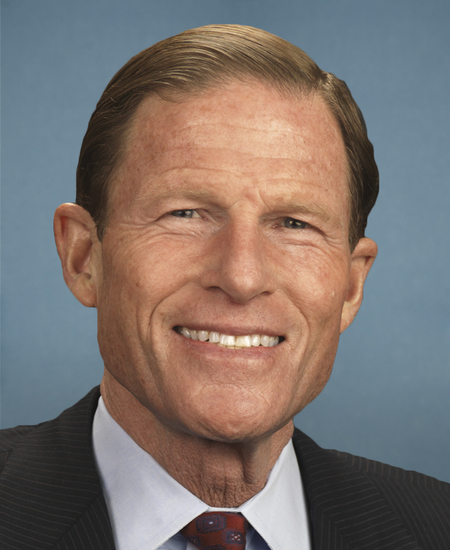
119th Congress Introduced by Richard Blumenthal and 6 co-sponsors

Expands Medicaid to cover prenatal, labor, postpartum care by doulas, midwives, tribal midwives, and lactation supports, with mandatory coverage starting 2027.

Introduced in Senate
0
WeVote Research Nonpartisan
Bill Summary · S 4986

Summary of S.4986 — Mamas First Act (119th Congress)

Purpose and overall intent

  • The bill aims to expand Medicaid coverage under title XIX of the Social Security Act to include services provided by doulas, midwives, tribal midwives, and lactation support providers.
  • It seeks to promote maternal and infant health by recognizing the role of non-medical and midwifery-based supports in prenatal, labor, and postpartum care, with the expectation of improving outcomes and reducing disparities.

Key provisions and changes

  • Medicaid coverage expansion (section 3(a))
    • Adds new covered services under Medicaid (Medicaid’s list of reimbursable services) described as:
    • Prenatal, labor, and postpartum care delivered in a culturally congruent manner by:
      • Doulas
      • Midwives
      • Tribal midwives
      • Lactation support providers
    • Settings of care include home, community-based settings, hospitals, birthing centers, clinics, health units, or via telehealth as authorized by state law.
  • Definitions (section 3(a)(ll))
    • Provides formal definitions for:
    • Doula: Certified by an education organization with continuing education; must provide positive references from clients or health providers, or be authorized as a Medicaid doula in the state plan.
    • Midwife: Meets state Medicaid provider requirements or the International Confederation of Midwives international definition.
    • Tribal Midwife: Authorized in the state plan or recognized by an Indian tribe for practice.
    • Lactation Support Provider: Authorized Medicaid provider of lactation services or meets specific training criteria (e.g., 20 hours foundational training per WHO/UNICEF lactation blueprint) or recognized by the Lactation Support Provider Descriptor chart.
  • Mandatory coverage requirement (section 3(b))
    • Replaces existing optional coverage trigger with a mandatory coverage requirement for the listed doula, midwifery, tribal midwifery, and lactation support services in state Medicaid plans.
  • Cost-sharing prohibition (section 3(c))
    • Modifies federal cost-sharing rules to prohibit or limit cost-sharing on these additional services, ensuring they are covered terms similar to other Medicaid services.
  • Effective date (section 3(d))
    • Applies to medical assistance furnished on or after January 1, 2027.
    • Includes a State-legislation exception: if a state law is required to meet amendments, the state won’t be deemed noncompliant solely because it hasn’t enacted the additional requirement before the first calendar quarter after the first regular State legislative session following enactment.
    • The exception accounts for states with two-year legislative sessions by treating each year of the session as a separate regular session.

Who or what would be affected

  • Beneficiaries: Pregnant and postpartum individuals eligible for Medicaid who would gain access to non-medical support (doula), midwifery care, tribal midwifery, and lactation support services as part of comprehensive maternal care.
  • Providers:
    • Doulas
    • Licensed or certified midwives (including tribal midwives)
    • Lactation support professionals
  • States and Medicaid programs: State Medicaid plans would be required to cover these services beginning in 2027, subject to state-specific implementation and any necessary enabling legislation.

Procedural and timeline aspects

  • Introduced in the Senate on July 15, 2026, by Senator Elizabeth Warren with several co-sponsors.
  • Referred to the Senate Committee on Finance for review.
  • If enacted, the changes would take effect for services furnished on or after January 1, 2027, with a state-legislation exception process to accommodate varying state timelines.

Notable context and rationale (as stated in findings)

  • Evidence cited includes disparities in maternal mortality by race/ethnicity, particularly higher mortality among Black and Indigenous women.
  • Doulas and midwifery-led care are associated with favorable maternal and neonatal outcomes (e.g., reduced low birth weight, fewer birth complications, higher rates of breastfeeding initiation, lower interventions including cesarean rates).
  • The bill emphasizes culturally congruent care and diverse practice settings for maternal health services.

If you’d like, I can compare this bill to current Medicaid coverage or provide a quick impact estimate by state type (e.g., states with robust midwifery programs vs. those with limited existing coverage).

Compiled from official sources — confirm details with the bill’s official record.

Sign in to ask a question.