

WeVote

Bill

Bill

HR 10124

Mail Theft and Postal Key Crime Prevention Act of 2026

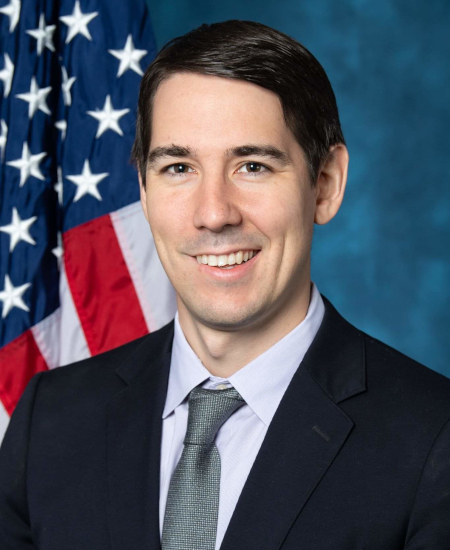
119th Congress Introduced by Josh Harder

The bill strengthens federal response to organized mail theft by creating designated Mail Theft Coordinators, improving interagency coordination, and prompting updated sentencing g

Introduced in House
0
WeVote Research Nonpartisan
Bill Summary · HR 10124

Overview

  • Bill: HR 10124 (Mail Theft and Postal Key Crime Prevention Act of 2026)
  • Session: 119th Congress
  • Sponsor: Rep. Josh Harder (co-sponsored)
  • Purpose: Improve coordination and prosecution of organized mail theft and related fraud offenses; direct the U.S. Sentencing Commission to review and amend sentencing guidelines for these offenses; authorize related investigative and reporting enhancements.

What the bill aims to do

  • Strengthen federal response to organized mail theft, including schemes involving postal keys, arrow keys, counterfeit access devices, identity theft, check fraud, and bank fraud.
  • Improve interagency coordination among federal, state, and local law enforcement and prosecutors.
  • Ensure tailored sentencing enhancements for offenses connected to mail theft and related fraud.

Key provisions

Section 2 — Findings and Sense of Congress

  • Documents rising mail theft and related crimes (including use of postal keys, identity theft, and fraud).
  • Emphasizes security risks to the mail system and harm to consumers, small businesses, financial institutions, and postal workers.
  • Calls for strong coordination among prosecutors, U.S. Attorneys’ Offices, the U.S. Postal Inspection Service, DHS, Treasury, and other agencies.
  • Advocates for sentencing policy that reflects the seriousness of offenses involving stolen or counterfeit postal access devices and organized mail theft.

Section 3 — Coordination of Prosecution of Mail Theft Offenses

  • Amends Title 28 U.S.C. by adding a new section: 551. Mail theft coordinator.
    • Designation: The Attorney General, with input from the district U.S. attorney, must designate an Assistant U.S. Attorney in each district as the Mail Theft Coordinator.
    • Primary responsibilities: Coordinate and supervise investigations and prosecutions of:
    • Theft or unlawful possession of postal keys/locks (18 U.S.C. § 1704)
    • Theft or receipt of stolen mail matter (18 U.S.C. § 1708)
    • Organized schemes involving mail theft, identity theft, check fraud, bank fraud, or access device fraud facilitated by stolen mail
    • Related conspiracy or fraud offenses
    • Coordination: Requires coordination with U.S. Postal Inspection Service, FBI, DHS, Treasury, state/local law enforcement, and other relevant agencies.
  • Clerical amendment to the Table of Contents for Chapter 35 to add the new section 551 (Mail theft coordinator).

Section 4 — Report on Organized Mail Theft

  • Requires the Attorney General to submit a report:
    • Not later than 1 year after enactment, and annually for 5 years. -內容: trends in mail theft; number/type of prosecutions under 18 U.S.C. §§ 1704, 1708 and related fraud statutes; interagency coordination; trends in theft/trafficking of postal keys, arrow keys, or counterfeit postal access devices; and recommendations to improve prevention, investigation, and prosecution.

Section 5 — Sentencing Guidelines for Mail Theft Offenses

  • Directs the U.S. Sentencing Commission to review and amend federal sentencing guidelines by May 1 of the first calendar year after enactment.
  • Objectives for the amendments:
    • Provide appropriate sentencing enhancements for:
    • Theft, robbery, possession, duplication, manufacture, or trafficking of postal keys, arrow keys, or counterfeit postal access devices
    • Organized or large-scale mail theft schemes
    • Identity theft, check fraud, bank fraud, or access device fraud facilitated through stolen mail
    • Violence, threats, or robbery targeting USPS employees or contractors
    • Mail thefts involving multiple victims or substantial financial loss

Section 6 — Rule of Construction

  • Clarifies that nothing in the Act limits authorities of the DOJ, USPS, or other federal law enforcement agencies.

Who is affected

  • Federal prosecutors and U.S. Attorneys' Offices, who will have designated Mail Theft Coordinators in each district.
  • U.S. Postal Inspection Service and other federal agencies (FBI, DHS, Treasury) involved in investigations.
  • State and local law enforcement partnerships coordinating with federal authorities.
  • Individuals and organizations affected by mail theft and related fraud schemes (the enhancements target offenders and criminal networks).
  • The U.S. Sentencing Commission, which must revise guidelines for relevant offenses.

Timelines and procedural notes

  • Enactment triggers:
    • Appointment of district-level Mail Theft Coordinators (immediate designations by AG in consultation with district U.S. Attorneys).
  • Reporting:
    • First annual report due within 1 year of enactment, then annually for 5 years.
  • Sentencing guidelines:
    • Commission must complete and publish amendments by May 1 of the first calendar year after enactment.

Potential impact

  • Operational: Improved coordination across agencies may streamline investigations and prosecutions of complex mail theft schemes.
  • Legal: Clear guidance for enhanced penalties for mail-related offenses and related fraud crimes; updated sentencing framework to reflect the severity of organized mail theft and device-based offenses.
  • Oversight: Regular reporting to Congress will provide ongoing visibility into trends and effectiveness of enforcement efforts.

Note: The text indicates this is a new act with a focus on coordination, enforcement, reporting, and sentencing enhancements related to mail theft and associated crimes.

Compiled from official sources — confirm details with the bill’s official record.

Sign in to ask a question.