

WeVote

Bill

Bill

HF 4824

Locations where certain arrests can be made restricted.

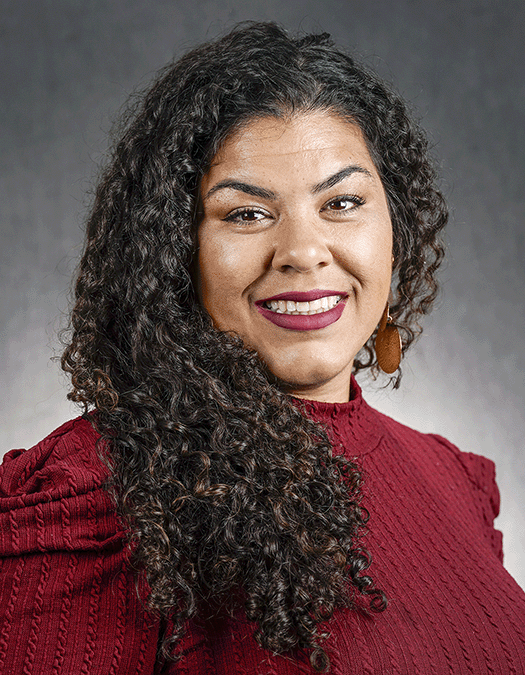
2025-2026 Regular Session Introduced by Athena Hollins

HF 4824 restricts where officers may arrest for certain offenses to defined locations, with exceptions for exigent circumstances.

Introduction and first reading, referred to Public Safety Finance and Policy
0
WeVote Research Nonpartisan
Bill Summary · HF 4824

Summary of HF 4824 (2025-2026) – Minnesota

Title

Locations where certain arrests can be made restricted.

Purpose and intent

HF 4824 proposes to restrict the locations where law enforcement officers may make arrests for certain offenses. The bill aims to limit arrest authority to specific, defined settings, with the goal of guiding enforcement practices toward defined spaces and procedures, and potentially aligning arrest authority with safety, privacy, or policy considerations in particular environments.

Key provisions and changes (highlights)

  • Arrest location restrictions: Establishes limitations on where arrests for certain offenses may be conducted. The bill would specify approved or preferred locations for making arrests, reducing discretion to arrest in other locations.
  • Scope of offenses: Applies to a defined set of offenses (the bill text would enumerate which offenses are subject to the location restrictions; the summary notes “certain arrests” but the exact offenses would be detailed in the bill).
  • Enforcement and procedures: Likely includes procedural requirements for officers when attempting arrests within restricted locations, including compliance with the specified locations and any exceptions or transitional provisions.
  • Exceptions or exemptions: May provide carve-outs (e.g., exigent circumstances, safety concerns, or when a suspect is physically located in a restricted area during a current investigation) where arrests can occur outside the restricted locations.
  • Definitions: Provides definitions for terms such as “locations,” “arrest,” and the offenses covered to avoid ambiguity and ensure consistent application.

Who/what is affected

  • Law enforcement officers: Subject to new location-based constraints on where they may perform arrests for the specified offenses.
  • Suspects and individuals in restricted locations: Potentially affected by changes in arrest practices and the settings in which arrests can occur.
  • Public safety and administrative agencies: May need to update policies, training, and protocols to align with the new restrictions.
  • Judicial and prosecutorial processes: Could experience changes in arrest-related timing and venue considerations if arrests occur in restricted locations.

Procedural and timeline aspects

  • Introduction and referral: Introduced and referred to the Public Safety Finance and Policy committee on April 7, 2026.
  • Sponsor: Co-sponsor Athena Hollins (in addition to primary sponsorship as indicated in the action history).
  • Next steps (typical for such bills): Committee hearings, potential amendments, floor votes in the House, and eventual conference process if the companion Senate bill exists. Final enactment would require passage by both chambers and signature by the governor.

Potential impact and considerations

  • The bill may reduce arrests in non-designated areas, potentially affecting crime response dynamics, police-resource deployment, and community interactions in certain spaces.
  • Implementation would require clear definitions and carve-outs to prevent unintended arrests or legal challenges related to exigent circumstances.
  • Stakeholders to watch include law enforcement agencies, civil rights advocates, prosecutors, and community organizations that monitor policing practices and arrest procedures.

If you would like, I can add line-by-line details from the bill text (once available) and compare HF 4824 to current Minnesota statute to highlight exact changes.

Compiled from official sources — confirm details with the bill’s official record.

Sign in to ask a question.