

WeVote

Bill

Bill

SB 3617

LOCAL GOV FRAUD TASK FORCE ACT

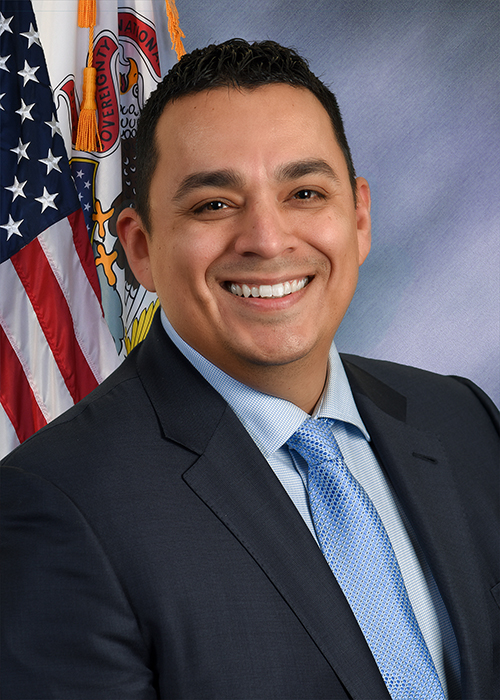
104th Regular Session Introduced by Li Arellano

Establishes a temporary Local Government Fraud Prevention Task Force to study and recommend improvements in fraud prevention, detection, auditing, and oversight for local governmen

Rule 3-9(a) / Re-referred to Assignments
0
WeVote Research Nonpartisan
Bill Summary · SB 3617

Overview

SB 3617, introduced in the Illinois Senate for the 104th General Assembly, establishes the Local Government Fraud Prevention Task Force. The Act creates a temporary, non-permanent body charged with studying and recommending improvements to fraud prevention, detection, and investigation in local government. The Task Force is to operate with administrative support from the Department of Central Management Services (CMS), report its findings by December 31, 2026, and be dissolved upon filing its report. The Act itself repeals on January 1, 2028 and takes effect immediately.

Main purpose and intent

  • Create a dedicated Task Force to modernize and enhance fraud prevention, detection, and investigation at the local government level in Illinois.
  • Provide legislative recommendations to improve transparency, auditing, banking practices, and oversight for local governments.
  • Explore training opportunities for current and new local government officials on financial oversight responsibilities and powers.
  • Strengthen the State’s capacity to detect and prosecute local government fraud through expanded investigative and prosecutorial capabilities.

Key provisions and changes

  • Establishment of the Local Government Fraud Prevention Task Force.
  • Duties (Section 10):
    • Make recommendations to prevent, detect, and investigate local government fraud.
    • Specific focus areas include: 1) Monitoring creation and reporting of local government bank accounts. 2) Expanding the State’s investigative and prosecutorial capabilities regarding local corruption and fraud. 3) Examining the scope and standard practices of government auditing and accounting. 4) Examining existing transparency laws. 5) Exploring training opportunities for local government officials on financial oversight responsibilities and powers.
  • Membership (Section 15):
    • 4 General Assembly members (appointed by the Speaker, House Minority Leader, President of the Senate, and Senate Minority Leader).
    • 4 appointive representatives:
    • Illinois Municipal League representative (appointed by the Governor).
    • Representative of counties (appointed by the Governor).
    • Representative of townships (appointed by the Governor).
    • 2 fraud-expertise professionals:
    • An active certified fraud examiner (appointed by the Governor).
    • A retired certified fraud examiner with Illinois experience (appointed by the Governor).
    • 4 law enforcement and prosecution figures:
    • A representative from the Illinois State Police/other relevant law enforcement (appointed by the Governor).
    • A current or retired prosecutor with experience prosecuting local government fraud (appointed by the Governor).
    • All members serve without compensation.
  • Meetings (Section 20):
    • Initial meeting within 120 days of enactment.
    • Subsequent meetings as called by the co-chairs.
    • At the initial meeting, the Task Force elects co-chairs from among the four General Assembly appointees.
  • Support (Section 25):
    • CMS shall provide administrative support as needed.
  • report and dissolution (Section 30):
    • Report due by December 31, 2026, filed with the Governor and General Assembly.
    • Task Force dissolves upon filing the report.
  • Repeal and effective date (Sections 35 and 99):
    • Act repeals January 1, 2028.
    • Effective date: immediate upon becoming law.

Who would be affected

  • Local governments in Illinois (cities, counties, townships) by potential future reforms stemming from the Task Force’s recommendations.
  • Illinois state agencies, particularly the Department of Central Management Services, which would provide administrative support.
  • Legislators and legislative staff who would review the Task Force’s recommendations and consider implementing follow-up measures.
  • Local government officials and professionals involved in budgeting, auditing, financial oversight, and fraud prevention training (potentially through training recommendations).

Procedural and timeline details

  • Formation: Effective immediately; Task Force established.
  • Appointments: Members appointed by specified state and local authorities; all appointments to be completed promptly after enactment.
  • Initial meeting: Within 120 days of enactment.
  • Reporting deadline: December 31, 2026, with the Task Force filing its report to the Governor and General Assembly.
  • Dissolution: Task Force dissolves upon filing the report (late 2026).
  • Sunset: The Act itself is repealed on January 1, 2028.

Potential impact and considerations

  • Provides a structured, time-bound approach to addressing local government fraud through enhanced oversight and transparency.
  • Could lead to policy changes regarding bank account monitoring, auditing standards, and transparency laws at the local level.
  • The emphasis on training suggests a focus on preventive capacity-building for local officials.
  • Since the Task Force is temporary and non-compensated, effectiveness will depend on member commitment, meeting cadence, and follow-through on recommendations.
  • Any legislative changes resulting from the recommendations would require separate, subsequent action by the General Assembly.

Compiled from official sources — confirm details with the bill’s official record.

Sign in to ask a question.