

WeVote

Bill

Bill

HR 9332

Load Forecasting Enhancement Act

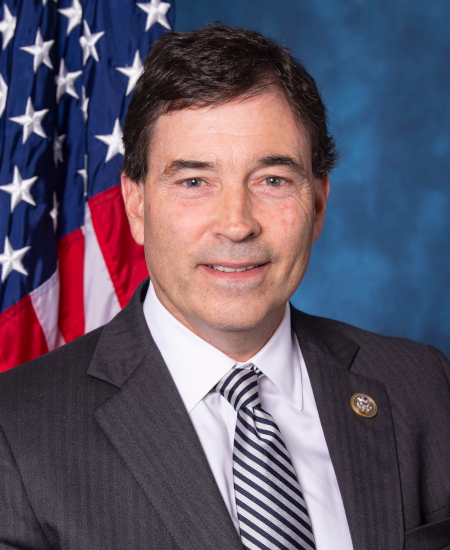
119th Congress Introduced by Troy Balderson and 2 co-sponsors

establishes regional boards to study and standardize electric load forecasting, outputs best practices to FERC and Congress, and embeds those standards into PURPA and state plans.

Subcommittee Consideration and Mark-up Session Held
0
WeVote Research Nonpartisan
Bill Summary · HR 9332

Purpose and Intent

  • HR 9332, the Load Forecasting Enhancement Act, aims to improve electric load forecasting through regional coordination and standardized best practices. The bill would require the Federal Energy Regulatory Commission (FERC) to establish regional joint boards to study load forecasting and to incorporate the resulting best practices into federal policy and state/regulatory actions.

Key Provisions

  • Establish regional joint boards (Sec. 2)

    • FERC must establish regions and create a joint board for each region within 90 days of enactment.
    • Each region must include all states within that region.
    • Board composition: one representative from each state's public utility/regulatory commission in the region, plus one FERC commissioner who serves as chair.
    • Duties: study best practices for electric load forecasting to improve reliability and affordability, including:
    • Effects of load forecasting on affordability and reliability/resilience of service.
    • Data collection, modeling methods, and transparency of forecasting methodologies.
    • Stakeholder engagement, economic development projections affecting load, and best available forecasting technologies and procedures.
    • Evaluation of large-load industrial/commercial facility requests for service and whether such facilities have made financial commitments to utilities.
    • Output: identify best practices and report them to FERC.
  • Report to Congress (Sec. 2(d))

    • Not later than 1 year after enactment, FERC must publish and submit to Congress a report detailing the identified best practices and recommendations for consistent state-wide use by electric utilities.
  • Termination of boards (Sec. 2(e))

    • Each regional joint board terminates the day after FERC submits its report to Congress.
  • PURPA standard on electric load forecasting (Sec. 3)

    • Amends the Public Utility Regulatory Policies Act (PURPA) to require that the procedures used to forecast electric loads incorporate the recommendations from the FERC report produced under this Act.
    • Non-regulated utilities are exempt from the requirement to consider and determine compliance.
    • States’ obligations (Sec. 3(a)(2)) to commence consideration or set hearings on the PURPA standard within 1 year, and complete determination within 2 years, for the standard established by the new paragraph.
    • Conforming amendments clarify references and provide transitional relief for prior State actions.
  • State energy conservation plans (Sec. 4)

    • Amends the Energy Policy and Conservation Act to add a new item requiring programs in state plans to improve the accuracy, oversight, and transparency of electric load forecasting by electric utilities.

Affected Parties and Scope

  • Primary actors:
    • Federal Energy Regulatory Commission (FERC): must establish regional boards, coordinate research, and publish a national report.
    • State commissions and electric utilities: participate in regional boards, supply data, and implement best practices.
  • Affected topics:
    • Electric load forecasting methods, data collection and modeling, transparency, and stakeholder engagement.
    • Affairs surrounding large-load industrial/commercial service requests and their impact on forecasting and planning.
  • Broader impact:
    • Potential improvement in reliability and affordability of electricity through standardized forecasting practices.
    • Increased consistency across states in forecasting methodologies.

Procedural and Timeline Details

  • Enactment timing: Upon passage, FERC must establish regions and joint boards within 90 days.
  • Reporting deadline: FERC must deliver the regional best practices report to Congress within 1 year.
  • Board duration: Each joint board dissolves the day after the final report is submitted.
  • PURPA and state processes: Modifications require state regulatory authorities to begin and complete proceedings related to the new load forecasting standard within 1–2 years.
  • State energy plans: Adds forecasting transparency/oversight requirements to state energy conservation plan obligations.

Summary

HR 9332 creates a structured, regionally focused mechanism for evaluating and standardizing electric load forecasting. By convening regional joint boards (one per region with one representative from each state utility commission and a FERC chair), the bill seeks to identify best practices that enhance reliability and affordability. It directs a comprehensive assessment of data, methods, transparency, and stakeholder engagement, culminating in a one-year report to Congress and recommendations for uniform adoption. It also embeds these forecasting standards into PURPA and expands state planning requirements to improve forecasting accuracy and oversight.

Compiled from official sources — confirm details with the bill’s official record.

Sign in to ask a question.