

WeVote

Bill

Bill

S 4985

Language Access for All Act of 2026

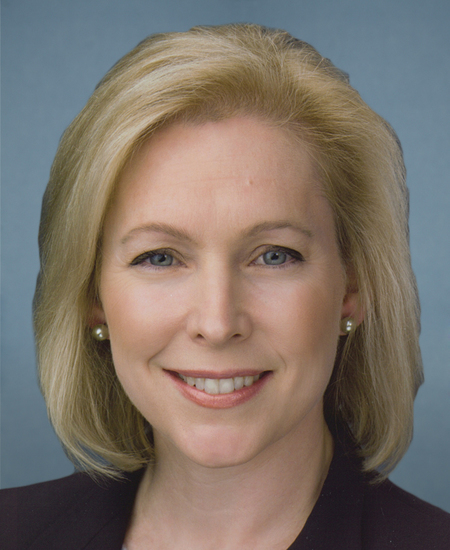
119th Congress Introduced by Kirsten Gillibrand and 2 co-sponsors

Requires federal agencies to ensure meaningful access for LEP individuals within 1 year via multilingual materials, services, and plans with oversight and complaints.

Introduced in Senate
0
WeVote Research Nonpartisan
Bill Summary · S 4985

Overview

  • Bill: S. 4985, Language Access for All Act of 2026
  • Session: 119th Congress
  • Purpose: To improve access to Federal services for individuals with limited English proficiency (LEP) and to establish a comprehensive, standardized framework for language access across federal agencies.
  • Introduced: July 15, 2026 (Senator Kim, with Senators Hirono and Gillibrand as cosponsors)
  • Status: Referred to the Senate Committee on Homeland Security and Governmental Affairs

Main purpose and intent

  • Ensure meaningful access to federally conducted programs and activities for individuals with LEP.
  • Create a federal-wide framework involving language access standards, agency plans, compliance mechanisms, and oversight to reduce language-related barriers in access to government services.
  • Promote transparency, public accountability, and continuous improvement in language access efforts.

Key provisions and changes

A. Meaningful access requirements (Section 2(a))

  • Agencies must ensure LEP individuals can meaningfully access federally conducted programs and activities within 1 year of enactment.
  • Core components:
    • Multilingual document translation:
    • Translate vital documents into languages the agency frequently encounters and the dominant languages spoken in the U.S. per Census data.
    • Multilingual digital support:
    • Add multilingual functionality to digital systems to identify language needs and provide content in other languages.
    • Language services:
    • Provide oral interpretation, sight translation, and telephonic/remote interpretation.
    • Use of bilingual staff:
    • Allow demonstrably bilingual agency staff to provide language assistance when appropriate and cost-efficient.
    • Public notice:
    • Inform the public about language assistance options via multilingual notices, taglines, signage, and equivalents in agency materials and facilities.
    • Training:
    • Train public-facing staff on implementing the agency’s language access plan.

B. Public complaint and tracking system (Section 2(a)(2))

  • Attorney General must establish a publicly accessible system for LEP-related complaints.
  • Agency response: Agencies must respond within 60 days of a complaint.
  • Annual DOJ report: Publish a disaggregated annual report detailing complaints by agency, LEP language, and program/activity impacted.

C. Language Access Plan (Section 2(b))

  • Each agency must establish a Language Access Plan within 1 year.
  • Plan content requirements:
    • Practical, mission-responsive design.
    • Consistency with Language Access Technical Standards.
    • Alignment with existing civil rights guidance (Executive Order 13166, related CFR guidance, and AG memorandum 2022 on language access).
    • Identification of LEP populations likely to seek agency services, including emerging or historically isolated groups.
    • Methods for multilingual communication (oral, visual, community-based).
    • Emergency response provisions ensuring multilingual communication during emergencies.
    • Monitoring, evaluation, and improvement procedures, including performance indicators, data collection on service usage and complaints, internal civil rights reviews, and corrective action processes.
  • Public notice and comment:
    • 60-day Federal Register public comment period for proposed plans.
    • Agency to consider comments and publish a finalized plan in the Federal Register.
  • Submission to Attorney General and Congress:
    • Plans due to DOJ and key congressional committees within 30 days of establishment.
  • Central repository:
    • DOJ to maintain LEP.gov as a public central repository for submitted plans.

D. Language Access Technical Standards (Section 2(c))

  • Standards to be established within 1 year, in consultation with AG, NIST, and community stakeholders.
  • Standards to ensure meaningful access, including:
    • Availability of written content in user-selected languages.
    • System functionality, quality, and timeliness across all languages.
    • User-friendly interfaces accommodating varying literacy/digital skills.
    • Cultural relevance in communications.
  • Undue burden exception:
    • Agencies may request waivers for specific requirements demonstrating undue burden.
    • AG has up to 30 days to grant/deny, with criteria focusing on likelihood of LEP interaction and potential harm from lack of access.
    • Granted waivers expire after 2 years and must be recorded publicly.
  • Public participation:
    • Public input opportunities before establishing or updating standards.
  • Updates:
    • Standards reviewed at least every 3 years.
  • Certification:
    • Agencies must annually certify compliance with Language Access Technical Standards.
  • Scope:
    • Applies to all agency programs, activities, and communications, including in-person, telephonic, paper/digital content, websites, portals, mobile apps, and AI-assisted language services.

E. AI and automated language services (Section 2(d))

  • Limitations on replacing qualified human language professionals:
    • Agencies may not fully replace qualified translators/interpreters with AI/machine translation.
    • Any AI usage must be verified by a qualified human translator/interpreter.
  • Requirements for AI services:
    • Public disclosure of data sources, limitations, confidence levels, and error rates on LEP.gov annually.
    • Compliance with Privacy Act, information and data governance laws, and E-Government Act protections.
    • Non-discrimination: AI tools must be tested to prevent language/cultural bias; mitigation measures must be documented.
    • Validation by qualified translators for cultural and linguistic accuracy; continuous monitoring and user-reported correction mechanisms.
  • Best practices and audits:

    • AG to issue guidance on best practices for AI in language services within 1 year.
    • Inspectors General to audit AI-assisted language systems at least every 2 years, with public summaries of findings by the AG.
  • National standards support:

    • NIST to provide technical validation tools and standardization support for AI-based language services.

F. Interagency coordination (Section 2(e))

  • Interagency Language Access Standards Council chaired by the Attorney General, led by the General Services Administration (GSA) Administrator for coordination on updates and research.
  • Language Access Working Group:
    • Central resource for agency support and community engagement.
    • Members: One Language Access Coordinator from each agency plus the Attorney General.
    • Head: Attorney General.

G. Language Access Coordinator (Section 2(f))

  • Each agency must designate a Language Access Coordinator.
  • Duties:
    • Serve as contact for language access initiatives.
    • Ensure mandatory annual training for managers and staff interacting with LEP individuals, regarding the language access plan and procedures.
    • Identify additional programs for LEP accessibility.
    • Beginning 3 years after enactment, evaluate the plan’s costs and propose refinements.

H. Noncompliance (Section 2(g))

  • Violations count as discrimination under Title VI of the Civil Rights Act.
  • DOJ enforcement authority: investigations, administrative actions, and civil or injunctive remedies.
  • Private enforcement allowed: aggrieved individuals can pursue DOJ-administered actions or civil remedies.

I. Definitions (Section 2(h))

  • Clarifies key terms: agency, individual with LEP, Language Access Coordinator, Language Access Technical Standards, language assistance services, meaningful access, primary language, program or activity, qualified interpreter/translator, vital document, and more.

Who is affected

  • All federal agencies (as defined by 5 U.S.C. 551) and their public-facing operations.
  • LEP individuals relying on federal programs and services.
  • Agency staff, particularly those who interact with the public and coordinate language services.
  • Translators, interpreters, and qualified language professionals.
  • IT and AI vendors or providers supporting agency language services (subject to standards and audits).

Procedural and timeline aspects

  • Implementation timeline:
    • Within 1 year: Agencies must ensure meaningful access and establish Language Access Plans; start building multilingual systems; set up complaint mechanisms.
    • Within 1 year: Establish Language Access Technical Standards; begin public participation processes.
    • Within 3 years: Start evaluating and refining agency language access plans; agencies must begin annual certification.
  • Public engagement:
    • 60-day public comment periods for plans and standards updates.
    • Ongoing interagency coordination and community engagement through councils and working groups.
  • Transparency and accountability:
    • LEP.gov central repository for plans and public reports.
    • Annual DOJ report on LEP complaints and federal agency performance.
    • Regular audits of AI-assisted language services by IGs with public summaries.
  • Enforcement:
    • Title VI-based enforcement pathway via DOJ; potential private actions for aggrieved individuals.

Potential impact

  • Improved access to federal programs for LEP individuals through translated materials, multilingual digital access, and interpreters.
  • Increased transparency of language access efforts and accountability across agencies.
  • Establishment of standardized, auditable language access practices and oversight mechanisms.
  • Emphasis on human-centered approaches, with safeguards around AI usage to prevent discrimination and protect privacy.

Compiled from official sources — confirm details with the bill’s official record.

Sign in to ask a question.