

WeVote

Bill

Bill

SB 777

Labor and Employment - Workforce Development - Hospital Employee Retraining and Placement Program and Workforce Development and Local Workforce Development Boards (Local Workforce Solutions Investment Act)

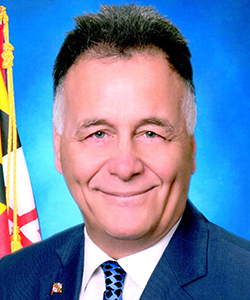
2026 Regular Session Introduced by Johnny Salling

The bill shifts hospital retraining funds to Local Workforce Development Boards to lead retraining, quick response, and apprenticeship programs, expanding LWDB roles.

Passed Enrolled
0
WeVote Research Nonpartisan
Bill Summary · SB 777

Summary of Senate Bill 777 (2026) – Labor and Employment: Workforce Development and Local Workforce Development Boards (Local Workforce Solutions Investment Act)

Jurisdiction: Maryland | Committee: Finance and Budget and Taxation | Sponsor: Senator Salling (Co-sponsor: Senator Salling)

Date introduced: February 6, 2026 | Act take effect: October 1, 2026

1) Purpose and intent

  • To reform and expand Maryland’s workforce development framework by:
    • Reallocating funds from the Hospital Employees Retraining Fund to local workforce development boards (LWDBs) under certain hospital-closure/merger scenarios.
    • Requiring LWDBs to be involved in, and to receive funding for, programs addressing workforce dislocations and retraining.
    • Expanding the role of LWDBs in administering and delivering certain state workforce initiatives, including grant programs tied to construction apprenticeships and direct care workforce development.
    • Strengthening coordination between the Maryland Department of Labor (MD Labor), LWDBs, and related programs during reductions in operations and other workforce disruptions.

2) Key provisions and changes

  • Hospital Employees Retraining Fund (HERF)

    • New trigger: If a hospital closes, loses licensure, downsizes, or merges, MD Labor must allocate money from HERF to the LWDB in the affected county/region.
    • Unexpended HERF funds cannot revert to the General Fund at year-end.
  • Local Workforce Development Boards (LWDBs)

    • LWDBs become the primary conduits for:
    • Receiving HERF allocations to deploy retraining and placement resources for displaced hospital workers.
    • Providing direct deployment support to affected workers when funding is available.
    • LWDBs must be included in certain programs and activities previously led by MD Labor or other state entities.
  • Quick Response Program (Economic Stabilization Act)

    • MD Labor’s capacity to deliver quick response services is clarified and expanded.
    • The bill:
    • Places greater emphasis on LWDBs as the partners for labor market and retraining information.
    • Requires referrals to retraining opportunities to occur through LWDBs (and their connections with private industry councils, service delivery areas, and the community college network).
    • Requires MD Labor to provide quick response funding to the LWDB in the affected county/region when available, for direct worker deployment.
  • Apprenticeship Career Training in Our Neighborhoods (ACTION) Program

    • MD Labor administers the ACTION program in partnership with LWDBs.
    • LWDBs must grant funds to eligible employers that employ at least one apprentice who:
    • Has been employed for at least 7 months,
    • Is in a construction trade,
    • Is in the first year of an apprenticeship registered with the Maryland Apprenticeship and Training Council,
    • Lives in a ZIP code with at least 20% poverty (per Census data).
    • State budget language previously mandated at least $100,000 per year for ACTION to cover grants and admin costs; the bill notes that the FY 2027 budget as introduced does not include funding for ACTION (implying potential policy continuity with existing budgets or need for future appropriation).
  • Direct Care Workforce Innovation Program (DCWIP)

    • DWDAL’s DCWIP guidance continues, but with greater LWDB involvement in grant administration under the program, encouraging coordination with higher education, MD Health, one-stop centers, and organizations serving women, minorities, immigrants, and impoverished communities.
  • Other statutory references

    • The bill revises cross-references and conformance language to reflect LWDBs’ expanded role in:
    • 11-201 (HERF and retraining),
    • 11-304 (Quick Response program guidelines and funding),
    • 11-305 (Reduction in operations notification and LWDB involvement),
    • 11-601 (ACTION program governance and grants),
    • 11-1403 and 11-1405 (DCWIP and consultation with LWDBs)

3) Who and what is affected

  • State agencies

    • Maryland Department of Labor (MD Labor)
    • Division of Workforce Development and Adult Learning (DWDAL)
    • Governor’s Workforce Development Board (GWDB)
    • Maryland Department of Health (as a partner in ACTION considerations)
  • Local entities

    • Local Workforce Development Boards (LWDBs) in each county or region
    • Local employers, particularly those with at least one apprentice or those facing hospital-related dislocations
  • Programs and funds

    • Hospital Employees Retraining Fund (HERF): funds redirected to LWDBs when hospital events trigger dislocations
    • Quick Response Program (economic stabilization): expanded coordination with LWDBs and potential direct funding to LWDBs
    • ACTION Program: administered in partnership with LWDBs; grants to eligible construction employers with apprentices
    • Direct Care Workforce Innovation Program (DCWIP): heightened LWDB involvement in grant consultations and project development

4) Procedural and timeline aspects

  • Effective date: October 1, 2026
  • Implementation timeline
    • MD Labor to allocate HERF funds to LWDBs in affected regions upon hospital triggering events.
    • MD Labor to develop/adjust quick response guidelines in cooperation with LWDBs; distribute guidelines to employers every two years (per existing framework, with amendments to roles).
    • LWDBs to administer ACTION program grants to eligible construction employers (subject to state budget appropriations; the bill acknowledges existing funding constraints).
  • Oversight and regulations
    • MD Labor and the Secretary (and relevant health-related partners) will adopt regulations to implement the above provisions.
    • Coordination with LWDBs is codified across multiple sections to reflect a shift toward LWDB-led administration where possible.

5) Fiscal and policy impact

  • Fiscal notes indicate MD Labor can implement changes with existing resources, with no new statewide revenue projections attached to the bill.
  • Local fiscal effects include increased LWDB revenues and expenditures due to HERF allocations and program administration, supported by the HERF funds.
  • The ACTION program historically required a minimum annual state appropriation; current budget language shows no FY 2027 funding, which may affect program delivery unless future appropriations are made.

This bill advances a more integrated, LWDB-centered approach to workforce development in Maryland, tying hospital workforce retraining to local boards, expanding quick response collaboration, and consolidating apprenticeship and direct care workforce initiatives under LWDB leadership where feasible.

Compiled from official sources — confirm details with the bill’s official record.

Sign in to ask a question.