

WeVote

Bill

Bill

S 5225

K–12 AI Literacy and Readiness Act of 2026

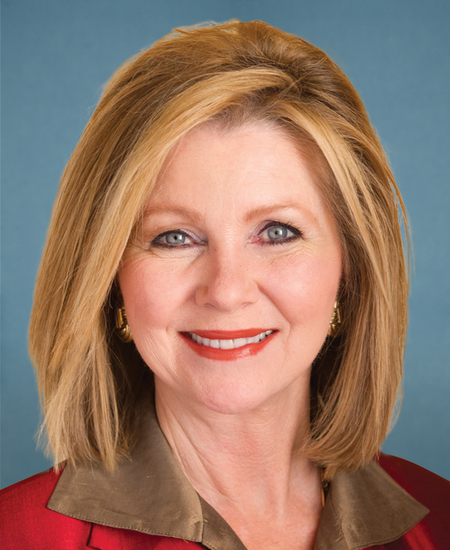
119th Congress Introduced by Marsha Blackburn and 3 co-sponsors

The bill authorizes federal funds under ESEA to be used for AI-related K–12 curriculum, instruction, and professional development to teach and use AI safely, effectively, and respo

Introduced in Senate
0
WeVote Research Nonpartisan
Bill Summary · S 5225

Overview

  • Bill: S.5225, the K–12 AI Literacy and Readiness Act of 2026
  • Purpose: Amend the Elementary and Secondary Education Act (ESEA) of 1965 to explicitly authorize and fund curriculum, professional development, and instruction related to artificial intelligence (AI) in K–12 education, with emphasis on safe, effective, and responsible use.
  • Introduced in the Senate on August 4, 2026; sponsors include Senator Sheehy, with co-sponsors Budd, Tuberville, and Blackburn. Referred to the Senate Committee on Health, Education, Labor, and Pensions.

Main aims and intent

  • Expand permissible uses of federal funds under ESEA to support AI-related education.
  • Ensure teachers, school leaders, and staff receive training and resources to use and teach AI responsibly.
  • Promote student instruction on AI applications and safe practices.

Key provisions and changes

The bill makes targeted amendments to various sections of the ESEA to incorporate AI-related activities as allowable uses of funds at multiple levels:

  • Section 4104(b)(3)(A)(i) – State allowable uses for student instruction
    • Adds: Use of artificial intelligence (as defined by the National AI Initiative Act of 2020) in a manner that is safe, effective, and responsible.
  • Section 4104(b)(3)(C) – State allowable uses for teachers and school leaders
    • Adds new subparagraph (vii) requiring funding to provide teachers, paraprofessionals, school librarians and media personnel, specialized instructional support personnel, and administrators with knowledge and skills to use and teach AI safely, effectively, and responsibly, including through professional development.
    • Clarifies ongoing alignment with the AI definition in the National AI Initiative Act of 2020.
  • Section 4107(a)(3) – Local allowable uses for student instruction
    • Adds subparagraph (J) authorizing instruction on the use of AI (defined as above) in a safe, effective, and responsible manner.
  • Section 4109(a) – Local allowable uses for teachers and school leaders
    • Adds new paragraph (7) enabling provision of professional development to equip teachers, paraprofessionals, librarians and media personnel, specialized instructional support personnel, and administrators with AI knowledge and skills to use and teach AI safely and responsibly.

In all instances, AI is defined per the National AI Initiative Act of 2020 (15 U.S.C. 9401).

Who is affected

  • Students: Gains access to AI-related instruction as part of the curriculum where funds may be used for AI instruction.
  • Teachers and school staff: Eligible for professional development and resources to learn and teach AI safely and effectively.
  • School librarians, media personnel, paraprofessionals, and administrators: Targeted for training and capacity-building in AI usage and instruction.
  • Local Educational Agencies (LEAs) and states: Eligible to use federal funds for AI curriculum development, instruction, and professional development under the amended allowances.

Procedural and timeline aspects

  • Status: Introduced in the Senate; referred to the Committee on Health, Education, Labor, and Pensions (as of the latest action history).
  • Legislative process: As with other ESEA amendments, would require committee consideration, potential floor consideration, and alignment with Senate and House versions for passage and any reconciliation with the President’s signature.
  • No explicit funding amounts, performance metrics, or implementation deadlines are provided in the text provided; the bill focuses on expanding permissible uses rather than creating new mandatory appropriations.

Potential impact (high-level)

  • Facilitates integration of AI literacy and readiness into K–12 education by formalizing AI as an allowable, funded activity.
  • Supports teacher and administrator capacity-building to safely and effectively integrate AI tools and instruction.
  • Aims to prepare students with foundational AI knowledge and digital literacy aligned with current federal AI policy definitions.

If you’d like, I can compare S.5225 to existing ESEA provisions or draft a one-page briefing for policymakers or the public.

Compiled from official sources — confirm details with the bill’s official record.

Sign in to ask a question.