Bill Summary — SB 1305 (mixed-content document)
Note: The materials provided for “SB 1305” include provisions from multiple states (primarily Illinois, Arizona and Hawaii) that share the same bill number but are separate measures. Below are concise, state‑specific summaries so readers can understand the distinct purposes, major provisions, affected parties, and procedural status for each component included in the packet.
Illinois — Juvenile Court Act / “Reunite Child–Family”
Primary purpose
- Replace the statutory standard “reasonable efforts” with a higher standard called “active efforts” in the Juvenile Court Act of 1987 for cases involving reunification by the Department of Children and Family Services (DCFS).
Key provisions
- “Active efforts” is defined as efforts that are affirmative, active, thorough, timely and intended to maintain or reunite a child with the child’s family; it is expressly a higher standard than “reasonable efforts.”
- “Active efforts” includes the Title IV‑E “reasonable efforts” required under federal law.
- If a court finds DCFS failed to make active efforts as provided in the service plan, the court’s order must specify each party to whom the failure applies and the applicable time period.
- Amends the Adoption Act: a person shall not be deemed unfit solely because DCFS (or its assignee) failed to make active efforts during any period of the case.
- A parent may not be found unfit for failure to make reasonable efforts/progress for any 9‑month period during which the court found DCFS failed to make active efforts.
Who is affected
- DCFS case practice and caseworkers (higher documentation and service standard).
- Parents and children in abuse/neglect and termination/adoption proceedings (potentially affects findings of unfitness and timelines for termination of parental rights).
- Courts (must make more specific findings when DCFS failures are identified).
Procedural status (from packet)
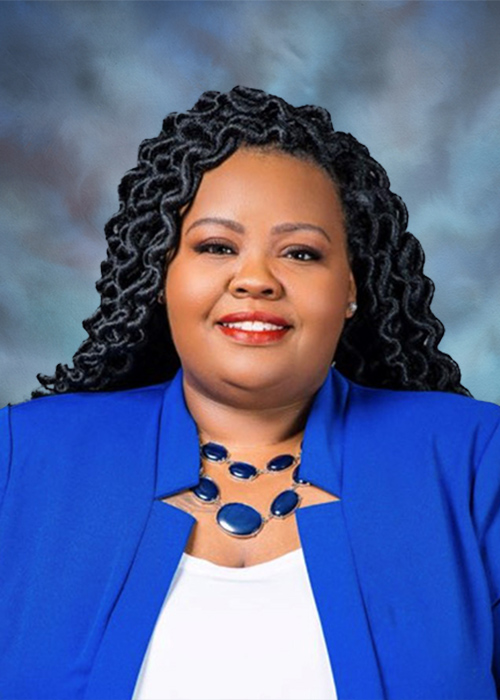
- Introduced Jan 28, 2025 by Sen. Lakesia Collins; referred to Assignments and Judiciary (check Illinois legislative tracker for current status).
Potential impact
- Raises the statutory duty of child‑welfare agencies in reunification cases; may affect termination/adoption timelines and require expanded services/documentation to meet the “active efforts” standard. May influence federal Title IV‑E eligibility assessments and litigation over agency compliance.
Arizona — Temporary Assistance / “Child‑Only Case”
Primary purpose
- Amend Arizona’s welfare definitions (ARS §46‑101 and §46‑292) to modify and clarify the definition of a “child only case” and related assistance unit language.
Key provisions
- Expands/clarifies “child only case” to include:
a) children in legal custody of DCS, tribal court or tribal child‑welfare agency placed with an unrelated adult or nonparent relative who is not receiving cash assistance; and
b) children living with a nonparent relative responsible for meeting the child’s basic needs who is not receiving cash assistance.
- Confirms “assistance unit” may include a needy family or a child‑only case for determining cash assistance.
Who is affected
- Children in foster care placements and children living with nonparent relatives (kin caregivers) who are not themselves cash assistance recipients.
- Department of Economic Security eligibility staff and local kinship caregivers seeking TANF/temporary assistance for child‑only cases.
Procedural status (from packet)
- Introduced Feb 14, 2025 by Sen. Shope; listed as “Rule 3‑9(a) / Re‑referred to Assignments” (check Arizona tracker for updates).
Potential impact
- Could broaden eligibility or clarify pathway for cash assistance on behalf of children placed with nonparent relatives, increasing access for kin caregivers not on assistance.
Hawaii — Pesticide Use Revolving Fund Ceiling Increase
Primary purpose
- Increase the statutory cap on the Pesticide Use Revolving Fund from $1,000,000 to $3,000,000.
Key provisions
- Raises the maximum year‑end fund balance that may remain in the revolving fund; unobligated unexpended amounts exceeding $3,000,000 will lapse to the state general fund.
- Effective July 1, 2025 (per the text).
Who is affected
- Hawaii Department of Agriculture programs funded by the revolving fund (pesticide registration/licensing, certification, compliance monitoring, training, pest eradication, environmental studies).
Procedural status (from packet)
- Legislative actions in the packet show committee referrals, readings, and votes across a timeline — check Hawaii’s legislative site for final disposition.
Potential impact
- Provides the department greater fund balance flexibility to support technical projects, environmental studies, compliance/enforcement and biosecurity work.
If you want, I can:
- Pull the current live status (committee votes, amendments, final disposition) for any one of these state bills.
- Draft a one‑page explainer focused solely on the Illinois “active efforts” changes with citations and likely legal/operational implications.