

WeVote

Bill

Bill

HR 7903

Justice for Hind Rajab Act

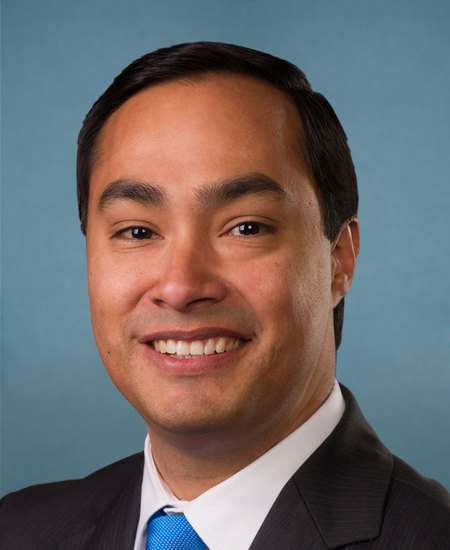
119th Congress Introduced by Joaquin Castro and 7 co-sponsors

The bill creates a framework to investigate, potentially prosecute, and seek compensation for war-crime allegations tied to the January 29 Gaza attack, including U.S.-linked weapon

Introduced in House
0
WeVote Research Nonpartisan
Bill Summary · HR 7903

Summary of HR 7903 — Justice for Hind Rajab Act

Purpose and intent

  • Establishes a framework to seek accountability for the January 29, 2024 attack in Gaza City, in which 5-year-old Hind Rajab and two Palestine Red Crescent paramedics were killed by Israeli Defense Forces (IDF).
  • Requires a formal assessment by the executive branch and potentially referral for prosecution in U.S. courts if the attack is found to involve U.S.-origin weapons, U.S. trained personnel, or U.S. citizens.
  • Seeks to document and report on the incident, and to promote possible compensation for victims’ families.

Key provisions and changes

  • Short title

    • Referred to as the “Justice for Hind Rajab Act.”
  • Findings (Section 2)

    • Notes U.S. military aid to Israel exceeding $21.7 billion since Oct. 7, 2023.
    • Cites alleged involvement of up to 10,000 U.S. nationals activated for the Gaza war.
    • Documents civilian and health worker casualties in Gaza (children and health workers).
    • Identifies Hind Rajab’s death and the deaths of two paramedics, with forensic findings pointing to IDF weaponry and proximity of U.S.-manufactured tank parts.
    • References public statements and investigations by various parties.
  • Prosecution of war crimes (Section 3)

    • Secretary of State must certify, within 30 days of enactment, if credible information suggests the January 29 attacks could be war crimes and involve U.S.-origin weapons, U.S. citizens, or U.S.-trained IDF personnel; if so, refer to the Attorney General for prosecution within 15 days of certification.
    • Attorney General must certify within 30 days that the DOJ will review the referral and initiate a war-crimes investigation and possible prosecution under 18 U.S.C. § 2441, as jurisdiction allows.
  • Report on the Gaza City attacks (Section 4)

    • Requires a comprehensive report to appropriate congressional committees within 45 days of enactment.
    • Contents include: identities of IDF units involved, operational motives, Israeli investigations or accountability actions, whether U.S. citizens were involved, whether U.S.-provided weapons were used, and whether IDF personnel involved were U.S.-trained.
    • Details on State Department inquiries to Israel, intelligence community information requests, leverage of Leahy Laws, and DOJ reporting related to war-crime investigations.
  • Compensation (Section 5)

    • Expresses that Israel should compensate Hind Rajab’s family and the paramedics’ families.
    • If U.S. citizens serving in the IDF were involved, the State Department should also consider compensation.
  • Policy and objectives (Section 6)

    • Establishes broad U.S. policy to collect and preserve evidence of possible war crimes for use in domestic and international courts.
    • Emphasizes continued efforts to pursue accountability for war crimes and to uphold international humanitarian law (e.g., Fourth Geneva Convention, protection of wounded and medical personnel).
    • Calls on the Attorney General to investigate credible allegations of war crimes by U.S. citizens in Gaza, using DOJ authorities.
  • Definitions (Section 7)

    • Clarifies terms: appropriate congressional committees, atrocities, and war crimes per relevant statutes.
    • Specifies scope for which committees, bodies, and authorities are implicated.

Who/what would be affected

  • Executive branch agencies: State Department, Department of Justice, Department of Defense (through reporting and investigations), and the Office of the Secretary of War (as defined for related reporting).
  • Members of Congress and congressional committees (Foreign Relations, Judiciary, Armed Services, and Intelligence, in both Senate and House).
  • Potentially individuals (IDF personnel) and entities (U.S.-origin weapons, U.S.-trained personnel) implicated in the January 29, 2024 attack.
  • Families of Hind Rajab and the two Red Crescent paramedics for potential compensation.
  • U.S. entities involved in security assistance to Israel and related procurement chains (indirectly, through findings about weapons provenance and training).

Procedural and timeline aspects

  • Certification by Secretary of State: within 30 days of enactment, if credible information indicates possible war crimes linked to U.S. weapons/citizens/trainings; Secretary must refer to the Attorney General within 15 days after certification.
  • DOJ action: Attorney General must certify within 30 days that it will review the referral and pursue investigation/prosecution under 18 U.S.C. § 2441 as appropriate.
  • Report to Congress: Secretary of State (with AG and Secretary of War input) must deliver a detailed report within 45 days of enactment.
  • Definitions and scope: The bill defines key terms and designates “appropriate congressional committees” for oversight.
  • Legislative reference: The bill follows a framework combining diplomacy, accountability, and potential criminal proceedings, with a focus on war-crimes provisions and Leahy Law considerations.

Notable themes

  • Emphasis on accountability for civilian and medical personnel casualties in Gaza.
  • Linkage between U.S. weapons/assistance and alleged war crimes.
  • Use of existing U.S. legal tools (e.g., War Crimes Act, Leahy Laws) and international humanitarian law to guide investigations and potential prosecutions.
  • Provision for compensation to victims’ families if U.S. involvement is established.

Compiled from official sources — confirm details with the bill’s official record.

Sign in to ask a question.