

WeVote

Bill

Bill

HF 2371

Informed consent for sensitive examinations performed on an anesthetized or unconscious patient required, and criminal penalty provided.

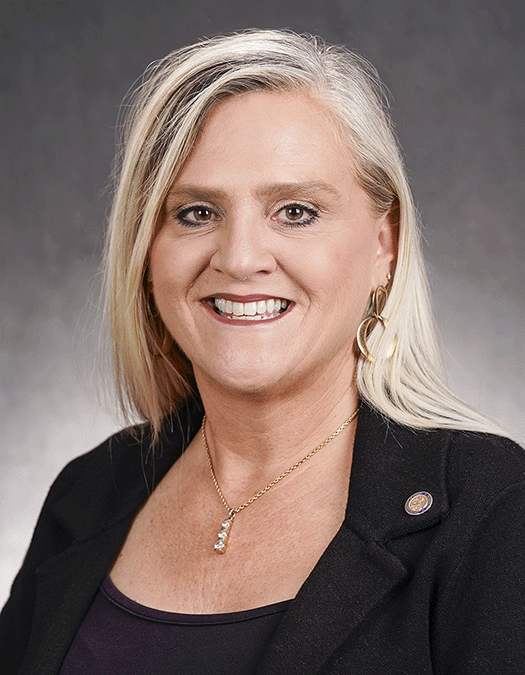
2025-2026 Regular Session Introduced by Pam Altendorf and 11 co-sponsors

Imposes that sensitive examinations performed on unconscious or anesthetized patients require informed consent, with criminal penalties for violations.

Committee report, to adopt and re-refer to Public Safety Finance and Policy
0
WeVote Research Nonpartisan
Bill Summary · HF 2371

Summary of HF 2371 (2025-2026) – Minnesota

What the bill aims to do

HF 2371 would require informed consent for certain sensitive examinations when performed on an anesthetized or unconscious patient. It also establishes a criminal penalty related to enforcing or violating the informed consent requirement. The bill is framed to protect patients who are unconscious or under anesthesia from undergoing sensitive examinations without explicit consent.

Key provisions and changes

  • Informed consent requirement for sensitive examinations: The bill mandates that when a patient is unconscious or under anesthesia, certain “sensitive examinations” cannot be performed without providing informed consent.
    • The exact scope of what constitutes a “sensitive examination” is not defined in the provided summary, but typically such terms cover exams involving intimate or private areas or procedures that could be disconcerting or invasive in nature.
  • Consent process standards: The bill would establish standards for obtaining informed consent, including what information must be disclosed and how consent must be documented. Likely elements include:
    • Explanation of the procedure, risks, benefits, and alternatives
    • Assurance that the patient’s autonomy is respected even when they are unconscious
    • Documentation requirements in the patient’s medical record
  • Criminal penalty: The bill provides a criminal penalty for failing to obtain informed consent for sensitive examinations performed on an anesthetized or unconscious patient. This creates potential criminal liability for providers who conduct such procedures without proper consent.
  • Scope and applicability: The measure targets medical professionals performing examinations in contexts where the patient cannot consent due to anesthesia or unconsciousness. It may apply across healthcare settings (hospitals, clinics, surgical centers), and could cover physicians, nurses, and other licensed practitioners involved in the examination.
  • Relationship to existing law: The proposal would complement existing patient autonomy and informed consent statutes by adding heightened protections for sensitive examinations in incapacitated patients. It may also intersect with patient-rights, medical ethics, and professional licensing standards.

Who is affected

  • Patients: Specifically those who are unconscious or under anesthesia. The bill aims to protect their rights to be informed about and consent to sensitive examinations.
  • Healthcare providers and facilities: Physicians, surgeons, nurses, and other practitioners who perform sensitive examinations; facilities would need to ensure procedures and record-keeping meet the new consent requirements.
  • Licensing and enforcement bodies: Agencies responsible for medical licensing and disciplinary actions would administer compliance and prosecute violations under the new criminal penalty framework.

Procedural/timeline aspects

  • Introduction and first reading: March 17, 2025, referral to Health Finance and Policy.
  • Committee refinement: March 24, 2025, authors expanded; committee action included “to adopt and re-refer to Public Safety Finance and Policy.”
  • Current status: As of the latest available action history, the bill has progressed through committee references and is moving to a policy or cross-cutting committee for further consideration. Actual dates for passage or final floor action are not provided here.

Practical implications

  • Hospitals and clinics would need to review and update consent practices for unconscious patients undergoing sensitive exams.
  • Documentation systems would need to capture consent status, which could involve forms, electronic medical record prompts, and verification processes.
  • Potential criminal liability underscores the seriousness of obtaining proper consent and may influence consent workflows, staff training, and patient advocacy efforts.

If you’d like, I can draft a one-page plain-language explainer or create a checklist for healthcare providers to assess current consent practices in light of HF 2371.

Compiled from official sources — confirm details with the bill’s official record.

Sign in to ask a question.