

WeVote

Bill

Bill

A 9291

Increases the mandatory retirement age of members of the uniformed force of the fire department of the city of New York from sixty-five to sixty-seven

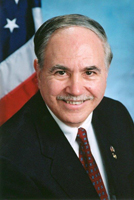
2025 Regular Session Introduced by William Colton and 3 co-sponsors

The bill raises the FDNY uniformed personnel retirement age from 65 to 67, with limited extensions and specific exceptions.

REFERRED TO GOVERNMENTAL EMPLOYEES
0
WeVote Research Nonpartisan
Bill Summary · A 9291

Summary: A.9291 (2025-2026) — Increases Mandatory Retirement Age for NYPD Fire Department Uniformed Force

jurisdiction: New York

  • Bill number and session: A.9291, 2025-2026 Regular Session
  • Introduced by: Assembly Member Colton
  • Co-sponsors: Angelo Santabarbara, Alicia Hyndman, Dana Levenberg
  • Committee: Governmental Employees
  • Effective date: Immediate

Purpose and intent

  • The bill raises the mandatory retirement age for members of the uniformed force of the Fire Department of the City of New York (FDNY) from 65 to 67 years.
  • It aligns retirement age provisions with a broader public-sector retirement policy adjustment, while preserving certain transitional or exception-based provisions.

Key provisions and changes

  1. Section 15-121 (termination of service due to superannuation)

    • Change: A member of the FDNY uniformed force shall be retired and placed on pension rolls upon reaching age 67 (previously 65), with two notable exceptions:
      • Medical officers and others expressly exempted remain governed by existing rules.
      • If a member is not yet eligible for retirement at age 67, they may continue to serve until eligible for retirement, subject to age and service requirements.
    • Special transitional rule for those aged 65-67:
      • Members who have not completed 35 years of creditable city service by age 67 may continue to serve until they reach 35 years of service, provided they are capable of performing duty as deemed acceptable by the commissioner. This does not apply to chaplains or medical officers.
    • Longevity cap:
      • A member may be continued in service for up to two-year increments beyond mandatory retirement, upon approval by the commissioner and then by the relevant board (Board of Estimate). Such extensions may be granted successively, but no member may be continued beyond age 75.
  2. Section 13-145.1 (transfer of membership) – Section j amendments

    • Any member electing transfer of membership is subject to mandatory retirement at age 67 (instead of 65) under the code’s subdivision a, consistent with the main retirement age increase.
  3. Effective date

    • The act takes effect immediately upon enactment.

Who is affected

  • FDNY uniformed personnel (firefighters, officers, and other uniformed members not designated as medical officers or chaplains) who would otherwise retire at age 65 will now be subject to retirement at age 67.
  • Members who have not yet reached 35 years of creditable city service by age 67 may continue serving to reach 35 years, if capable and approved.
  • Transfers of membership and related eligibility are adjusted to reflect the higher retirement age for non-medical officers.

Procedural and timeline considerations

  • Proposed change is retroactive in terms of applied retirement age, effective immediately upon enactment.
  • The bill allows up to two-year extension periods beyond mandatory retirement, subject to commissioner and Board of Estimate approval, with a hard cap of age 75.
  • The bill does not alter retirement rules for chaplains or medical officers, who remain governed by other provisions.

Practical implications

  • Potential impact on department staffing, pension planning, and retirement pipelines as cohorts that would have retired at 65 may now retire later at 67.
  • May affect eligibility calculations for service credits and pension accrual, particularly for members near the new thresholds.
  • Administrative adjustments required for payroll, pension processing, and retirement eligibility records to reflect the new mandatory retirement age.

If you’d like, I can provide a side-by-side comparison of current law vs. the proposed changes, or a brief impact assessment for personnel and budget considerations.

Compiled from official sources — confirm details with the bill’s official record.

Sign in to ask a question.