

WeVote

Bill

Bill

HR 8877

Improving Self-Sufficiency of Families in HUD-Subsidized Housing Act

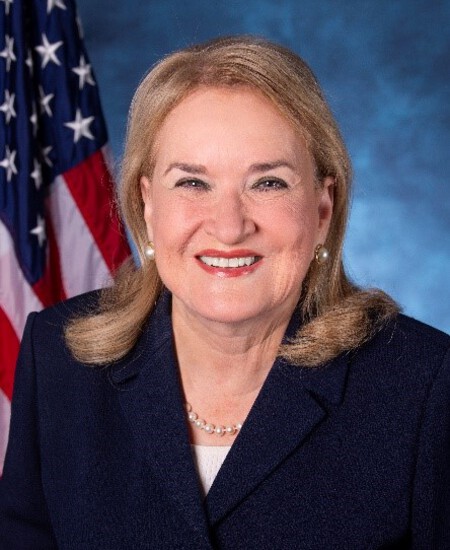
119th Congress Introduced by Sylvia Garcia

The bill directs HUD to study how MTW-participating public housing agencies’ work requirements affect residents and agency operations, with findings to Congress.

Introduced in House
0
WeVote Research Nonpartisan
Bill Summary · HR 8877

Overview

  • Bill: HR 8877 — Improving Self-Sufficiency of Families in HUD-Subsidized Housing Act
  • Session: 119th Congress
  • Introduced in the House: May 19, 2026 by Rep. Sylvia Garcia (D-TX)
  • Status: Referred to the House Committee on Financial Services
  • Purpose: Direct the Secretary of Housing and Urban Development (HUD) to conduct a study on the implementation of work requirements by public housing agencies (PHAs) that participated in the Moving to Work (MTW) demonstration, and report findings to Congress.

Purpose and intent

  • The bill aims to assess how work requirements implemented by certain PHAs affect residents and program operations.
  • The focus is on PHAs that, as part of MTW demonstration proposals submitted under the 1996 MTW authority, identified work requirements as an innovative approach.

Key provisions

  • Study Mandate (Section 2(a)):
    • HUD must conduct a study on the implementation of work requirements by MTW-participating PHAs described in subsection (a)(4).
    • Scope includes short-, medium-, and long-term benefits and challenges for:
    • Public housing agencies implementing the requirements
    • Program participants subject to the requirements
    • Areas analyzed include effects on:
    • Homelessness rates
    • Poverty rates
    • Asset building
    • Earnings growth
    • Job attainment and retention
    • Administrative capacity of PHAs
    • The study must include both quantitative and qualitative evidence, including interviews with:
    • Program participants
    • Participant residents’ councils
  • Reporting Timeline (Section 2(a)(3)):
    • HUD must submit an initial findings report to the Senate Banking, Housing, and Urban Affairs Committee and the House Financial Services Committee no later than 1 year after enactment.
  • Public Housing Agencies Covered (Section 2(a)(4)):
    • Agencies described are those that, in MTW demonstration applications under the 1996 act, proposed workforce requirements as an innovative plan.
  • Determination to Proceed (Section 2(b)):
    • HUD may pursue the study if:
    • A sufficient number of MTW-participating PHAs exist to allow rigorous evaluation of the impact.
    • The study would not negatively affect low-income families receiving assistance from these PHAs.

Who is affected

  • Primary: Public housing agencies (PHAs) that participated in the MTW demonstration and proposed work requirements.
  • Secondary: Residents and program participants under those MTWs, including their resident councils, who would be subject to the work requirements or affected by changes in administration and support services.

Procedural and timeline details

  • Trigger for study: Availability of a sufficient sample of MTW-participating PHAs and assurance that the study would not adversely impact low-income residents.
  • Reporting: An initial findings report due within 12 months of enactment to two congressional committees.
  • Nature of findings: Both qualitative (e.g., interviews with participants and resident councils) and quantitative data on employment, income, asset building, homelessness, and agency operations.

Potential impact and considerations

  • The bill would generate an evidence base on whether work requirements in MTW PHAs help or hinder self-sufficiency, work participation, and housing stability.
  • Policymakers and HUD would gain insight into:
    • Effectiveness of work requirements in improving earnings and job retention
    • Administrative feasibility and burden on PHAs
    • Impacts on homelessness and poverty among residents
  • The measure is prospective and does not mandate new work requirements; it requires a study to inform future decisions.

Compiled from official sources — confirm details with the bill’s official record.

Sign in to ask a question.