

WeVote

Bill

Bill

HR 8907

IMPACT to Save Moms Act

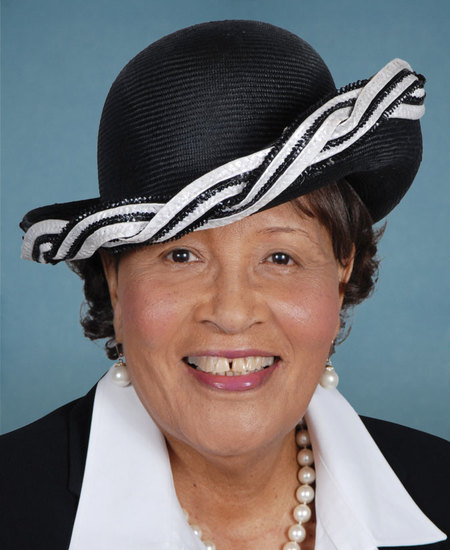
119th Congress Introduced by Alma Adams and 68 co-sponsors

The bill would test new, team-based maternity care payment models within Medicaid/CHIP (2027–2031) to improve outcomes, address disparities, and include nonclinical supports like d

Introduced in House
0
WeVote Research Nonpartisan
Bill Summary · HR 8907

Summary of HR 8907 (119th Congress) – IMPACT to Save Moms Act

Purpose and intent

  • The bill, titled the Innovative Maternal Payment and Coverage To Save Moms Act (IMPACT to Save Moms Act), directs the Secretary of Health and Human Services, via the Administrator of the Centers for Medicare & Medicaid Services (CMS), to establish a Perinatal Care Alternative Payment Model Demonstration Project.
  • The Demonstration Project is designed to test various alternative payment models for maternity care provided to pregnant and postpartum individuals enrolled in State plans under Title XIX (Medicaid) and State Child Health Plans under Title XXI.

Key provisions and changes

  • Demonstration Project scope and duration
    • Applicable for fiscal years 2027 through 2031.
    • States may participate by testing different payment models under their Medicaid and CHIP programs for maternity care.
  • Coordination and stakeholder engagement
    • CMS must coordinate with a broad set of stakeholders, including:
    • State Medicaid programs
    • Maternity care providers and professional organizations
    • Patient advocacy groups, with emphasis on demographics experiencing higher maternal mortality, severe maternal morbidity, disparities, or adverse perinatal outcomes
    • Community-based organizations, perinatal health workers, health insurers
    • Hospitals, health systems, midwifery practices, birth centers, federally qualified health centers, rural health clinics
    • Researchers and policy experts in maternity care payment models
    • Other relevant stakeholders, especially from groups with elevated risks
  • Eligibility and participation
    • States must submit an application to participate in the Demonstration Project. The bill outlines the process and requirements likely to be set by the Secretary for eligibility.
  • Design considerations for payment models
    • The Demonstration Project should consider alternative payment models that:
    • Aim to improve maternal health outcomes for high-risk groups
    • Use risk stratification by pregnancy risk level and adjust payments accordingly
    • Establish evidence-based quality metrics
    • Consider nonhospital birth settings (e.g., freestanding birth centers)
    • Incorporate social determinants of maternal health
    • Promote diverse maternity care teams, including physicians, advanced practice clinicians, doulas, lactation consultants, nutrition professionals, and perinatal health workers
    • Ensure teams reflect racial, ethnic, professional diversity; include training on implicit bias and racism
    • Include perinatal health workers as part of the care team
    • Address maternal mental health and substance use disorders
  • Definitions (key terms)
    • Alternative Payment Model: Follows the definition in 42 U.S.C. 1395l(z)(3)(C)
    • Maternal Mortality: Death during pregnancy or within one year after pregnancy related to pregnancy/childbirth, including deaths from suicide, overdose, or mental health/substance use disorders linked to pregnancy
    • Maternity Care Provider: Includes physicians, physician assistants, midwives (meeting international standards), advanced practice nurses, doulas reimbursable under certain State plans, or lactation consultants
    • Perinatal Health Worker: Nonclinical roles supporting maternal/perinatal health (e.g., doulas, community health workers, nutritionists, social workers, patient navigators, interpreters, etc.)
    • Perinatal: From pregnancy onset through 1 year postpartum
    • Severe Maternal Morbidity: Pregnancy/childbirth-related health conditions with significant health consequences
    • Social Determinants of Maternal Health: Nonclinical factors affecting maternal health outcomes
  • Evaluation and reporting
    • The Secretary must evaluate the Demonstration Project on:
    • Maternal health outcomes with data disaggregated by race, ethnicity, language, SES, geography, insurance type, etc.
    • State maternity care spending
    • Patient experience (qualitative and quantitative, where practicable)
    • Other relevant measures determined by the Secretary
    • A report to Congress is due within one year after the completion or termination date of the Demonstration Project, including:
    • Evaluation results
    • A recommendation on whether to continue and potentially expand the Demonstration Project on a national basis
  • Authorized funding
    • The bill authorizes appropriations as necessary to carry out the Demonstration Project (no specific dollar amount set in the text provided).

Who would be affected

  • Medicaid and CHIP participating States, including their:
    • State Medicaid agencies and program administrators
    • Maternity care providers (physicians, midwives, nurse practitioners, doulas, lactation consultants, etc.)
    • Hospitals, birth centers, rural clinics, federally qualified health centers
    • Maternity care professional organizations and patient advocacy groups
    • Perinatal health workers and community-based organizations
    • Insurers and health plans operating within Medicaid/CHIP frameworks
  • Pregnant and postpartum individuals enrolled in State Medicaid or CHIP plans, particularly those in demographic groups with higher maternal risk

Timeline and procedural aspects

  • Introduction date: May 19, 2026
  • Referral: House Committee on Energy and Commerce
  • Authorized demonstration period: Fiscal years 2027–2031
  • Evaluation and reporting: Evaluation during/after the demonstration; final Congress-report due within one year after completion/termination
  • Implementation requires State plan alignment under Title XIX/XXI and coordination with CMS and a broad stakeholder network

Bottom-line impact

  • The bill seeks to test and refine alternative payment models for maternity care to improve outcomes, address disparities, and incorporate a broader, team-based perinatal care approach that includes nonclinical support (e.g., doulas, community health workers) and nontraditional birth settings. It emphasizes data-driven evaluation, equity, and potential national expansion based on demonstrated results.

Compiled from official sources — confirm details with the bill’s official record.

Sign in to ask a question.