
WeVote

Bill

Bill

HR 8980

Holiday Pay Act

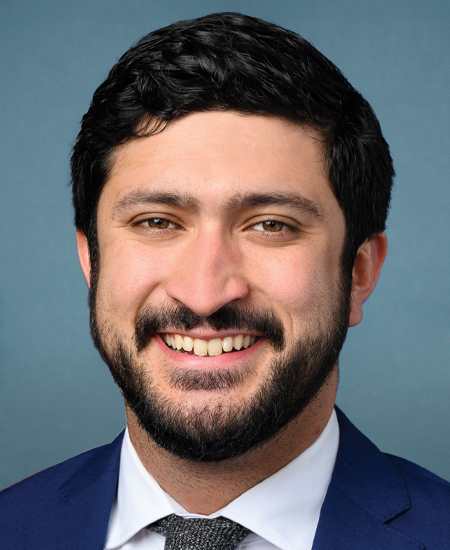
119th Congress Introduced by Greg Casar and 1 co-sponsor

Requires employers to pay at least 1.5 times regular pay for work on legal public holidays under FLSA.

Introduced in House
0
WeVote Research Nonpartisan
Bill Summary · HR 8980

Overview

  • Bill: HR 8980, the Holiday Pay Act
  • Session: 119th Congress
  • Purpose: Amend the Fair Labor Standards Act of 1938 (FLSA) to require employers to pay employees at least 1.5 times their regular rate for work performed on legal public holidays, and to adjust related enforcement, exemptions, and conforming provisions accordingly.
  • Introduced: May 21, 2026 by Rep. M. C. Bride (with Rep. Greg Casar as a co-sponsor) and Rep. Sarah McBride as a co-sponsor
  • Status: Referred to the House Committee on Education and the Workforce

What the bill would do (key provisions)

  1. Definition

    • Introduces “Legal public holiday” as any public holiday specified in section 6103(a) of Title 5 U.S.C.
  2. Mandatory holiday pay rate

    • Employers may not employ an employee who works on a legal public holiday without paying at least 1.5 times the employee’s regular rate for that work, as determined under FLSA section 7(e).
  3. Administrative adjustments to avoid double counting

    • Excludes holiday work pay from the calculation of overtime compensation when determining overtime under section 7(h)(2). In other words, holiday pay under section 8 does not count toward overtime calculations for those hours.
  4. Expands exemptions and coverage

    • Adds “legal public holiday compensation” to the list of compensations considered under exemptions (Section 13(f)) and broadens the list of compensations in related exemptions.
    • Aligns related sections to reference 6, 7, or 8 (instead of just 6 and 7) where applicable.
  5. Enforcement and prohibited acts

    • Updates enforcement provisions to reference the new section 8 alongside sections 6 and 7.
    • Expands language in liability and enforcement sections to cover unpaid legal public holiday compensation.
  6. Remedies and notices

    • Amends various parts of the FLSA to include unpaid legal public holiday compensation in the sets of wages that may be claimed as due, alongside unpaid minimum wages and unpaid overtime.
  7. Relation to other laws

    • Clarifies that the new holiday pay rule does not excuse compliance with higher rates required by federal, state, or municipal laws or orders; it also does not prohibit other jurisdictions from imposing higher holiday compensation.
  8. Statutory changes and conforming edits

    • Repeals or reworks certain provisions (e.g., repeal of section 10) and adds the new reference to section 8 across multiple subsections to ensure consistency.
    • Adjusts the Portal-to-Portal Act’s statute of limitations language to explicitly include unpaid legal public holiday compensation.

Who would be affected

  • Employers covered by the FLSA who have employees in commerce or engaged in goods production, who work on legal public holidays.
  • Employees who perform work on legal public holidays would be entitled to at least 1.5x their regular rate for those hours.
  • Employers’ payroll practices and overtime calculations would be adjusted to separate or exclude holiday pay from standard overtime determinations, per the bill’s rule.

Key dates and timeline

  • The bill has been introduced and referred to the House Committee on Education and Workforce.
  • Specific implementation timelines (effective dates, phase-in, or compliance deadlines) are not detailed in the text provided; the bill would typically require further committee action and potential floor votes before any effective date.

Potential impact and considerations

  • Wage impact: For employees working on legal public holidays, earnings would increase due to the 1.5x holiday premium.
  • Compliance burden: Employers would need to update payroll systems to track holiday work separately and ensure correct premium payments.
  • Enforcement: Expanded enforcement provisions would augment potential remedies for unpaid holiday compensation, alongside existing minimum wage and overtime protections.
  • Consistency with other laws: The measure clarifies that higher rates imposed by other laws or municipal orders remain unaffected, preserving existing rights if they exceed the bill’s minimum.

If you’d like, I can provide a side-by-side comparison with current FLSA provisions to highlight what changes would occur post-enactment.

Compiled from official sources — confirm details with the bill’s official record.

Sign in to ask a question.
