

WeVote

Bill

Bill

SB 1928

HIGHER ED-MISCONDUCT SURVEY

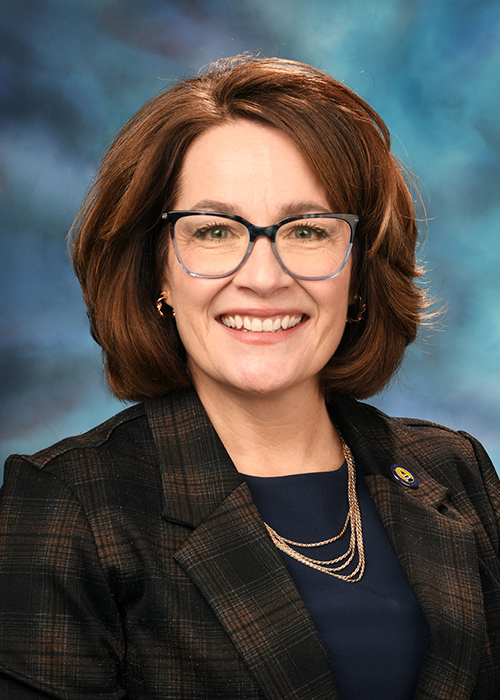
104th Regular Session Introduced by Meg Loughran Cappel and 7 co-sponsors

Illinois standardizes campus sexual misconduct climate surveys statewide with a common base survey and biennial reporting, while broadening the Task Force and removing fines.

0
WeVote Research Nonpartisan
Bill Summary · SB 1928

SB 1928 — Summary (Public Act 104-0127)

Status: Enacted (Public Act 104-0127). Governor approved August 1, 2025. Effective January 1, 2026. Companion: HB 1495.

Purpose

Amends Section 35 of the Preventing Sexual Violence in Higher Education Act to standardize and govern campus sexual misconduct climate surveys — including creation and scope of a statewide Task Force, a common “base survey,” procedures for campus additions, reporting requirements, and dispute review. The law also adjusts Task Force membership and duties and removes a civil fine previously tied to noncompliance.

Key provisions

  • Survey frequency and content

    • Each higher education institution must conduct a sexual misconduct climate survey that includes a state-provided “base survey.”
    • The base survey is a common set of questions recommended by the Task Force and approved by the Executive Director of the Board of Higher Education and the Executive Director of the Illinois Community College Board.
    • Boards will provide the base survey to institutions every 2 years.
    • Institutions may append campus-specific questions only if they are trauma-informed and do not require disclosure of personally identifying information.
  • Timing and reporting

    • Institutions must compile a summary of survey results (including aggregated results for each base question) and submit it to the appropriate state board and publish it on the institution’s website.
    • The summary must be compiled within 120 days after survey completion, but no later than one year after the board issued the last base survey.
  • Definitions

    • “Student” includes enrolled persons at public or private degree‑granting postsecondary institutions (full-time, part-time, extension students, and those on leave or withdrawn due to being a victim).
    • “Trauma informed” is defined to include understanding neurobiological impacts of trauma, societal myths/stereotypes, and perpetrator behavior.
  • Task Force on Campus Sexual Misconduct Climate Surveys

    • Creates/updates membership: includes the Executive Director of the Illinois Community College Board, members appointed by the Board of Higher Education, and members appointed by the Illinois Community College Board; modifies or removes certain gubernatorial appointments.
    • Adds representation from students, institutional research experts (2- and 4-year), student services officers, survivor representatives, legal-service organizations, domestic violence and LGBTQ+ advocates, immigrant-rights advocates, survey researchers, and data analytics/statistics experts.
    • Task Force duties are focused on recommending updates/revisions to the base survey (rather than administering or implementing survey results).
    • Members serve 2-year terms; administrative support provided by the Board of Higher Education. Members serve without compensation but may be reimbursed for expenses as funds allow.
  • Complaint review

    • The Board of Higher Education and the Illinois Community College Board, with the Attorney General as needed, will review complaints from students who believe survey questions are traumatizing.
  • Enforcement change

    • The act removes the civil fine that had been imposed on institutions for failing to carry out survey provisions (per bill synopsis).

Who is affected

  • All Illinois public and private degree‑granting higher education institutions and community colleges.
  • All students enrolled at those institutions (as defined in the Act).
  • State boards (Board of Higher Education; Illinois Community College Board), the Task Force, and advocacy and survivor organizations participating on the Task Force.

Potential impacts

  • Standardizes data collection across institutions through a common base survey, enabling more comparable statewide metrics.
  • Allows institutions to add trauma‑informed local questions while protecting student privacy.
  • Changes Task Force composition to broaden institutional and survivor representation and refocus its role on designing/revising the base survey.
  • Biennial distribution of the base survey (and alignment of institutional schedules) may reduce administrative frequency vs. previous requirements.
  • Removal of the civil fine reduces a statutory enforcement mechanism; oversight will rely more on reporting, publication, and board review of complaints.

Timeline / Procedural notes

  • Introduced: February–March 2025; passed both houses May 2025.
  • Governor approved: August 1, 2025.
  • Effective date: January 1, 2026.

Compiled from official sources — confirm details with the bill’s official record.

Sign in to ask a question.