

WeVote

Bill

Bill

S 5326

Health Care Fraud Prevention and Enforcement Act

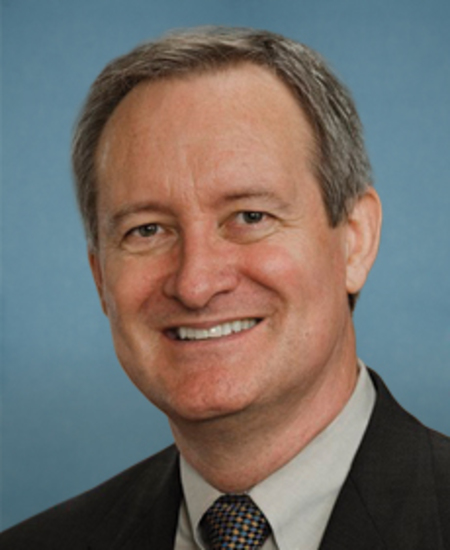
119th Congress Introduced by Mike Crapo and 3 co-sponsors

The bill increases funding and expands authorities for health care fraud enforcement across HHS OIG, DOJ, and FBI to detect, deter, and prosecute fraud in Medicare, Medicaid, and C

Introduced in Senate
1
WeVote Research Nonpartisan
Bill Summary · S 5326

Overview

S.5326, the Health Care Fraud Prevention and Enforcement Act, introduced in the 119th Congress, aims to strengthen program integrity oversight of the Health Care Fraud and Abuse Control Program under Title XVIII (Medicare) of the Social Security Act. The bill proposes increased and indexed funding, expanded investigative authority for the Office of the Inspector General (OIG) of the Department of Health and Human Services (HHS) and related agencies, clarified definitions and authorities, enhanced reporting, and a GAO/Comptroller General study with a follow-up report.

Purpose and intent

  • Improve and safeguard the integrity of federal health care programs by boosting funding for enforcement and oversight.
  • Expand and clarify the authorities of responsible agencies (HHS OIG, Department of Justice (DOJ), Federal Bureau of Investigation (FBI)) to detect, deter, and prosecute health care fraud and abuse.
  • Ensure more comprehensive data sharing and coordination across programs (including Medicare, Medicaid, and the State Children’s Health Insurance Program (SCHIP/Title XXI)).
  • Enhance accountability through annual reporting, timely GAO/comptroller analyses, and predictable funding increases indexed to the Consumer Price Index (CPI).

Key provisions and changes

A. Additional funding for core entities (sections 1817(k)(3)(A)(i)-(ii); 1817(k)(3)(B); 1817(k)(3)(C))

  • Department of Health and Human Services and Justice
    • Adds new funding levels for fiscal years 2027–2029 and links post-2029 funding to CPI growth.
    • Example allocations:
    • FY2027: $490,000,000
    • FY2028: $520,000,000
    • FY2029: $570,000,000
    • After 2029, funding increases by CPI annually.
  • Federal Bureau of Investigation (FBI)
    • Adds new funding for FY2027–FY2029:
    • FY2027: $230,000,000
    • FY2028: $250,000,000
    • FY2029: $270,000,000
    • Post-2029 funding adjusts annually with CPI.

B. Expanded investigative authority for HHS OIG (section 1817(k)(3)(A)(ii))

  • Updates heading and scope to explicitly cover the Office of the Inspector General of HHS.
  • Broadens reference to include authority over Title XIX (Medicaid) and programs established under Title I of the ACA amendments administered by the Secretary.

C. Clarification of health plan definitions (section 1128C)

  • Expands the definition to explicitly cover both public and private health plans and programs, ensuring coverage of a wider array of plans in fraud enforcement activities.

D. Authority across DOJ and HHS activities (section 1817(k)(3))

  • Adds a rule of construction confirming that funds in this paragraph may be used to detect/prosecute health care fraud and to communicate with the public about fraud.

E. Annual reporting requirements (section 1817(k)(5))

  • Renumbers and reorganizes annual reporting requirements.
  • Establishes a hard deadline: not later than April 1 for the annual report, with a new catch-up mechanism if delayed.
  • Requires joint notice to Congress if reports are delayed, specifying committees to be notified (Senate Finance and Budget; House Ways and Means, Budget, and Energy and Commerce).

F. Funding allocation process adjustments (section 1817(k)(3)(A)(i))

  • Replaces a certification requirement with an agreement regarding funding allocation decisions.

G. Inclusion of CHIP/SCHIP in data matching (section 1893(g))

  • Extends Medicare-Medicaid Data Match Program to include SCHIP (Title XXI) from 2027 onward.
  • Aligns data matching across Title XXI, XIX, and XI programs for more comprehensive fraud detection.

H. GAO study on program performance (Section 3)

  • Directs the Comptroller General to study:
    • Use and effectiveness of HHS/DOJ appropriations for the Health Care Fraud and Abuse Control Program.
    • Performance metrics and outputs used to deter fraud.
    • How funds are obligated and the timeliness and usefulness of outputs.
    • Overall impact on reducing health care fraud and abuse.
  • Requires a final report within 16 months of enactment, with recommendations for further action.

Who/what would be affected

  • Federal health care programs and beneficiaries, notably Medicare, Medicaid, and SCHIP.
  • HHS agencies (including the OIG) and the Department of Justice responsible for health care fraud enforcement.
  • FBI and related investigative efforts under the Health Care Fraud and Abuse Control framework.
  • Program administrators and state policymakers involved in data matching and program integrity activities.
  • Congress, through enhanced reporting and oversight requirements.

Procedural and timeline notes

  • Introduced August 6, 2026; referred to the Senate Finance Committee.
  • Funding levels for 2027–2029 are specified, with CPI-based increases beginning after 2029.
  • Annual report deadline shifted to April 1; delays require notice to Congress.
  • Mandates a GAO study with a final report due within 16 months after enactment, plus embedded recommendations.
  • The bill would affect several sections of the Social Security Act (titles II, XIX, XI, XXI, and XVIII references) and related data-match authorities.

Potential impact

  • Strengthened deterrence and enforcement against health care fraud through higher and indexed funding.
  • Expanded investigative authority may enhance detection of fraud across public and private health plans.
  • Greater alignment and transparency in reporting and performance evaluation could improve accountability and program effectiveness.
  • Expanded data sharing across CHIP, Medicaid, and Medicare programs could improve fraud prevention efforts.

Compiled from official sources — confirm details with the bill’s official record.

Sign in to ask a question.