

WeVote

Bill

Bill

SB 1280

Health care coverage for mental health and substance use disorders.

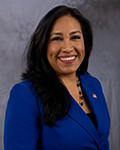
2025-2026 Regular Session Introduced by Suzette Valladares

SB 1280 requires health plans and disability insurers to cover medically necessary MHSUD treatment, including out-of-network care with defined reimbursements and protections for en

April 22 set for first hearing canceled at the request of author.
0
WeVote Research Nonpartisan
Bill Summary · SB 1280

Summary of SB 1280 (2025-2026) – California Health Care Coverage for Mental Health and Substance Use Disorders

1) Purpose and Intent

  • SB 1280, introduced by Senator Valladares, seeks to strengthen and harmonize health care coverage for medically necessary treatment of mental health and substance use disorders (MHSUD) under both health care service plans (Knox-Keene Act) and disability insurance policies.
  • The bill builds on existing requirements that MHSUD treatment be covered on the same terms as other medical conditions and clarifies payment and communication processes for out-of-network services when in-network options are not available within geographic and timely access standards.

2) Key Provisions and Changes

A. Out-of-Network Reimbursement and Cost Sharing (Health Care Service Plans)

  • When in-network MHSUD services are not available within required geographic/timely access standards, the plan must arrange medically necessary out-of-network services.
  • Reimbursement to noncontracting individual health professionals for out-of-network MHSUD services shall be:
    • The greater of the average contracted rate or 125% of Medicare reimbursement for similar services in the region.
  • Enrollees may owe no more than the in-network cost-sharing amount for these out-of-network services.
  • Noncontracting providers must not bill enrollees more than the in-network cost-sharing amount.
  • Communications from providers to enrollees prior to disclosing cost sharing must clearly state that the message is not a bill and that the enrollee should not pay until the plan provides the applicable cost sharing.
  • At payment, the plan must inform both the enrollee and the noncontracting provider of the in-network cost-sharing amount.
  • Any payment by the plan to the provider, plus the enrollee’s cost sharing, constitutes full payment for the service.
  • Violations may constitute a crime, creating a state-mandated local program.

B. Out-of-Network Provisions Parallel for Disability Insurance

  • The same out-of-network reimbursement and cost-sharing framework applies to disability insurers (Insurance Code 10144.5), mirroring the Health Plan provisions:
    • Reimbursement to noncontracting providers as the greater of average contracted rate or 125% of Medicare.
    • Enrollee protections and notification requirements identical to those in the health plan provisions.
    • Civil penalties for violations by the insurer (up to $5,000 per violation; $10,000 if willful).

C. Definitions and Standards

  • “Mental health and substance use disorders” include conditions listed in the ICD-10 mental and behavioral disorders or DSM equivalents, with protections for terminology changes over time.
  • “Medically necessary treatment” must meet generally accepted standards, be clinically appropriate, and not be primarily for the economic benefit of the plan or provider.
  • Plans may not limit benefits to short-term or acute treatment and must apply medical necessity determinations consistent with related statutes.
  • The bill defines who qualifies as a “health care provider” (licensed practitioners and certain licensed/credentialed mental health professionals).

D. Plan Operations and Compliance

  • Plans may provide MHSUD coverage via separate specialized plans or mental health plans, as long as service areas and emergencies are covered.
  • Plans may use usual cost-management tools (case management, utilization review, prior authorization, etc.) consistent with existing law.
  • Plans and insurers may not contractually undermine these requirements.
  • The act includes standard protections around public entitlement program considerations and continuity of care.

3) Who Is Affected

  • California health care service plans (e.g., HMOs, PPOs) and their enrollees.
  • Disability insurers and their insureds/policyholders.
  • Noncontracting individual health professionals who provide MHSUD services.
  • Mental health and substance use disorder providers, including licensed psychologists, social workers, marriage and family therapists, and other recognized providers listed in the bill.

4) Procedural and Timeline Aspects

  • Effective date and application: Applies to plans and policies issued, amended, or renewed on or after January 1, 2021 (consistent with the existing baseline years referenced in the text).
  • Legislative steps reflected in the bill history:
    • Referred to committees, amended, and scheduled for hearings in 2026.
    • Action history shows progression through the Senate Health Committee and related processes.
  • Fiscal impact: The bill notes no required state reimbursement for local agencies specifically under Section 6 of Article XIII B; it creates penalties for violations but does not itself authorize new state funding beyond existing mechanisms.
  • Enforcement: Violations could incur civil penalties for insurers; for health plans, there are criminal penalties for willful violations.

If you’d like, I can provide a side-by-side comparison with current law (Health and Safety Code sections 1374.72 and 10144.5) to highlight every numerical change and the exact cross-references.

Compiled from official sources — confirm details with the bill’s official record.

Sign in to ask a question.