

WeVote

Bill

Bill

HR 9024

Harry Lew and Danny Chen Military Justice Reform Act

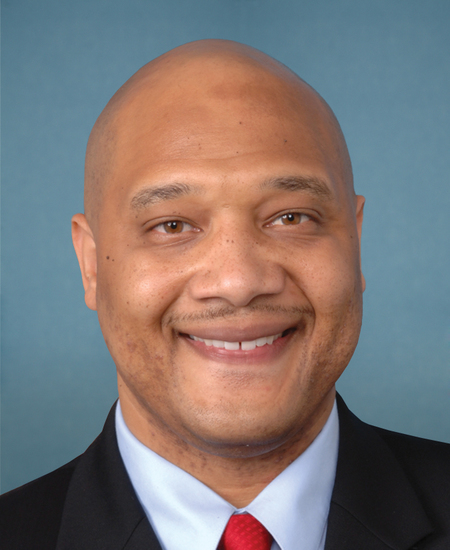
119th Congress Introduced by André Carson and 18 co-sponsors

The bill directs a DoD analysis on creating a separate hazing offense in the UCMJ and to propose a definition of hazing, with a report to Congress within 180 days.

Introduced in House
0
WeVote Research Nonpartisan
Bill Summary · HR 9024

Summary of HR 9024 (119th Congress) — Harry Lew and Danny Chen Military Justice Reform Act

Purpose and overall aim

  • The bill directs the Secretary of Defense to assess whether the U.S. military should establish a separate punitive article on hazing within the Uniform Code of Military Justice (UCMJ), and to develop recommendations on modifying Chapter 47 of Title 10, U.S. Code accordingly.
  • The assessment is to be conducted in coordination with the Joint Service Committee on Military Justice, and to include a proposed definition of “hazing” for the purposes of the new article.

Key provisions

  • Analysis directive (Section 2(a)):

    • The Secretary of Defense, working with the Joint Service Committee on Military Justice, must analyze the feasibility and advisability of creating a distinct punitive UCMJ article specifically addressing hazing.
    • The analysis should consider modifying Chapter 47 of Title 10 (the UCMJ) to establish this separate hazing article.
    • The Secretary must also develop a proposed definition of “hazing” for use in the new article.
  • Reporting requirement (Section 2(b)):

    • A report detailing the results of the analysis must be submitted to the Senate Armed Services Committee and the House Armed Services Committee.
    • The report is due no later than 180 days after enactment.

Who/what would be affected

  • The proposal directly affects:
    • The Department of Defense (DoD) leadership, particularly the Secretary of Defense.
    • The U.S. military justice system, specifically potential changes to the UCMJ (Chapter 47) to include a separate hazing offense.
    • Members of the Armed Forces, by potentially creating new legal standards and disciplinary consequences for hazing.

Procedural and timeline aspects

  • Introduction and referral:
    • Introduced in the House on May 26, 2026, and referred to the House Committee on Armed Services.
  • Timeframe:
    • The required analysis and final recommendation must be completed and reported within 180 days of enactment.
  • Legislative status:
    • As of the current text, the bill is a proposed measure aiming to study and possibly reform hazing-related punishment under military law.

Notable contextual elements

  • Legislative intent is to address hazing within the military by potentially creating a standalone hazing offense, signaling concern for hazing as a serious conduct issue in uniformed services.
  • The bill does not itself amend the UCMJ or add punitive provisions immediately; it requires an analysis and a subsequent report with recommendations.

Potential impact (if enacted following the study)

  • If the analysis supports it, Congress could consider enacting a separate hazing punitive article within the UCMJ.
  • A defined, standalone hazing offense could standardize hazing prohibitions and penalties across all branches, potentially improving consistency in discipline and enforcement.
  • The impact would depend on the defined scope, penalties, definitions, and the operational process for enforcement and appeals under military justice.

Compiled from official sources — confirm details with the bill’s official record.

Sign in to ask a question.