

WeVote

Bill

Bill

SB 833

Hampton, City of; operation of the district health department.

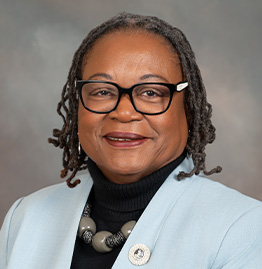
2025 Regular Session Introduced by Mamie Locke

DHS must study state support for private treatment foster care homes and, starting FY2026, begin reallocating funds to provide child care stipends comparable to public homes.

Left in Health and Human Services
0
WeVote Research Nonpartisan
Bill Summary · SB 833

SB 833 — Department of Human Services — Study on Private Treatment Foster Care Homes (Chapter 528, 2025)

Status: Approved by the Governor (Chapter 528), approved May 13, 2025; effective June 1, 2025; sunsets May 31, 2026.
Primary sponsor / origin: Maryland (Sen. Charles). Companion bills: HB 1057, HB 1207.

Purpose / Intent

The act directs the Maryland Department of Human Services (DHS) to study the kinds of State support — financial or otherwise — that would be appropriate and beneficial to private providers of treatment foster care homes, and to make recommendations to the General Assembly. It also establishes a short-term budgetary framework to begin providing child care stipends to eligible private treatment foster care homes and requires DHS to adopt procedures for awarding those stipends.

Key provisions

  • Study and report

    • DHS must conduct a study identifying types of State support for private treatment foster care homes (as defined in Family Law §5–525.2).
    • Report deadline: on or before December 1, 2025, to the General Assembly (per State Government §2–1257).
  • Child care stipends and budget actions

    • Beginning in Fiscal Year (FY) 2026 and each FY thereafter (subject to the act’s provisions), the Secretary of Human Services shall review and reallocate a portion of DHS’s annual budget to provide child care stipends to private treatment foster care homes to cover child care expenses, “in a similar manner as public treatment foster care homes.”
    • For FY 2027 and each FY thereafter the Secretary’s budget proposal to the Department of Budget and Management must request funding at least equal to the amount reallocated for private homes in the current fiscal year.
  • Allocation criteria and procedures

    • Reallocation decisions must be based on the funding needs of each local department that works with private treatment foster care homes and families of placed children.
    • The Secretary must adopt application procedures and award criteria for stipends.
    • Application procedures must require private treatment foster care homes to:
    • Meet or exceed the same equity and cultural competency standards as public treatment foster care homes; and
    • Not discriminate on the basis of race, color, religion, sex, age, national origin, marital status, sexual orientation, gender identity, or disability when providing services or placements.

Who is affected

  • Primary: private treatment foster care home providers in Maryland.
  • Secondary: local departments that place children in treatment foster care homes, families and children served, and DHS (administration and budgeting).
  • Fiscal: DHS is directed to reallocate existing budget funds; the Department of Legislative Services fiscal note states DHS can complete the required study with existing resources and that revenues are not affected.

Timeline and sunset

  • Effective date: June 1, 2025.
  • DHS report due: December 1, 2025.
  • The act remains in effect for one year and automatically expires May 31, 2026 (Chapter 528).

Potential impact / notes

  • Establishes an initial pathway for private treatment foster care homes to receive child care stipends comparable to public providers, subject to DHS review and available budgetary resources.
  • Requires DHS to incorporate the initial reallocation into subsequent budget requests starting FY 2027.
  • Because the act sunsets after one year, long‑term effects depend on subsequent legislative or budgetary action following DHS’s December 2025 report.

Compiled from official sources — confirm details with the bill’s official record.

Sign in to ask a question.