

WeVote

Bill

Bill

HR 9129

GUARD Act of 2026

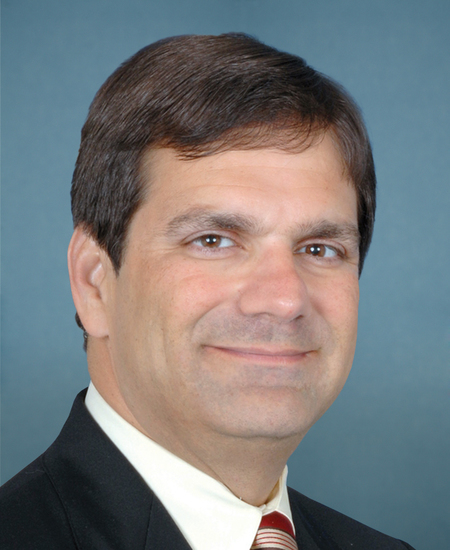
119th Congress Introduced by Gus Bilirakis and 5 co-sponsors

The GUARD Act would identify and restrict humanoid or quadruped robotics communications equipment or services from covered foreign entities by placing them on a federal covered lis

Introduced in House
0
WeVote Research Nonpartisan
Bill Summary · HR 9129

Summary of HR 9129 (GUARD Act of 2026)

Purpose and intent

  • The bill, titled the Guarding the U.S. against Adversarial Robotics Dominance Act of 2026 (GUARD Act of 2026), directs the identification and potential restriction of certain humanoid and quadruped robotics communications equipment or services.
  • Its core aim is to assess whether covered robotics communications equipment or services pose unacceptable national security risks and, if so, place them on a federal “covered list” to restrict their use or import.

Key provisions and changes

  • You must evaluate covered robotics equipment or services within a defined timeframe:

    • An appropriate national security agency must determine within 1 year of enactment whether such equipment or services pose an unacceptable risk to U.S. national security or to the safety of U.S. persons.
    • If the agency determines no unacceptable risk within that year, it must report the determination (in unclassified form, with possible classified annex) to Congress.
    • If a determination is not made within 1 year, the Federal Communications Commission (FCC) must add all covered robotics equipment or services to the covered list.
  • Actions when a risk determination is made:

    • If an agency determines an unacceptable risk, the FCC must, within 30 days, place the affected equipment or services on the covered list.
    • The agency must also submit a report to the appropriate congressional committees detailing the determination (unclassified with possible classified annex).
  • Actions when a determination is that there is no unacceptable risk:

    • The agency must submit a report to Congress within 30 days outlining the determination.
    • Within 180 days, other national security agencies must review the determination and file their own reports to Congress (unclassified with possible classified annex).
  • Definitions key to implementation:

    • Appropriate congressional committees: Senate Armed Services; Senate Homeland Security and Governmental Affairs; Senate Commerce; Senate Science, Space, and Transportation; Senate Select Committee on Intelligence; and the corresponding House committees (Armed Services, Homeland Security, Energy and Commerce, and the Permanent Select Committee on Intelligence).
    • Appropriate national security agency: Defined by reference to the Secure and Trusted Communications Networks Act of 2019.
    • Covered list: The FCC’s list of covered communications equipment or services established under the same 2019 act.
    • Covered robotics communications equipment or service: Any humanoid or quadruped robot, or software designed to control such a robot, that is produced or provided by a covered foreign entity.
    • Covered foreign entity: An entity connected to a country of concern (headquartered, organized in, or under influence/control of such a country), including affiliates, joint ventures, or entities sharing technology or licensing deals with such an entity.
    • Humanoid or quadruped robot: A mechanical device with 2 or 4 articulated limbs capable of autonomous or semi-autonomous operation, with an external device that can control it.
  • Important scope notes:

    • The bill explicitly states that it does not apply to countries that are not “countries of concern,” including NATO allies and Major Non-NATO Allies.
    • The term “covered robotics communications equipment or services” is tied to the broader definition of communications equipment or services under existing law (Secure and Trusted Communications Networks Act).

Who is affected

  • Entities producing or providing humanoid or quadruped robotics communications equipment or services that are linked to a country of concern (as defined in the bill) and thus considered “covered foreign entities.”
  • The FCC, which would administer the covered list and implement restrictions if equipment/services are deemed a national security risk.
  • National security agencies, which would perform risk determinations and report findings to Congress.
  • Congressional committees listed in the definitions, which would receive unclassified (and potentially classified annex) reports.

Procedural and timeline aspects

  • Immediate referral to the House Committee on Energy and Commerce upon introduction.
  • Timeline milestones:
    • Within 1 year: National security agency determines risk level regarding covered robotics equipment/services.
    • If risk is found: FCC places equipment/services on the covered list within 30 days; agency reports to Congress.
    • If no risk determined within 1 year: FCC automatically adds all covered robotics equipment/services to the covered list.
    • If a determination of no risk is made: Agencies report within 30 days; subsequent agencies complete reviews within 180 days and report to Congress.
  • Reports to Congress may be unclassified or include a classified annex.

Notes for readers

  • The bill focuses on risk assessment and potential regulatory restrictions tied to specific foreign-linked robotics communications technologies.
  • It builds on existing frameworks for trusted networks, applying similar screening to humanoid and quadruped robotics that rely on communications equipment or services.
  • The act emphasizes transparency to Congress through structured reporting while permitting classified information where necessary.

Compiled from official sources — confirm details with the bill’s official record.

Sign in to ask a question.