

WeVote

Bill

Bill

S 4629

Government Bailout Prevention Act

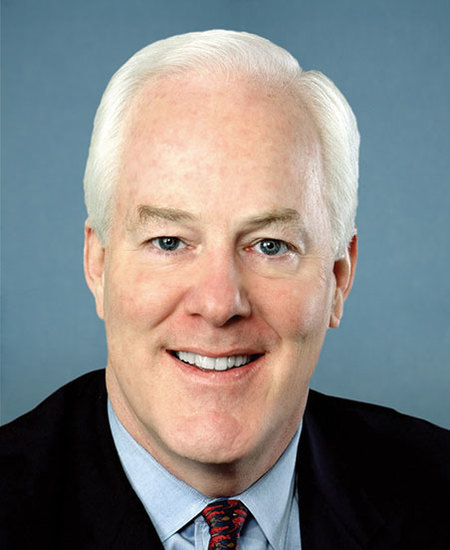
119th Congress Introduced by John Cornyn and 6 co-sponsors

Prohibits federal funds, guarantees, or aid from Treasury, Federal Reserve, or related agencies to states or localities that have defaulted, are bankrupt, or are at risk of default

Introduced in Senate
0
WeVote Research Nonpartisan
Bill Summary · S 4629

Overview

  • Bill: S.4629 (119th Congress, 2nd Session)
  • Title: Government Bailout Prevention Act
  • Purpose: Prohibit the use of Federal funds and Federal Reserve or Treasury-backed assistance to state and local governments (including school districts) that have defaulted, are in bankruptcy, or are at risk of defaulting on their obligations. Establishes a general ban on federal financial support to avoid “bailouts” of problem fiscally distressed governments, with limited disaster-response exception.
  • Introduced: May 21, 2026 by Senator Todd Young (and Senator Tom Cotton as co-sponsor); referred to the Senate Committee on Banking, Housing, and Urban Affairs.

Key Provisions

  • Section 2 – Definitions

    • Defines “State” to include any of the several States, the District of Columbia, and U.S. territories/possessions.
  • Section 3 – Prohibition on Federal Financial Support

    • (a) General prohibition: No Federal funds may be used to purchase or guarantee obligations, issue lines of credit, or provide direct/indirect grants to any State, municipal, local, county government, or school district that, on or after January 1, 2026:
    • Has filed for bankruptcy,
    • Has defaulted on its obligations,
    • Is at risk of defaulting, or
    • Is likely to default absent federal assistance.
    • (b) Limits on borrowed funds: The Secretary of the Treasury may not use general fund revenues or funds borrowed under Title 31 to support the aforementioned entities if they have defaulted, filed for bankruptcy, or are at risk/likely to default after Jan 1, 2026.
    • (c) Federal Reserve prohibition: No Federal Reserve Bank may provide funds, loan guarantees, credits, or purchase bonds of the affected states or local entities, or otherwise assist such entities, under any Federal Reserve authority.
    • (d) Disaster exception: Subsections (a)–(c) do not apply to Federal assistance provided in response to a declared disaster.
  • Section 4 – Applicability

    • (1) The prohibition covers debt restructuring or any related activity.
    • (2) The prohibition does not apply to:
    • (A) Discretionary appropriations or direct spending, as defined in section 250(c) of the Balanced Budget and Emergency Deficit Control Act of 1985.
    • (B) Any grant awarded by the United States to the State, municipal, local, county government, or school district.

Who/What Is Affected

  • State governments, municipal governments, local governments, county governments, and school districts nationwide.
  • Federal entities involved in financial support or guarantees, including:
    • U.S. Treasury (funds or guarantees)
    • Federal Reserve Banks (lending, guarantees, or bond purchases)
    • Federal agencies that provide financial assistance
  • Applies to entities that have defaulted, filed for bankruptcy, or are at risk/likely to default after January 1, 2026.

Timelines and Procedural Aspects

  • Effective date for prohibitions begins on January 1, 2026.
  • Applies to assistance or guarantees provided after that date; supports only in the form of prohibitions on future assistance.
  • Disaster exception provides a carve-out for federal aid responding to declared disasters.
  • Distinguishes between prohibited financial support and allowed forms of aid:
    • Discretionary appropriations/direct spending and certain grants remain permissible.
    • Debt restructuring activities are within the scope of the prohibition.

Potential Impacts and Considerations

  • Insulates federal treasury and Federal Reserve from being viewed as bailout providers to fiscally distressed governments.
  • Could alter states’ and localities’ debt management strategies by increasing the consequences of distress if federal backing is unavailable.
  • May influence credit markets and the perceived risk of municipal bonds from governments deemed at risk of default.
  • The disaster exception ensures emergency responses remain funded during declared catastrophes, preserving federal disaster-response capacity.

Note: This summary reflects the bill’s text and stated intent as introduced. If enacted, implementing regulations and agency interpretations would shape operational details and practical effects.

Compiled from official sources — confirm details with the bill’s official record.

Sign in to ask a question.