

Summary of H.R. 7007 — Governing for the People Act (119th Congress, 2026)
Note: This is a high-level, nonpartisan overview of the bill’s stated purposes, key provisions, affected parties, and notable timelines.
1) Purpose and intent
- Title: Governing for the People Act
- Main aim: Establish a broad set of policy changes across several areas of federal law and government operations with the stated goal of “governing on behalf of the American people.” The bill touches tax incentives, veterans' benefits enforcement, natural disaster recovery, AI literacy, health coverage, emergency management, and House operations, among other topics.
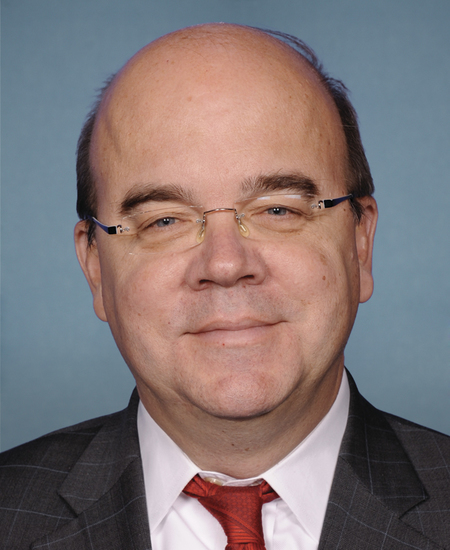
- Introduced by: Representative M. Governen (as listed); co-sponsor: Jim McGovern
- Referral: The bill would be considered by multiple committees spanning tax, transportation, judiciary, agriculture, natural resources, science and technology, education, small business, energy and commerce, foreign affairs, intelligence, armed services, oversight, veterans’ affairs, financial services, house administration, homeland security, rules, ethics, and the budget/appropriations.
2) Key provisions and changes
A. Title I — Film and Television Production Tax Provisions (Internal Revenue Code)
- Extension: Extends Section 181(g) production tax credit eligibility through December 31, 2030 (was 2025).
- Dollar-imitation increases:
- General cap (181(a)(2)(A)) increases the per-production qualified cost exclusion to up to $30 million.
- Higher caps in certain areas (181(a)(2)(B)) raised to $40 million (from $30 million) for qualifying productions in designated areas.
- Inflation adjustment: Adds a new subparagraph (C) to index these dollar amounts for inflation after 2026, using the cost-of-living adjustment (COLA) framework and rounding to the nearest $1,000.
- Effective date: Applies to productions commencing after enactment.
B. Title II — Fraud Prevention for Veterans’ Benefits
- New criminal penalty: Adds 18 U.S.C. § 1352 making it illegal to knowingly defraud individuals of veterans’ benefits, with penalties up to 5 years’ imprisonment, fines, or both.
- Definitions expanded: Clarifies terms such as “veteran” and “veterans’ benefits.”
- Procedural note: Adds the new section to Chapter 63 of Title 18 and updates the table of sections accordingly.
C. Title III — Wildland Fire Rehabilitation Cost-Share Waiver
- Purpose: Ensures 100% federal funding for remediation of damages caused by wildland fires connected to National Forest System land management.
- Cost-share waiver: Allows the Secretary of Agriculture to waive required matching funds for recovery projects in areas affected by covered wildland fires.
D. Title IV — AI Literacy Awards (NSF)
- NSF authority: NSF Director may award grants to develop and evaluate local AI literacy programs.
- Uses of funds: Curriculum/materials development, literacy training for marginalized communities, outreach, and program evaluation.
- Priorities: Focus on serving marginalized groups, scalable approaches, and demonstrated local impact.
- Reporting: Recipients must submit annual reports detailing program description, participant demographics, and impact.
- Interagency reporting: Requires a 1-year and 2-year reporting cadence from multiple agencies (Labor, Commerce, Small Business Administration, Education) on AI literacy strategies and how existing awards can be adapted to support AI literacy; agencies must publish findings publicly.
E. Title V — National Security/Intelligence Reporting on China and Iran
- Requires a DO-level report within 180 days analyzing oil and ballistic missile-related transactions between China and Iran, including possible sanctions-evasion schemes and financial actions supporting Iran’s missile program.
- Post-report action: Treasury to determine, within 6 months of the report, whether China engages in sanctionable activities and report to Congress.
F. Title VI — Health Insurance Coverage for Lung Cancer Screening
- Coverage mandate: All health insurers and applicable federal programs must cover annual LDCT lung cancer screening for eligible individuals without cost-sharing.
- Eligibility: Adults aged 50 to 80 who are at increased risk for lung cancer per clinical determination.
- Access protections: No prior authorization, no onerous utilization controls, no overly restrictive frequency limits (annual screening), and minimal documentation beyond standard guidelines.
- Implementation: Requires federal agencies (HHS, Defense, Veterans Affairs, and OPM) to issue implementing regulations within 180 days and ensure broad program-wide compliance.
G. Title VII — GAO Recommendations and Disaster Recovery
- FEMA and HUD are directed to implement priority GAO recommendations from a 2022 disaster recovery report (GAO-23-104956).
H. Title VIII — House Salary Process Update
- Salary payment cadence: Allows the House to pay salaries twice monthly or per another schedule during the next modernization of its payroll system, as determined by the House Committee on House Administration.
I. Title IX — Next Generation Warning System Grants Administration
- FEMA-administered grant program: Transfers responsibility to FEMA for administering the Next Generation Warning System grant program, including timetable to disburse historical funds and begin new awards (FY2022–FY2024 funding streams referenced).
J. Title X — House Hearings on Implementation
- Requirement that standing committees hold hearings on the Act’s implementation within 1 year of enactment.
K. Title XI — House Code of Conduct Revisions
- Strengthens ethics rules by prohibiting sexual relationships between Members and staff under their supervision or employment, with carve-outs for marriages.
L. Title XII — Budgetary and PAYGO
- Establishes budgetary treatment per PAYGO rules; aligns with the latest PAYGO budgetary effects statement for the Act.
M. Title XIII — Appropriations
- Provides targeted additional appropriations across federal agencies for various programs (health and dental research, animal health, U.S. Tax Court, Space Force, North American Wetlands Conservation Act, Federal Railroad Administration, among others) for fiscal year ending Sept 30, 2027, and to remain available for specified purposes.
3) Who and what is affected
- Film and television productions eligible for expanded tax credits (and larger caps).
- Veterans and veterans’ beneficiaries facing potential fraud, with enforcement under federal law.
- Federal and State/local entities implementing wildland fire recovery and rehabilitation projects.
- Local communities, schools, and the general public through NSF-supported AI literacy programs, affecting students, workers, and underserved groups.
- Agencies and stakeholders involved in AI literacy strategy across Labor, Commerce, Education, SBA.
- International security monitoring and sanctions regimes related to China and Iran.
- Individuals eligible for lung cancer screening and health care providers administering LDCT coverage.
- House operations and administration (payroll scheduling, conduct rules, hearings, and GAO-recommendation implementation).
4) Procedural and timeline notes
- Enactment triggers inflation-adjusted funding for certain credits starting in 2026.
- Implementation timelines include:
- AI literacy program implementation with annual reporting by NSF award recipients.
- Interagency reports on AI literacy to Congress within 1 year; subsequent agency-specific modifications and public postings.
- Lung cancer screening guidelines implementation within 180 days via implementing regulations.
- Next Gen Warning System grants administration timelines aligned with historical and new funding streams (FY22–FY24 context).
- Hearings on implementation within 1 year of enactment.
- Budgetary treatment under PAYGO to be determined by the latest PAYGO statement; specific appropriations listed for various agencies for FY2027.
Overall, H.R. 7007 proposes a wide-ranging set of reforms and new programs across tax incentives, anti-fraud enforcement, disaster recovery funding, AI literacy, national security reporting, health coverage, and House governance.
Start the Conversation
Be the first to share your thoughts on this petition. Your voice matters!