

WeVote

Bill

Bill

S 5075

Get Foreign Money Out of U.S. Elections Act

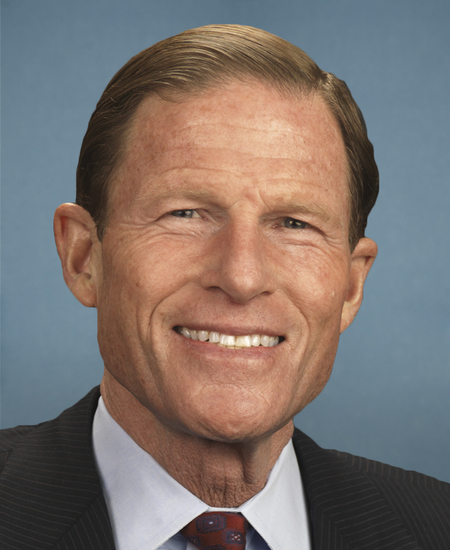
119th Congress Introduced by Richard Blumenthal and 12 co-sponsors

The bill bans political spending by foreign-controlled, foreign-influenced, or foreign-owned domestic entities and requires their leaders to certify non-foreign status before contr

Introduced in Senate
0
WeVote Research Nonpartisan
Bill Summary · S 5075

Get Foreign Money Out of U.S. Elections Act (S. 5075, 118th Congress) — Summary

Purpose and intent

  • The bill aims to strengthen the prohibition on foreign nationals influencing U.S. elections by expanding the prohibition to cover not just foreign individuals, but also foreign-controlled, foreign-influenced, and foreign-owned domestic business entities.
  • The core goal is to prevent foreign money from being used to influence federal elections (and related political activity) through domestic entities.

Key provisions and changes

Expanded ban on foreign involvement (Section 2)

  • Amends Section 319(b) of the Federal Election Campaign Act (FECA) to add new criteria for “foreign-controlled, foreign-influenced, and foreign-owned” domestic business entities to be treated as prohibited sources for contributions and expenditures.
  • New categories include:
    • Entities in which a foreign national located outside the United States directly or indirectly owns or controls 50% or more of voting shares, equity, or other ownership interests.
    • Entities where a foreign national (outside the U.S.):
    • directly/indirectly owns or controls 1% or more of ownership (for entities not covered by the 50% threshold),
    • two or more foreign nationals collectively own 5% or more,
    • foreign nationals have the power to direct or control decisionmaking in the U.S. activities of the entity, including contributions, expenditures, independent expenditures, or election-related disbursements, or the administration of a political committee.
  • Expands prohibited activities to include contributions, expenditures, independent expenditures, disbursements for electioneering communications, and administration of political committees by these entities.

Certification and compliance (Section 2)

  • Introduces a new certification requirement (Section 319(c)) for any business entity making a political contribution or engaging in any election-related activity:
    • The chief executive officer (or top official if no CEO) must certify within 7 days that the entity was not a foreign national on the date of the activity, after due inquiry.
    • The entity must determine beneficial ownership consistent with applicable law (State law, or SEC 13(d) framework if applicable).
    • The entity must provide a copy of the certification to recipients (campaign committees or other recipients of the funds) on request.

Prevention of circumvention (Section 2, subsection d)

  • Prohibits recipients of funds from a business entity that is required to certify from using those funds to further prohibited activities, unless the funds are accompanied by the certification and used in a manner consistent with the certification.
  • Allows reliance on the certification in good faith by recipients.

Expanded definition of “business entity” (Section 2, subsection e)

  • Broadens the FECA definition to encompass for-profit corporations, LLCs, partnerships, and other similar for-profit entities.

Effective date (Section 2)

  • Amendments take effect 180 days after enactment, regardless of whether the FEC has promulgated implementing regulations.

Clarifications on disbursements and PACs (Section 3)

  • Applies the foreign-money ban to state/local ballot initiatives and related disbursements, as well as to super PACs (with tailored clarifications on how corporate PACs operate).
  • Requires separate segregated funds (SSFs) of corporations to certify:
    • That fund managers are U.S. citizens or lawfully admitted permanent residents.
    • No foreign nationals participate in decisionmaking of the fund.
    • The fund does not solicit foreign-national input.
    • Any board members who are foreign nationals abstain from relevant votes.
  • Allows conditions to ensure funds from compliant entities are used properly and that foreign influence is not present in fund governance.

Who and what is affected

  • Domestic business entities that have foreign ownership or control (as defined) would become subject to FECA prohibitions on political contributions and expenditures.
  • Political committees, campaigns, and recipients of contributions from such entities would be impacted by the new certification and anti-circumvention requirements.
  • Separate segregated funds of corporations would face new governance and certification obligations.
  • State and local ballot initiatives and related expenditures could be affected due to expanded applicability to disbursements connected with such initiatives.

Procedural and timeline aspects

  • Introduced in the Senate on July 22, 2026, with multiple co-sponsors.
  • Referred to the Committee on Rules and Administration.
  • Effective date: 180 days after enactment, independent of whether the FEC issues implementing regulations.
  • Certification process must be completed within 7 days of a funded activity.

Notable details

  • The bill specifies thresholds for ownership and control (e.g., 50% for direct/indirect ownership; 5% aggregate ownership for two or more foreign nationals; 1% ownership in certain scenarios) to determine whether a domestic entity is foreign-controlled/foreign-influenced/foreign-owned.
  • Certification requires alignment with established ownership-tracking standards (state laws or SEC rules) to determine beneficial ownership.

This summary captures the bill’s main objectives, the substantive changes proposed, who would be affected, and key timing and regulatory structure aspects. If you’d like, I can provide a comparison with current FECA provisions or a section-by-section paraphrase of the text.

Compiled from official sources — confirm details with the bill’s official record.

Sign in to ask a question.