

WeVote

Bill

Bill

HR 9284

Foreign Investment Review Monitoring and Commitment Tracking Oversight Board Act

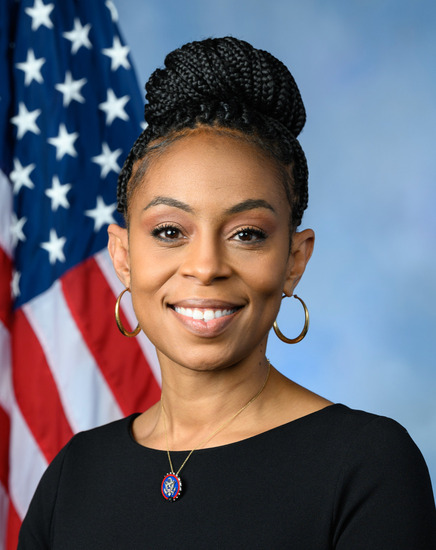
119th Congress Introduced by Shontel Brown and 3 co-sponsors

Creates FIRA to identify, review, and enforce compliance on covered foreign investment commitments with transparency, ethics rules, and penalties.

Introduced in House
0
WeVote Research Nonpartisan
Bill Summary · HR 9284

Summary of HR 9284 (119th Congress) – Foreign Investment Review Monitoring and Commitment Tracking Oversight Board Act

This bill would create a new independent federal entity, the Foreign Investment Review Authority (FIRA), charged with identifying, reviewing, and monitoring “covered foreign investment commitments” and determining whether investments meet defined standards to count toward those commitments. It also establishes ethics, transparency, and oversight mechanisms to govern the process.

Purpose and intent

  • Establish FIRA to determine whether foreign countries that have made investment commitments to the United States have complied with those commitments.
  • Create a structured process for identifying, reviewing, monitoring, and enforcing those commitments.
  • Improve transparency to Congress and the public about foreign investments and their domestic impact, including job creation and supply-chain characteristics.
  • Introduce ethics, compliance, and accountability measures, including a Public Oversight Board and an Office of the Chief Ethics Officer.

Key provisions and changes the bill would make

  • Definition of covered foreign investment commitment (Sec. 2):
    • Commitments arising from:
    • trade agreements; or
    • responses to tariffs/embargoes or other punitive measures under specified Trade Act authorities; or
    • negotiations with the executive branch or actors acting on behalf of the executive branch.
  • Definition of covered investment and qualified investment (Sec. 2):
    • Covered investment: an investment counted toward a commitment.
    • Qualified investment: a subset of covered investments that meets additional criteria and is counted toward the commitment after review.
    • Net economic benefit criteria: investments should promote domestic growth, create/retain quality jobs, ensure wages and benefits, avoid harming domestic businesses, and prefer domestic-sourced inputs.
    • Quality jobs: at least 30 hours/week, compensation at or above comparable U.S. jobs, health care, pension, and family-sustaining benefits; local union neutrality requirements; and alignment with home-country practices on worker opportunities.
  • Establishment and structure of FIRA (Sec. 3):
    • A board of directors headed by a Chair appointed by the President with Senate advice and consent.
    • Additional board members: designees from the Secretary of Commerce, Attorney General, and Labor; plus four politically balanced Presidential appointees.
    • 4-year terms for board members; conflicts-of-interest rules; an Office of the Chief Ethics Officer (6-year term) and a Public Oversight Board (3-year terms with staggered appointments, including a labor representative).
  • Identification, notice, and disclosure requirements (Sec. 4–5):
    • FIRA would publicly identify and list all covered foreign investment commitments via a website, including parties, amounts, obligation dates, activities, potential conflicts, etc.
    • Initial covered commitments to be deemed in existence at enactment (e.g., China-related commitment via U.S.-China Board of Trade, and large commitments by Japan, South Korea, Taiwan with specified amounts and dates).
    • Investors must notify FIRA at the investment’s start, disclose parties involved (owners, beneficiaries, financial advisers, financiers, other interested parties), and provide quarterly updates.
    • Senior government officials (e.g., President, Vice President, cabinet members) must disclose if they are beneficiaries of any covered investment.
    • Public notices and real-time access to notices, updates, attestations, and disclosures for oversight.
    • Civil penalties up to 10% of the investment value for noncompliance or misstatements.
  • Review of investments (Sec. 6):
    • FIRA will determine which investments are covered and which are qualified.
    • A formal process for pre-notified investments, plus a petition process for other investments to be reviewed.
    • Deemed reviews for undeclared investments; standard of proof for revocation if evidence shows the investment is not covered.
    • Heightened review for investments involving nationals from “covered nations.”
    • Prohibitions on qualified investments involving certain entities (UFLPA Entity List, active CBP Withhold Release Orders, or entities with significant ownership stakes) and situations where ethics laws could be violated.
    • Exemptions for specific investments (e.g., government bonds, diversified index funds) from certain benefits.
    • Mitigation agreements and penalties if anti-dumping or IP enforcement orders are involved.
  • Mediation and prohibition authority (Sec. 7):
    • FIRA can mandate mediation to revise terms for a not-qualified investment.
    • FIRA can suspend or prohibit investments that fail to meet qualified investment standards.
  • Ethics and transparency laws (Sec. 8):
    • FIRA would apply a defined set of federal ethics and transparency laws to parties involved in covered investments.
  • Fulfillment and enforcement (Sec. 9):
    • FIRA would publicly track the amount of qualified investments related to each commitment and, if the 4-year post-obligation period ends with insufficient qualified investments, the President must engage in negotiations with the foreign country to address the deficit.
  • Reporting requirements (Sec. 10):
    • Annual Congressional report on investments reviewed, trends, and risks (unclassified, with possible classified annex).
    • Semiannual public reports on progress, jobs created, compensation, unionization, foreign worker involvement, inputs, and mitigation agreement compliance/enforcement.
    • Quarterly public reporting from the Chief Ethics Officer on complaints and resolutions.
  • Appeals (Sec. 6, Sec. 7):
    • Appeals processes to FIRA for determinations on qualified status or mitigation terms, including a supermajority vote requirement for overturning FIRA decisions.
    • Appeals to U.S. District Court for certain determinations (standing: investors, Chief Ethics Officer, Public Oversight Board, and harmed parties).

Who would be affected

  • Foreign investors and their U.S. counterparties involved in covered investments.
  • Government agencies and offices interacting with FIRA (Commerce, Justice, Labor, etc.).
  • U.S. workers and employers participating in projects funded by covered investments (through net benefit and quality job criteria).
  • Public and private entities involved in investment financing, ownership structures, and beneficiaries.
  • Congress and the public, via regular reporting and transparency measures.
  • Charitable donations to 501(c)(3) organizations are explicitly exempted from being treated as covered or qualified investments.

Procedural and timeline aspects

  • Establishes FIRA and a governance structure with a 4-year term for most board members, a 6-year term for the Chief Ethics Officer, and 3-year terms for the Public Oversight Board.
  • Requires initial identification of certain commitments at enactment (specific totals for Japan, South Korea, Taiwan, and an unnamed China-related commitment).
  • Imposes a 4-year measurement period for fulfillment of commitments, with a process to negotiate if qualified investments fall short.
  • Provides for annual and semiannual reporting cycles, plus quarterly complaint reporting.
  • Establishes multiple avenues for appeal and judicial review, including internal FIRA processes and federal court challenges.

Note: The bill text includes some large-sum initial commitments for certain countries (e.g., Japan $550B, South Korea $350B, Taiwan $500B) and a China-related commitment “as determined by FIRA,” which appear to be illustrative or placeholder figures within the draft.

Overall, HR 9284 would create a centralized mechanism to monitor and enforce foreign investment commitments, emphasizing transparency, ethics compliance, and accountability, with structured review, mediation, and potential penalties for noncompliance.

Compiled from official sources — confirm details with the bill’s official record.

Sign in to ask a question.