

WeVote

Bill

Bill

S 5238

For Our Republic Act

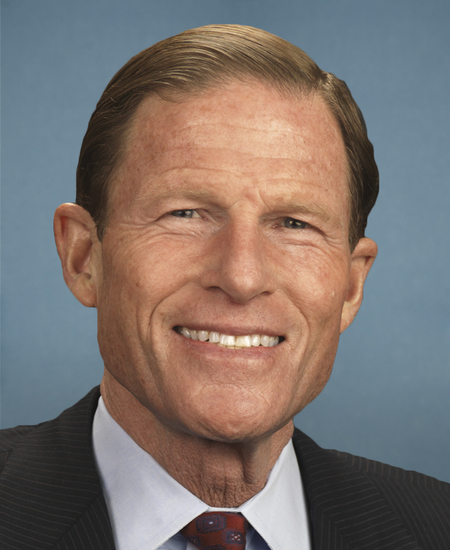
119th Congress Introduced by Richard Blumenthal and 2 co-sponsors

The bill aims to curb executive overreach by broad reforming civil service protections, inspector general independence, immigration and border policy, child welfare, and election i

Introduced in Senate
0
WeVote Research Nonpartisan
Bill Summary · S 5238

Summary of Bill: S.5238 – For Our Republic Act (Session 119)

  • Purpose and scope

    • Aims to preserve the democratic republic of the United States by addressing what its sponsors describe as authoritarian overreach. The bill is broad, combining provisions on Inspector General independence, civil service protections, immigration and border policy reforms, child welfare, election integrity, and government accountability.
    • Title I through Title X organize a wide set of changes, with a strong emphasis on independence, transparency, and protections against perceived abuses by executive agencies.
  • Key provisions and changes

    • Title I – Defend the Referees
    • Sec. 101. Inspector General Independence Act: Amends law to prohibit President from nominating an IG who is or has been a political appointee under the nominating President. IG positions would be shielded from political appointments for purposes of this section.
    • Title II – Protect the Independent, Nonpartisan Civil Service
    • Sec. 201. Reduction in Force Review Act: Expands justification and reporting requirements for reductions in force at federal agencies, including detailed rationales, consultation summaries, and veteran-related impacts.
    • Sec. 202. Agency Reorganization: Requires express congressional consent to dissolve, restructure, merge, or alter any federal agency’s mission or purpose.
    • Title III – Celebrate One Nation, Indivisible
    • Sec. 301. ICE Out of Our Faces Act: Proposes restrictions on biometric surveillance by immigration enforcement, including real-time facial recognition and other biometric systems; defines covered officers and imposes deletion timelines and civil actions for violations.
    • Sec. 302. Accountability for unlawful immigration actions: Establishes an “ICE and CBP Constitutional Accountability Act” with findings about constitutional rights, creates civil remedies for victims of unlawful actions, and broadens the ability to seek damages against agencies/officers.
    • Sec. 303. Prohibition on racial profiling: Prohibits racial profiling by law enforcement at all levels; creates enforcement avenues for individuals and states to pursue relief.
    • Title IV – Reaffirm Equal Justice Under Law
    • Subtitle A – Children's Safe Welcome Act of 2026
      • Establishes standards for handling unaccompanied and accompanied noncitizen children in custody, prioritizing the child’s best interests and family unity.
      • Procedures following apprehension, including prohibitions on family separation (with narrow exceptions), nonadversarial asylum processing for children, and strict detention standards (e.g., 72-hour custody limits, designated reception centers, and expedited release processes).
      • Subparts address foster care and placement, family sponsors, and post-release services, with emphasis on minimizing transfers, ensuring proper medical care, education, recreation, and language services.
      • California Flores settlement and court oversight are referenced; the bill adds an Ombudsperson role and expands access to legal representation and legal orientation for children.
    • Subtitle B – Real Courts, Rule of Law Act of 2026
      • Establishes the structure and governance of a reformed U.S. Immigration Court system, including staffing, budget, and oversight provisions.
    • Title V – Strengthen Free Speech
    • Sec. 501. Broadcast Freedom and Independence Act of 2025: Addresses free speech and broadcast independence (details not fully enumerated in the excerpt).
    • Title VI – Reassert Congress’s Power of the Purse
    • Sec. 601. Prohibition on rescissions; Sec. 602. East Wing Modernization Project: Limits on rescinding funds and outlines a federal project.
    • Title VII – Fight Government Corruption
    • Multiple acts targeting ethics, transparency, and accountability such as BEACON, TABOO, End Crypto/Crookery measures, and related governance provisions.
    • Title VIII – Ensure Liberty and Justice for All
    • Sec. 801–802: Increased transparency on directives to the Department of Justice; safeguards on judgment fund payments without congressional approval.
    • Title IX – Prevent Authoritarian Policing Tactics on America’s Streets
    • Sec. 901. Various safeguards related to policing tactics; Sec. 902. Insurrection Act of 2026 (referenced, details not provided in excerpt).
    • Title X – Safeguard Free and Fair Elections
    • Subtitle A – FRAIR Elections (Fraudulent Artificial Intelligence Regulations) – Provisions related to AI-generated election media, voter rolls, and private right of action against the Federal Government for data use in eligibility determinations; GAO study and severability.
    • Subtitle B – Election Interference and Law Enforcement at Polls: Additional provisions (not fully detailed in excerpt).
  • Who would be affected

    • Federal agencies and employees, especially:
    • Inspector General offices and IG nominees
    • Agencies undergoing reductions in force or reorganizations
    • Department of Homeland Security (CBP/ICE) and DHS-funded facilities and custody operations
    • Unaccompanied and accompanied noncitizen children and their sponsors, including:
    • Office of Refugee Resettlement
    • HHS and DHS facilities, reception centers, and medical services
    • Sponsors and nonparent family members of unaccompanied children
    • Immigrants and the general public, through changes to immigration court operations, detention standards, and civil remedies for rights violations
    • Local, state, and tribal law enforcement via prohibitions on racial profiling and related enforcement provisions
    • Election administrators and the public via AI, election integrity, and data-use provisions
  • Procedural and timeline aspects

    • The bill was introduced in the Senate on August 4, 2026, and referred to the Judiciary Committee.
    • Several sections propose immediate or phased implementation (e.g., 72-hour detention limits, 90-day deadlines for humane procedures, 180-day review and revision cycles for national standards, and interim procedures pending full reforms).
    • The Children’s Safe Welcome Act includes detailed timelines for staffing, facility improvements, medical screening, and release processes (including expedited release decisions within 72 hours in certain cases).
  • Notes on scope and interpretation

    • The bill is expansive, combining civil service protections, inspector general independence, immigration reform, child welfare, free speech, and anti-corruption provisions.
    • It relies on amendments to multiple existing laws (e.g., U.S. Code titles for IG independence and agency governance) and would create new oversight bodies and enforcement mechanisms, including civil actions and potential waivers of sovereign immunity in specified contexts.

This summary captures the bill’s overarching intent, major structural changes, affected parties, and key procedural elements based on the provided text.

Compiled from official sources — confirm details with the bill’s official record.

Sign in to ask a question.