Summary of SB 3346 (104th Illinois General Assembly)
Title: FOID-REVOCATION-SUSPENSION
Jurisdiction: Illinois
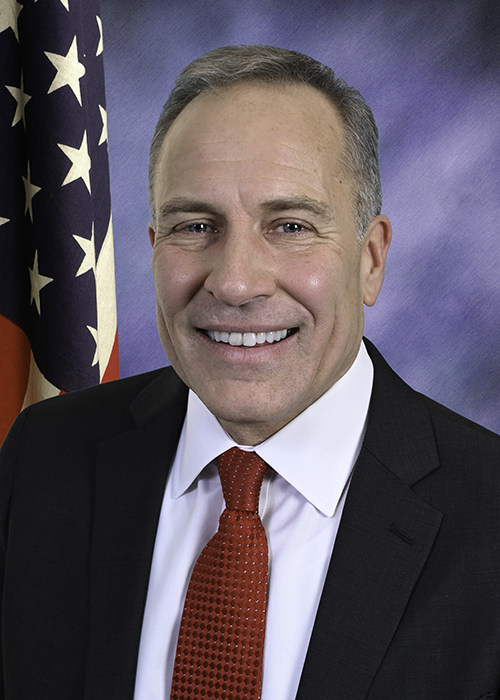
Sponsor: Sen. Terri Bryant (co-sponsors: Sen. Chris Balkema)
Purpose
- To modify the FOID (Firearm Owner’s Identification) card framework by restricting the Illinois State Police (ISP) from revoking FOID cards and by shifting revocation decisions to circuit court hearings. The bill also expands and clarifies procedures for suspensions, revocations, and relief from firearms prohibitions, including board-based and court avenues for relief.
Key Provisions and Changes
- FOID Card Revocation
- The bill provides that, on or after the amendatory Act’s effective date, the ISP may not revoke a FOID card.
- A FOID card may be revoked only after a FOID card hearing held in the circuit court of the county of residence.
- If the State’s Attorney has probable cause to believe a FOID holder is ineligible, the State’s Attorney must file a petition in the circuit court of the holder’s residence.
- The hearing is civil, with due process protections, subject to the Code of Civil Procedure and Illinois Rules of Evidence, and must be held within 45 days of filing.
- If the court, by clear and convincing evidence, finds ineligibility, the court shall order immediate revocation and seizure of the FOID card.
- Circuit clerks must seize and transmit the FOID card to ISP upon revocation.
Suspension Authority
- ISP may suspend a FOID card for a period and schedule a revocation hearing within 30-45 days after suspension. If the hearing is not timely scheduled, the card may be reinstated.
Denial, Suspension, and Revocation Grounds (Section 8; aligned with existing grounds)
- Grounds for denial or revocation include: under-21 status with disqualifying factors (e.g., delinquency, lack of parental consent), felonies, narcotics addiction, certain mental health findings, dangerous mental conditions, intellectual or developmental disabilities, false statements, noncitizen status under various conditions, firearm prohibitions, and multiple reporting failures for loss/theft.
- A new provision creates certification-based conditions for certain mental health disclosures, with protections for professionals against liability.
New FOID Card Review Board (appeals)
- Establishes the Firearm Owner’s Identification Card Review Board to hear appeals beginning January 1, 2023, with independence from other agencies.
- Board composition: 7 members appointed by the Governor with Senate consent; geographic representation across judicial districts; nonpartisan balance.
- Board responsibilities: review ISP-denial/revocation decisions, accept evidence, request additional information, and issue decisions within specified timelines (generally within 45 days after receipt of complete documents; extensions possible under certain conditions).
- Board decisions may grant relief, leading ISP to issue or reinstate a FOID card.
- Board meetings are exempt from Open Meetings Act; records are exempt from FOIA; monthly reporting to the Governor and General Assembly (excluding identifying information).
Expedited/Special Relief Provisions (c-5)
- Expedited relief for active duty police officers/employees via Board under specific mental health-related conditions after hospitalization or treatment, with a 30-day decision window.
- A process for expedited relief for qualifying active officers requires detailed documentation (hospitalization, treatment, fitness-for-duty evaluations, and professional certifications).
Additional Provisions
- Subsections outlining notification duties to ISP, State’s Attorneys, DHS, and related confidentiality safeguards.
- Mechanisms allowing circuit court challenges to ISP records if substantial justice is alleged to be unaddressed, and a director-level challenge process for record-based disputes.
- Provisions for juveniles and delinquents to potentially regain FOID eligibility after a set period, subject to court order or Board decision.
Effective Date and Status
- Introduced February 4, 2026.
- Committee progress and readings: ongoing in 2026 (Rule 2-10 deadlines noted).
Impact and Considerations
- Shifts revocation power from ISP to circuit court, creating a civil hearing process with a clear evidentiary standard (clear and convincing).
- Creates an independent FOID Card Review Board with formal procedures and reporting requirements, potentially reducing ISP’s unilateral authority in denial/revocation decisions.
- Introduces expedited relief pathways for certain law enforcement personnel and explicit timelines to streamline decisions.
- Retains a broad list of disqualifying criteria but adds procedural safeguards and confidentiality protections for Board deliberations and records.
Note: This summary focuses on substantive changes and procedural mechanics; please review the full text for precise statutory language and cross-references.