

WeVote

Bill

Bill

HR 7350

Fishing Vessel Financing Improvement Act of 2026

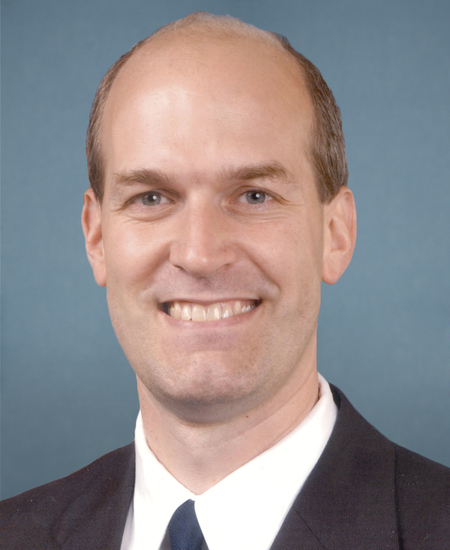
119th Congress Introduced by Rick Larsen

Expands MARAD direct loans and guarantees to include used fishing vessels and broader fishing-related financing, with higher guarantees and new safeguards aligned to fisheries mana

Introduced in House
0
WeVote Research Nonpartisan
Bill Summary · HR 7350

Overview

  • Bill: HR 7350 (Fishing Vessel Financing Improvement Act of 2026)
  • Session: 119th Congress
  • Purpose: Amend title 46, United States Code to modify and expand direct loan and loan-guarantee authorities via the Department of Transportation and the Maritime Administration (MARAD) for financing fishing vessels, with related changes to eligibility, funding, and safeguards.
  • Introduced: February 4, 2026 (Referred to the House Committee on Armed Services)
  • Principal sponsor: Rep. Begich; co-sponsor: Rep. Larsen (WA)

Main purpose and intent

  • To broaden and clarify MARAD’s direct loan and loan-guarantee programs for financing fishing vessels and related facilities.
  • To include fishing and seafood-related trade more explicitly in eligible uses and to adjust loan guarantees and financing terms in light of industry needs.
  • To align financing provisions with fisheries management goals and economic considerations within the Magnuson-Stevens framework.

Key provisions and changes

  • Definitions

    • Expands and reorganizes definitions in 46 U.S.C. §53701, including explicitly defining “fishing” by cross-reference to the Magnuson-Stevens Act.
    • Clarifies that the term “fishing vessels” includes vessels used in fishing activities.
  • Direct loans

    • MARAD’s direct loan authority (46 U.S.C. §53702) remains, but with adjusted labeling and clarified language to include “used” fishing vessels in eligible contexts.
    • Recasts some financing purpose language to refer to “financing the purchase” rather than broader or differently worded purposes.
  • Funding limits and obligations

    • Amends §53704(a) to broaden phrasing around obligations related to fishing facilities and used fishing vessels.
    • Adjusts eligibility and use of funds accordingly, aligning with new definitions.
  • Eligible purposes and obligor/obligor-related findings

    • §53706(a)(1)(A) revised to allow additional categories, including a new eligibility category for the fishing industry or seafood-related trade.
    • §53707(c) and §53708 amended to include Administrator involvement and to incorporate economic-soundness safeguards and internal consistency with fisheries resources management.
  • Economic soundness safeguards

    • Adds a new provision (§53708(f)) prohibiting guarantees or commitments if deemed inconsistent with wise use of fisheries resources and Magnuson-Stevens Act objectives (conservation, management, protection).
  • Amounts and guarantees

    • §53709(a)(3) revised to distinguish funding for used vessels and to increase guarantees for certain vessels up to 87.5% of actual or depreciated cost when the Administrator guarantees an obligation.
    • Adjusts the scope and limits of guarantees accordingly, with Administrator involvement extended to the guarantee process.
  • Vessel replacement and construction financing

    • §53734 amendments expand applicability to fishing or seafood-related trade (in addition to coastwise, intercoastal, and foreign trade).
    • Amends language to cover construction, refinancing, and reconstruction of vessels.
    • Adds a new applicability clause: guarantees for construction or refinancing financed with funds appropriated on or after the National Defense Authorization Act for Fiscal Year 2026 (NDAA 2026) enactment date.
  • Eligibility window

    • Creates a two-year eligibility window post-enactment for certain larger fishing vessels (greater than 79 feet overall, built and documented after Jan 1, 2021) to be eligible for Administrator-guaranteed obligations, even if not fully meeting prior reconstruction/repair requirements.
  • Savings clause

    • Retains authority for the Secretary of Commerce to provide direct loan obligations under existing authorities (American Fisheries Act §211(e)) notwithstanding these changes.

Who is affected

  • Fishing vessel owners and operators seeking financing or guarantees for purchase, construction, refinancing, or reconstruction.
  • Fishery-related facilities developers and entities involved in the fishing and seafood sector.
  • MARAD and the Department of Transportation, which administer direct loan and guarantee programs.
  • The Secretary of Commerce remains involved through the savings clause, ensuring alignment with broader federal fisheries policy.

Procedural and timeline aspects

  • Procedural history: Introduced February 4, 2026; referred to the House Committee on Armed Services.
  • No floor passage or Senate action detailed in the provided text.
  • Notable timelines: Eligibility expansion includes a two-year window post-enactment; applicability tied to NDAA 2026 funding dates for certain guarantees.

Potential impacts

  • Increased access to financing for fishing vessels and related facilities, including higher-guaranteed loan percentages (up to 87.5% for Administrator-guaranteed vessels).
  • Expanded eligibility to include broader fishing-related activities, potentially broadening the financed fleet and industry investments.
  • Stronger alignment of federal financing with fisheries conservation and sustainable management goals, through explicit economic-soundness safeguards.
  • Administrative changes: MARAD’s direct loan/guarantee program language updated, with new definitions and scope, and explicit involvement of the MARAD Administrator in guaranty decisions.

If you’d like, I can provide a side-by-side comparison with current law (46 U.S.C. titles) to highlight all statutory changes in detail.

Compiled from official sources — confirm details with the bill’s official record.

Sign in to ask a question.