

WeVote

Bill

Bill

HR 3821

Firefighter Cancer Registry Reauthorization Act of 2023

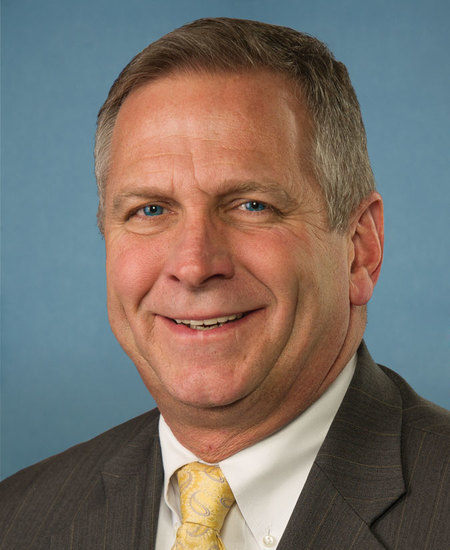
118th Congress Introduced by Mike Bost and 11 co-sponsors

Reauthorizes and doubles annual funding to 5.5 million for the Firefighter Cancer Registry (FY2024–FY2028) to expand data collection and research on cancer risks among firefighters

Signed by President.
0
WeVote Research Nonpartisan
Bill Summary · HR 3821

Summary — H.R. 3821: Firefighter Cancer Registry Reauthorization Act of 2023

Public Law No. 118‑147 (approved December 12, 2024)

Purpose

To reauthorize and increase funding for the voluntary national Firefighter Cancer Registry administered by the Centers for Disease Control and Prevention (CDC), in order to improve collection of cancer incidence data among firefighters and support research into links between firefighting exposures and cancer.

Key provisions

  • Amends the Firefighter Cancer Registry Act of 2018 (42 U.S.C. 280e–5(h)) to revise authorized funding and the authorization period.
  • Replaces the prior authorization of “$2,500,000 for each of the fiscal years 2018 through 2022” with an authorization of “$5,500,000 for each of fiscal years 2024 through 2028.”
  • Leaves the registry’s voluntary enrollment structure and CDC administration intact; the statute continues to authorize the registry but does not itself appropriate funds.

Funding and timeline

  • Authorized level: $5.5 million per year, FY2024–FY2028 (an increase from the previous $2.5 million annual authorization for FY2018–FY2022).
  • Enacted as law on December 12, 2024 (Public Law 118‑147).
  • Actual funding requires subsequent appropriations by Congress.

Who is affected

  • Firefighters and retired firefighters (who may enroll in the voluntary registry).
  • The U.S. Centers for Disease Control and Prevention (CDC), as the agency that maintains and operates the registry.
  • Public‑health and occupational‑health researchers (who use registry data to study incidence, types of cancer, trends, and occupational links).
  • Fire service organizations and policymakers who rely on registry findings to guide prevention and treatment initiatives.

Background and rationale

  • The registry is a voluntary online system established to collect data about cancer incidence among firefighters and help determine possible occupational links.
  • Prior studies (including a large NIOSH study of firefighters conducted 2010–2015) found elevated rates of certain cancers (digestive, oral, respiratory, urinary) and some cancers occurring at younger ages than expected, underscoring gaps in national surveillance and the need for improved data.
  • The reauthorization increases authorized funding to expand, sustain, and improve registry operations and data quality.

Legislative history / procedural notes

  • Reported by the House Committee on Energy and Commerce (H. Rept. 118‑247).
  • House passage: passed March 6, 2024 (suspension of the rules; 413–7).
  • Senate passage: passed December 4, 2024 (voice vote).
  • Presented to the President December 10, 2024; signed into law December 12, 2024.
  • The statute authorizes funding but does not itself appropriate funds; the CDC will implement and operate the registry contingent on appropriations.

Potential impact

  • With higher authorized funding, the registry can sustain and potentially expand enrollment, outreach, data collection, and analytic capacity through FY2028.
  • Improved registry data may enable better understanding of occupational cancer risks for firefighters, inform prevention and screening practices, and support policy and research aimed at reducing cancer burden in the fire service.

Compiled from official sources — confirm details with the bill’s official record.

Sign in to ask a question.