

WeVote

Bill

Bill

HB 3642

FELONY-RUNNING FOR OFFICE

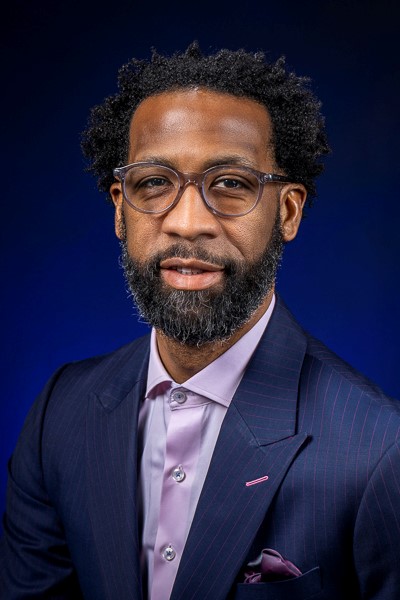
104th Regular Session Introduced by Curtis Tarver

HB 3642 revises public-office eligibility: removes municipal oath ban for prior infamous crimes, but keeps disqualification for crimes committed while in office; effective 9/1/2025.

Referred to Rules Committee
0
WeVote Research Nonpartisan
Bill Summary · HB 3642

HB 3642 — Felony — Running for Office (Summary)

Sponsor: Rep. Curtis J. Tarver, II
Introduced: Feb 18, 2025 | Signed by Governor: June 20, 2025 | Effective: Sept 1, 2025

Purpose / Intent

HB 3642 revises Illinois law governing the eligibility of persons convicted of certain crimes to hold or take the oath for public office. The bill (1) removes a municipal-code provision that barred some persons with prior convictions from taking a municipal oath of office, and (2) clarifies and extends state-law disqualifications for persons convicted for crimes committed while serving as public officials. Conforming changes are made to the Officials Convicted of Infamous Crimes Act, the Election Code, and the Unified Code of Corrections.

Key provisions

  • Municipal Code (65 ILCS 5/3.1-10-5)

    • Removes the explicit provision that a person is ineligible to take the oath of office for a municipal office if, at oath time, they "have been convicted ... of any infamous crime, bribery, perjury, or other felony".
    • Retains provisions on residency and other standard qualifications; continues pathways for restoration of rights (pardon, gubernatorial restoration, or other lawful restoration).
  • Officials Convicted of Infamous Crimes Act (5 ILCS 280/1) and Election Code (10 ILCS 5/29-15)

    • Continues to provide that persons convicted of felonies, bribery, perjury, or other infamous crimes are ineligible to hold public office unless the conviction is reversed or their eligibility is lawfully restored.
    • If a conviction is reversed, the person is to be reinstated and compensated for withheld pay to the extent of the remaining term; pension rights are protected.
  • Unified Code of Corrections (730 ILCS 5/5-5-5)

    • Adds (or clarifies) that a person convicted of a felony, bribery, perjury, or other infamous crime for an offense committed on or after the Act’s effective date while serving as a public official is ineligible to hold any local public office (in addition to offices created by the State Constitution) unless the conviction is reversed or until sentence completion and restoration of eligibility.

Who is affected

  • Current and prospective municipal officers and candidates (changes to eligibility/oath rules).
  • Elected officials and public servants convicted of crimes alleged to have been committed while in office.
  • Local election officials and municipal clerks responsible for administering oaths and certifying eligibility.
  • Voters indirectly, through changes to candidate eligibility rules.

Procedural / timeline notes

  • Passed both chambers in May 2025 after committee hearings and conference committee action.
  • Enrolled June 2, 2025; signed by the Governor June 20, 2025; becomes effective September 1, 2025.

Practical effect and considerations

  • The bill appears to remove an automatic bar in the municipal code that prevented some candidates from taking an oath based solely on prior convictions, while tightening/clarifying ineligibility for crimes committed while serving as public officials. The result is a shift toward (a) permitting some persons with historic convictions to take municipal office when rights have been restored, and (b) explicitly disqualifying persons convicted for misconduct committed in office from holding local public office after the effective date.
  • Because the bill amends multiple statutes with overlapping language, implementation may require updated administrative guidance by election and municipal officials. Readers seeking case-specific guidance should consult the enacted statutory text or legal counsel.

Compiled from official sources — confirm details with the bill’s official record.

Sign in to ask a question.