

WeVote

Bill

Bill

S 4848

Farming Opportunities Training and Outreach Grant Program Reauthorization Act of 2026

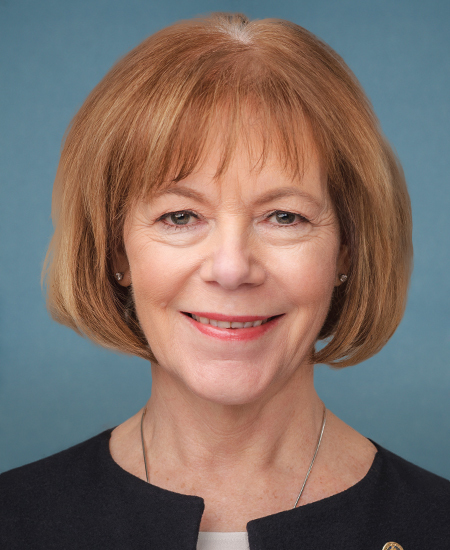
119th Congress Introduced by Tina Smith

Expands outreach, language access, and data reporting to boost support for disadvantaged and veteran farmers through extended programs and a five-year, race/ethnicity–based data cy

Introduced in Senate
0
WeVote Research Nonpartisan
Bill Summary · S 4848

Summary of bill: S.4848 – Farming Opportunities Training and Outreach Grant Program Reauthorization Act of 2026

Purpose and intent

  • Reauthorizes and expands provisions related to outreach, assistance, and accountability for socially disadvantaged, veteran, and beginning farmers and ranchers.
  • Builds on the Food, Agriculture, Conservation, and Trade Act of 1990 to improve access to Department programs and technical assistance, with enhanced emphasis on language access (interpretation and translation) and data transparency.

Key provisions and changes

  1. Outreach and assistance program enhancements (Section 2)

    • Amends Section 2501 of the 1990 Act to extend and broaden the timeframes and modalities for outreach to targeted farmer communities.
    • Extends the period of focus for certain program activities from 2019–2023 to 2027–2031.
    • Requires inclusion of interpretation and translation services when useful to expand meaningful access to Department programs or technical assistance (e.g., for non-English speakers).
    • Expands prioritization to include eligible entities that provide interpretation/translation as part of outreach and technical assistance.
    • Adds explicit language about providing interpretation and translation services as part of outreach and technical assistance, where determined by the Secretary.
    • Adjusts priority language to emphasize nongovernmental entities when providing such services.
  2. Transparency and accountability (Section 3)

    • Reorganizes and expands data-reporting requirements for socially disadvantaged farmers and ranchers.
    • Establishes a 5-year data collection cycle with reports due by March 31, 2028, and every five years thereafter.
    • Data to be collected (by county and state) includes:
      • Base acres of program crops owned by farmers/ranchers.
      • Payment yields for program crops.
      • Number of fee waivers and premium reductions under the Noninsured Crop Disaster Assistance Program (NAP) (as established in 1996 farm bill changes).
      • Number of loans guaranteed to farmers/ranchers.
      • Allocation of grazing permits by the Forest Service.
      • Race, ethnicity, and gender of farmers/ranchers (with privacy protections).
    • Requires these data to be organized by race/ethnicity/gender categories described in the statute.
    • Mandates that reports be structured to cover both:
      • Data under paragraph (1) (baseline data) and
      • Data under the new paragraph (2) (the 5-year requirement).

Who is affected

  • Socially disadvantaged farmers and ranchers.
  • Veteran and beginning farmers and ranchers.
  • Counties and states (via state-level and county-level data collection and reporting).
  • Eligible entities that provide interpretation and translation services as part of outreach and technical assistance (potentially non-governmental organizations, among others).
  • U.S. Department of Agriculture (USDA) and its relevant programs, which would implement the outreach, grant, and data-reporting requirements.

Temporal and procedural aspects

  • Short title: Farming Opportunities Training and Outreach Grant Program Reauthorization Act of 2026.
  • Effective/implementation timeline:
    • Outreach and assistance program focus extended to 2027–2031 (replacing 2019–2023 windows).
    • 5-year data collection and reporting cycle begins with a report due by March 31, 2028, and every five years thereafter.
  • Process: The bill was introduced in the Senate on June 22, 2026, referred to the Committee on Agriculture, Nutrition, and Forestry.

Potential impact considerations

  • Increased emphasis on language access may broaden participation and utilization of USDA programs by non-English-speaking communities.
  • Extended timelines could sustain or expand grant and technical assistance activities toward disadvantaged and veteran farmers through 2031.
  • Enhanced transparency may improve visibility into who receives program benefits and how resources are distributed, informing policy adjustments and equity considerations.
  • Data collection could enable more rigorous analysis of program outcomes by race, ethnicity, and gender, while balancing privacy protections.

Compiled from official sources — confirm details with the bill’s official record.

Sign in to ask a question.