

WeVote

Bill

Bill

S 5358

FAIRR Act

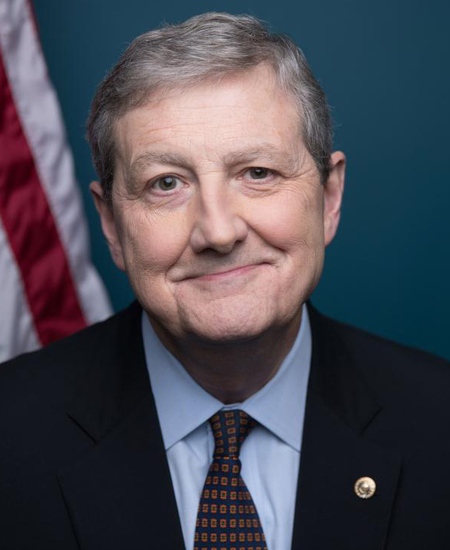
119th Congress Introduced by John Neely Kennedy and 1 co-sponsor

The bill establishes a government-wide framework to identify, regulate, and mitigate AI-related risks in the financial system, including new oversight, reporting, and rulemaking ac

Introduced in Senate
0
WeVote Research Nonpartisan
Bill Summary · S 5358

Summary of Bill: S. 5358 — Financial Artificial Intelligence Risk Reduction Act (FAIRR Act)

Overall purpose

The FAIRR Act would amend the Financial Stability Act of 2010 to explicitly address risks related to artificial intelligence (AI) in the financial sector. It assigns new duties to the Financial Stability Oversight Council (FSOC) and creates parallel enhancements across several financial regulatory frameworks to improve research, coordination, oversight, and rulemaking related to AI-driven technologies used by financial institutions and their service providers.

Key provisions and changes

  • Definition of AI (new section 126, in FSOC context)

    • Adopts the AI definition from the National Artificial Intelligence Initiative Act of 2020 (15 U.S.C. 9401).
  • FSOC coordination, reporting, and recommendations (section 126)

    • FSOC must coordinate with member agencies regarding AI-related systemic risks.
    • Directs the Office of Financial Research, as appropriate, to study AI uses by financial institutions and affiliated service providers.
    • Requires FSOC to identify AI-related threats to financial stability, including:
    • False representations and impersonation affecting markets or institutions.
    • AI deployment and development gaps in existing laws about liability for unauthorized AI-driven transactions, and concerns about concentration risk tied to AI infrastructure providers.
    • Other AI-related acts or practices that could threaten financial stability.
    • Within 180 days of enactment, FSOC must submit a joint report (to Senate Banking Committee and House Financial Services Committee) detailing:
    • The AI threats identified.
    • AI tools/techniques specifically good for cybersecurity tasks and vulnerabilities.
    • Gaps in current regulations, guidance, and examination standards among member agencies.
    • Specific recommendations to address these gaps, including alignment with the Cybersecurity Information Sharing Act and related 2023 NSA/FBI/CISA cyber guidelines where appropriate.
    • Potential opportunities to use AI in regulation and supervision, with emphasis on transparency to regulated entities.
    • Congressional review of the report within 30 days of receipt.
    • FSOC to implement its recommendations through the process outlined in Section 120 (of the Financial Stability Act framework) after considering Congress’ comments.
  • Scenario-based exercises (section 126(f))

    • The Financial and Banking Information Infrastructure Committee (within the President’s Working Group on Financial Markets) would run scenario-based exercises to test defenses against AI-enabled financial disruptions, with private-sector and government collaboration.
    • Exercises aim to produce ongoing improvements in detection, prevention, and mitigation of AI-associated disruptions.
  • Enhanced authority to oversee third-party AI providers (section 3)

    • Amends the Federal Credit Union Act to grant broader oversight and specify that third-party AI providers used by credit unions can be overseen by the Board in a prescribed manner.
    • Adds a notification requirement for service-provider relationships (existence of such relationships must be reported within a defined timeframe).
  • Regulation and examination of service providers (section 4)

    • Adds a new provision to the Federal Housing Enterprises Financial Safety and Soundness Act allowing the Director to regulate and examine service providers that perform activities permissible for regulated entities, with timely notification requirements (within 30 days of contract or performance).
  • SEC rulemaking on AI (section 5)

    • Adds an AI-focused rulemaking authority to the Securities Exchange Act of 1934.
    • Defines covered persons (brokers, dealers, issuers with registered securities, self-regulatory organizations, etc.) and requires the SEC to:
    • Within 180 days, impose specific requirements on covered persons to address AI use and ensure compliance with securities laws.
    • Establish governance measures for testing, deployment, monitoring, human oversight, permissions, escalation procedures, and use limits for AI systems.
    • Consider whether AI is developed/controlled by the covered person versus third-party providers and whether the person has sufficient control over AI actions.
  • Rules of construction (section 6)

    • Clarifies that AI provisions do not undermine existing securities laws and that AI use must still comply with those laws.

Who and what is affected

  • Regulators and councils

    • Financial Stability Oversight Council (FSOC) and its member agencies.
    • Office of Financial Research.
    • Securities and Exchange Commission (SEC).
    • Federal banking and housing agencies implementing related sections (including potential interaction with Federal Credit Union Act authorities and the Federal Housing Finance Agency).
  • Financial institutions and service providers

    • Financial institutions using AI and entities providing services to them (e.g., third-party AI providers, cybersecurity-focused AI tools).
    • Credit unions and other regulated entities subject to expanded oversight of third-party AI services.
    • Credit unions’ governing and risk management frameworks reinforced.

Procedural and timeline aspects

  • Report requirement

    • Within 180 days after enactment: FSOC must produce a comprehensive report identifying AI-related threats, gaps in regulation, and recommendations, incorporating relevant cybersecurity guidelines.
    • 30 days after report receipt: Congressional committees provide comments/recommendations.
  • Implementation

    • Following congressional review, FSOC and member agencies to implement recommended actions through established procedures (FSOC’s framework, Section 120 processes).
  • Regulatory rulemaking timelines

    • SEC rulemaking on AI to be issued within 180 days after enactment for covered persons.

Potential impacts and considerations

  • A formalized, government-wide approach to AI risk in the financial sector, emphasizing transparency, governance, and defensive preparedness.
  • Expanded regulatory authority over third-party AI providers and service contracts impacting regulated entities.
  • Increased reporting and coordination obligations across FSOC, SEC, and banking/housing regulators to address AI-enabled risks such as market manipulation, unauthorized transactions, and cybersecurity vulnerabilities.
  • Possible rise in compliance requirements and costs for financial institutions and covered entities to align with new AI governance and reporting standards.

Notes:
- The bill is introduced in the 119th Congress in August 2026 by Senators Warren and Kennedy.
- Co-sponsors include John Neely Kennedy and Elizabeth Warren.

Compiled from official sources — confirm details with the bill’s official record.

Sign in to ask a question.