

WeVote

Bill

Bill

HR 7917

Fair Wages for Home Care Workers Act

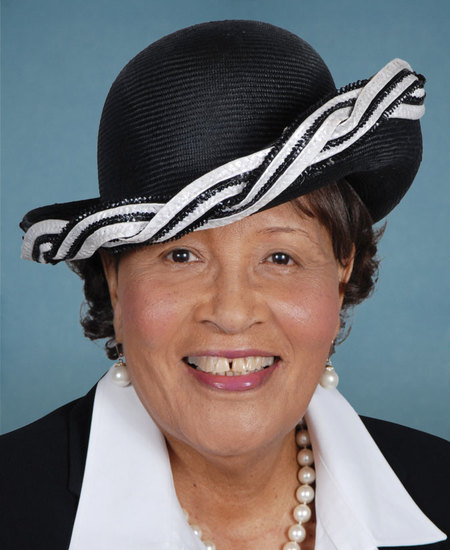
119th Congress Introduced by Alma Adams and 75 co-sponsors

The bill extends federal minimum wage and overtime protections to certain casual babysitting services in private homes by removing the exemption.

Introduced in House
0
WeVote Research Nonpartisan
Bill Summary · HR 7917

Purpose and main goal

  • HR 7917, the Fair Wages for Home Care Workers Act, seeks to amend the Fair Labor Standards Act of 1938 to extend minimum wage and overtime protections to certain caregiving employees who are currently exempted.
  • The bill aims to remove exemptions related to babysitting services in domestic work, thereby ensuring that some home care workers receive federal minimum wage and overtime pay protections.

Key provisions and changes

  • Exemption amendments to the Fair Labor Standards Act (FLSA):
    • Subsection (a)(15) of Section 13 is amended to remove the existing exemption for “casual basis in domestic service employment” and replace it with language focusing on “casual basis to provide babysitting services.” This narrows the prior exemption.
    • Subsection (b)(21) is repealed, eliminating the current exemption entirely.
  • New definitions added to clarify scope:
    • “Babysitting services” (defined in Section 3) refer to custodial care and protection of infants or children in a private home where they reside. It explicitly excludes care provided by trained professionals (e.g., registered nurses, licensed practical nurses) and home care workers (e.g., home health aides, personal care aides).
    • “Casual basis” (in the context of babysitting) is defined as irregular or intermittent work not performed by someone whose vocation is babysitting, and may include incidental household tasks so long as such tasks do not exceed 20 percent of total hours worked while providing babysitting services.
  • Scope and intent:
    • The bill narrows the exemption so that certain casual babysitting services in private homes would no longer be exempt from minimum wage and overtime, thereby subjecting these specific caregiving activities to FLSA protections.
    • It preserves the distinction that trained home health aides and similar professional caregivers are not encompassed by the “babysitting services” definition and would continue to be governed by applicable wage and hour protections as defined by the act.

Who/what would be affected

  • Targeted workers:
    • Individuals providing casual babysitting services in private homes who would be considered under a “casual basis” and whose activities fall within the 20 percent household task allowance, and who were previously exempt from minimum wage and overtime protections.
  • Exclusions:
    • Trained personnel such as registered, vocational, or practical nurses.
    • Home care workers including home health aides and personal care aides performing caregiving tasks beyond babysitting as defined.
  • Employers and households:
    • Private households employing casual babysitters could become subject to federal minimum wage and overtime requirements for those babysitting services that previously fell under the exemption.

Procedural and timeline aspects

  • Introduced in the 119th Congress on March 12, 2026.
  • Referred to the House Committee on Education and Workforce for consideration.
  • A bill sponsor list includes a broad coalition of representatives and multiple co-sponsors, indicating cross-party and cross-issue support for expanding wage protections to some caregiving workers.

Practical implications and potential impact

  • Wage protections:
    • Eligible babysitting services on a casual basis would gain minimum wage protections and potentially overtime pay, depending on hours worked and applicable federal rules.
  • Compliance considerations:
    • Private households would need to track hours and wages more carefully for babysitting services classified under the new definition to ensure compliance with the FLSA.
  • Ambiguities and implementation:
    • Real-world application would hinge on how “casual basis” and the 20 percent household task threshold are administered by the Department of Labor, and how employers classify workers who perform mixed duties.
  • Broader policy context:
    • The bill aligns with efforts to extend labor protections to domestic and caregiving workers, addressing wage adequacy and fair pay in home-based care settings.

Compiled from official sources — confirm details with the bill’s official record.

Sign in to ask a question.