

WeVote

Bill

Bill

HR 8529

Fair Air Standards Act

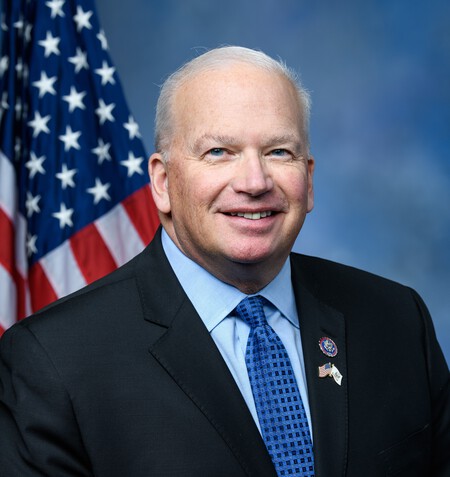
119th Congress Introduced by Scott Fitzgerald and 4 co-sponsors

Allows EPA to redesignate ozone nonattainment to attainment if outside-state or foreign emissions would have allowed meeting the standard, with a 180-day review window.

Introduced in House
0
WeVote Research Nonpartisan
Bill Summary · HR 8529

Overview

  • Bill: H.R. 8529
  • Session: 119th Congress
  • Title: Fair Air Standards Act
  • Purpose: Amends the Clean Air Act to create a conditional pathway for redesignating certain ozone nonattainment areas as attainment areas when interstate or cross-border emissions prevent attainment, and to specify a timely federal review process for such redesignations.

What the bill would do

  • Adds a new scenario under which an area currently designated as ozone nonattainment can be redesignated to attainment:
    • If the state demonstrates to the satisfaction of the EPA Administrator (with the Administrator’s concurrence) that the area would have reached the National Ambient Air Quality Standard (NAAQS) for ozone by the applicable attainment date, but for ozone or ozone precursors originating outside the state (i.e., emissions from outside-State sources or foreign sources).
  • Submission process:
    • The Governor may submit the finding and demonstration to the Administrator at any time and on the Governor’s own initiative.
  • EPA review timeline:
    • After submission, the Administrator must issue a concurrence or nonconcurrence within 180 days.
    • If the Administrator concurs, the redesignation must be promulgated by EPA.
  • Considerations in determining the finding:
    • The Governor and Administrator must consider, among others, modeling or monitoring evidence of emissions from other States and foreign countries, in making the finding.
  • Text is inserted as an addition to the existing statutory provision for redesignation (Section 107(d)(4)(A) of the Clean Air Act).

Who/what is affected

  • Entities and areas currently designated as ozone nonattainment areas under the Clean Air Act.
  • State governments ( Governors) who oversee air quality programs and may submit demonstrations.
  • The Environmental Protection Agency (EPA) as the federal reviewing and finalizing body for redesignation decisions.
  • Cross-border/Out-of-state emission sources whose contributions to ozone levels are considered in redesignation decisions.

Key provisions and details

  • Mechanism: Introduces a pathway for attainment redesignation despite nonattainment status if interstate/foreign emissions prevented attainment.
  • Submission authority: Governors can initiate the submission of the finding and demonstration at any time without waiting for a formal trigger.
  • Federal timing: EPA must respond within 180 days of submission (concur or nonconcur).
  • Criteria: Requires consideration of external emissions data (from other states and foreign countries) and related modeling/monitoring evidence.
  • Process outcome: If EPA concurs, the area is redesignated as attainment; if not, the area remains nonattainment (subject to other applicable Clean Air Act provisions).

Procedural and timeline aspects

  • Introduction date: April 27, 2026.
  • Referral: Committee on Energy and Commerce.
  • Submission and review cycle:
    • Governor submits finding and demonstration.
    • EPA has up to 180 days to decide (concur or nonconcur).
    • If concur, EPA promulgates the redesignation.

Practical implications

  • Potentially broadens factors that can lead to attainment redesignation by recognizing cross-border emission reductions, rather than solely within-state controls.
  • Could affect state planning, interstate collaboration, and any federally enforceable emission reduction strategies tied to attainment status.
  • The bill sets a clear, finite review window to provide timely decisions on redesignations.

Note: This summary reflects the bill text as introduced and does not account for amendments or floor actions that may occur during the legislative process.

Compiled from official sources — confirm details with the bill’s official record.

Sign in to ask a question.