

WeVote

Bill

Bill

S 10087

Expands the type of certifications that may be accepted by the state of New York for restricted licenses

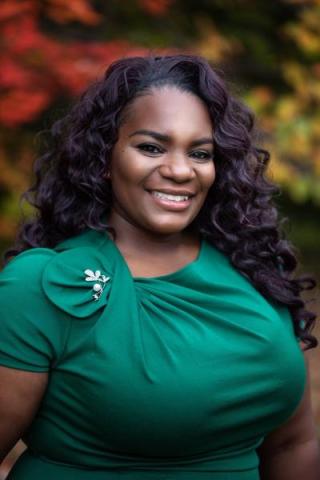
2025 Regular Session Introduced by April Baskin

Expands restricted clinical lab licenses to include more specialist certifications and areas, with toxicology limited to NYSDOH‑authorized labs under a licensed director.

REFERRED TO HIGHER EDUCATION
0
WeVote Research Nonpartisan
Bill Summary · S 10087

Summary of Bill S. 10087 (2025-2026 Reg. Session) – New York

Bill Overview

  • Title: Expands the type of certifications that may be accepted by the state of New York for restricted licenses
  • Jurisdiction: New York
  • Introduced by: Sen. Baskin
  • Committee: Higher Education
  • Status: Referred to Higher Education (as of April 27, 2026)
  • Effective Date: 12 months after becoming law

Purpose and Intent

The bill amends the Education Law to broaden the scope of restricted clinical laboratory licenses, specifically by expanding the categories of examinations and procedures that a restricted licensee may perform, and by clarifying certification pathways for certain toxicology-related credentials.

Key Provisions

Section 1 – Amendments to Education Law § 8610 (subdivision 1)

  • Restricted license framework: The department may issue a restricted license that allows the holder to receive a certificate to perform certain examinations and procedures within the definition of clinical laboratory technology.
  • Allowed areas (under the license): A restricted licensee may perform examinations and procedures only in the following areas listed on the license certificate:
    • Histocompatibility
    • Cytogenetics
    • Stem cell process
    • Flow cytometry/cellular immunology
    • Molecular testing
    • Toxicology
    • Or for areas for which the licensee has obtained a specialist certification from a nationally recognized certifying body acceptable to the department
  • Note on language: The provision reflects the current structure that ties the license to the specific areas listed on the certificate, with an allowance for specialty certifications from recognized bodies.

Section 1 – Additional language (existing provisions)

  • The bill preserves the option for restricted licenses to include additional areas for certain specialized employers (e.g., National Cancer Institute-designated centers or teaching hospitals) under prior provisions, but the current text emphasizes that the standard scope remains those listed areas or those tied to specialist certifications.

Section 1 – Section 8610 (b) and (b-1) adjustments

  • The language clarifies that, in general, restricted licensees may only practice toxicology if they are employed in a laboratory authorized by the New York State Department of Health, operating under a clinical laboratory director.
  • The current subsection (b-1) determines that only individuals employed in such authorized laboratories may obtain a toxicology certificate.

Who Is Affected

  • Restricted licensees in clinical laboratories who perform specified examinations and procedures (histocompatibility, cytogenetics, stem cell processing, flow cytometry/cellular immunology, molecular testing, toxicology, or other areas via recognized specialist certification).
  • Laboratories authorized by NYS Department of Health that perform toxicology testing, under leadership of a clinical laboratory director.
  • Certification bodies recognized by the NYS Department of Health as acceptable for granting specialist certifications.

Procedural and Timeline Aspects

  • Effective date: The act becomes law 12 months after enactment.
  • Implementation: Departments (Education and Health) would implement the revised framework for restricted licenses, scope of practice, and acceptable certifications.
  • Action History: The bill was referred to the Senate Committee on Higher Education on April 27, 2026.

Potential Impact (Summary)

  • Expands flexibility for NYS to recognize additional specialist certifications for restricted clinical laboratory licenses, potentially widening the pool of qualified personnel who can perform certain high-precision or specialized laboratory duties.
  • Maintains strict supervision and authorization requirements, particularly for toxicology practice, ensuring it occurs within NYSDOH-authorized laboratories under a licensed clinical laboratory director.
  • Could influence workforce planning in clinical laboratories, hiring, and credentialing processes by allowing more pathways to restricted licensure through recognized specialty certifications.
  • Aims to align NYS practice with federally or nationally recognized certification standards in relevant specialty areas.

Compiled from official sources — confirm details with the bill’s official record.

Sign in to ask a question.