

WeVote

Bill

Bill

HR 7158

Expanding AI Voices Act

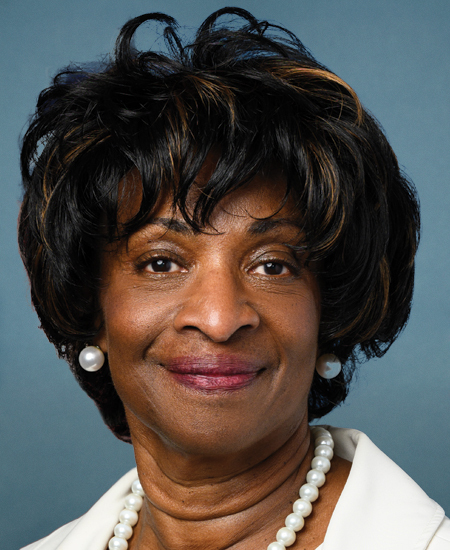
119th Congress Introduced by Valerie Foushee and 5 co-sponsors

The bill creates a new NSF-funded pathway to expand AI research by supporting underrepresented institutions and partnerships to build AI capacity, education, and workforce pipeline

Introduced in House
0
WeVote Research Nonpartisan
Bill Summary · HR 7158

Summary of HR 7158 – Expanding AI Voices Act (119th Congress)

Purpose and intent

  • The bill aims to broaden and diversify the U.S. AI research ecosystem by expanding capacity, partnerships, and workforce development in artificial intelligence.
  • It targets institutions and organizations that have historically been underrepresented in STEM, with a focus on expanding AI research, education, and related civilian applications.

Key provisions and changes

  • Amends Section 5401 of the National AI Initiative Act to create a new funding pathway titled “Expanding Capacity in Artificial Intelligence.”
  • Funding authority and governance
    • The Director of the National Science Foundation (NSF), after coordinating with relevant Federal agency heads, would award competitive, merit-reviewed grants.
    • Eligible recipients: certain institutions of higher education and eligible nonprofit organizations (or consortia thereof).
  • Eligible institutions of higher education
    • (A) Institutions not among the top 100 in Federal R&D expenditures over the prior 3-year period, per NSF data.
    • (B) Historically Black Colleges and Universities (HBCUs).
    • (C) Minority-serving institutions (MSIs).
    • (D) Tribal Colleges or Universities (TCUs).
    • (E) Consortia of any of the above.
  • Collaboration and partnerships
    • Awards may be used to form partnerships with other higher education institutions, nonprofit organizations, Federal/state/tribal governments, private sector entities, and AI research institutes under existing programs.
  • Authorized uses of funds
    • Develop or expand AI and related research programs.
    • Recruit and develop AI faculty and staff.
    • Bridge programs to prepare undergraduate/post-baccalaureate students for graduate study in AI.
    • Provide or broker access to research resources (computing, networking, data facilities, software engineering support).
    • Community-building to foster public-private collaboration with Federal agencies, industry, labs, and academia.
    • Host intra- or inter-institutional workshops to broaden AI workforce participation.
    • Integrate ethical and responsible AI practices into education programs.
    • Other activities to build research capacity, education pathways, and workforce pipelines in AI.
  • Outreach and inclusion
    • NSF Director must outreach to eligible institutions and nonprofit organizations.
    • Emphasis on engaging participants from all U.S. regions, prioritizing underserved communities and groups historically underrepresented in STEM.
  • Duplication and coordination
    • Awards under this section should be complementary to, not duplicative of, existing NSF programs.
  • Additional considerations for awards
    • Eligible applicants’ contributions to diversity (including first-generation students).
    • Geographic diversity and relative resource constraints of institutions.
  • Definitions (Section 5401(g) as rewritten)
    • Historically Black College or University: as defined in Higher Education Act provisions.
    • Minority-serving institutions: includes HSBIs, Alaska Native-serving, Native Hawaiian-serving institutions, and other specified MSIs.
    • Nonprofit organization: defined under 501(c)(3) of the Internal Revenue Code.
    • Tribal College or University: as defined by the Higher Education Act.

Who would be affected

  • Eligible higher education institutions (especially those not among the top spenders in Federally funded R&D, HBCUs, MSIs, TCUs, and consortia thereof).
  • Eligible nonprofit organizations and consortia engaging in AI research and capacity-building activities.
  • Researchers, students, and faculty at underrepresented or under-resourced institutions.
  • Federal agencies and industry partners collaborating through funded initiatives.

Procedural and timeline aspects

  • The bill designates a funding pathway and ordinary NSF competition mechanics but does not specify dollar amounts, duration, or fiscal year sequencing.
  • It requires ongoing outreach, coordination with other agencies, and alignment with existing NSF programs to avoid duplication.
  • Introduces targeted outreach and regional diversity goals as part of the grant awarding process.

Sponsorship

  • Primary sponsors include Rep. Valerie Foushee (and several co-sponsors), with bipartisan support indicated by the listed co-sponsors.

Compiled from official sources — confirm details with the bill’s official record.

Sign in to ask a question.