

WeVote

Bill

Bill

SB 988

SCS/SB 988 - This act establishes the Dentist and Dental Hygienist Compact ("Compact"), which facilitates the interstate practice of dentistry and dental hygiene and provides for dentists and dental hygienists licensed in a participating state the ability to practice in other participating states. The Compact sets forth the requirements to be met in order for a state to join and the requirements for a dentist or dental hygienist to obtain and exercise the ability to practice in other participating states. The Compact further provides that a dentist or dental hygienist with compact privilege shall function within the scope of practice authorized by the participating state in which they seek to practice and shall be subject to that state's regulatory authority. A dentist or dental hygienist whose privilege in a participating state is encumbered or removed is not eligible for compact privilege in other participating states until the encumbrance or removal has passed and all requirements are met. Additionally, the Compact creates the Dentist and Dental Hygienist Compact Commission ("Commission"), which is a joint government agency of the participating states tasked with administering and implementing the Compact. Each participating state shall have one Commissioner, who shall be selected within sixty days by the licensing authority of the participating state. Additionally, there shall be an Executive Board of the Commission, composed of seven Commissioners, to act on behalf of the Commission. The act provides for the powers and duties of the Commission, including the development and maintenance of a coordinated database and reporting system containing licensure, adverse actions, and investigative information on all licensees and applicants. The Commission may levy on and collect an annual assessment from each participating state and impose fees on licensees for the compact privilege in order to cover the cost of the operations and activities of the Commission and its staff. Upon enactment, the Compact shall be reviewed by the Commission to determine if it is materially different from the Model Compact and whether the state qualifies for participation in the Compact. Any state that adopts the Compact subsequent to the Commission’s initial adoption of the rules and bylaws shall be subject to the rules and bylaws existing on the date on which the Compact becomes law. Any participating state may withdraw from the Compact by repealing the Compact, but such withdrawal shall not take effect until 180 days after the enactment of the repeal. Finally, the Compact shall be binding upon participating states and shall supersede any conflict with state law. This act is identical to a provision in SCS/HB 1961 (2026) and in SS/HCS/HB 2974 (2026), and to provisions in HCS/SB 1092 (2026), and is similar to SB 327 (2025), a provision in SCS/HCS/HB 943 (2025) and in SS/SB 778 (2024), and to provisions in HCS/SS#2/SB 1233 (2026), in HB 1847 (2026), in HCS/SS/SB 7 (2025), in HB 56 (2025), in HCS/SS/SB 61 (2025), in HB 1031 (2025), and in HB 2075 (2024). KATIE O'BRIEN

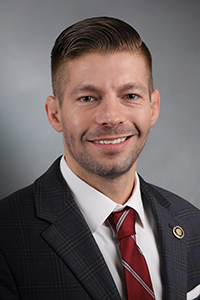
2026 Regular Session Introduced by Ben Brown

Creates a Maryland Collaborative to expand school-based oral health, and allows dental hygienists to practice in schools under general supervision to boost kids' access to care.

SCS Voted Do Pass S Emerging Issues and Professional Registration Committee (4727S.02C)
0
WeVote Research Nonpartisan
Bill Summary · SB 988

SB 988 — Maryland Collaborative to Improve Children’s Oral Health Through School‑Based Programs

Status: Rereferred to Health and Government Operations
Introduced: Jan 29, 2025
Effective date (if enacted): July 1, 2025; collaborative terminates June 30, 2027

Purpose / Intent

Create a short‑term, state‑led collaborative to study and recommend policies to expand and improve school‑based oral health services for Maryland children, and to permit licensed dental hygienists greater ability to deliver care in schools and school‑based health centers (SBHCs).

Key provisions

  • Dental hygiene scope:
    • Adds a new provision to the Health Occupations Article: a general license to practice dental hygiene authorizes the licensee to practice under the general supervision of a licensed dentist in a school or SBHC if the hygienist files a board form stating intent to practice in those settings.
  • Maryland Collaborative to Improve Children’s Oral Health Through School‑Based Programs:
    • Establishes the collaborative, staffed by the Maryland Department of Health (MDH).
    • Membership includes legislative appointees (2 Senators, 2 Delegates), executive branch designees (Secretary of Health, Secretary of Education, Deputy Secretary of Public Health Services), the Chair (or designee) of the Community Health Resources Commission, and multiple health‑system and school/dental stakeholder representatives appointed by the Secretary of Health (e.g., Medicaid, dental hygienists’ and dentists’ associations, SBHC organizations, school boards, FQHCs).
    • Members serve without compensation but are eligible for travel/expense reimbursement under State travel rules.
    • Tasks: study and make recommendations on strategies including:
    • Linking school programs to permanent dental homes;
    • Increasing school‑based dental hygienist services (policy, grants, and Medicaid reimbursement);
    • Authorizing and reimbursing school nurses to apply fluoride varnish and other clinically appropriate services;
    • Expanding SBHC dental capacity;
    • Clarifying legal/regulatory issues around dental hygienists in school settings; and
    • Other innovative school‑based delivery models.
    • Reporting deadlines: interim report to Governor and General Assembly by Dec 1, 2025; final report by Oct 1, 2026.

Fiscal and operational impact

  • MDH staffing and reporting: estimated general fund cost of approximately $38,000 in FY2026 and $16,700 in FY2027 to staff the collaborative (contractual part‑time analyst to manage work and produce reports). Travel/expense reimbursements expected minimal and absorbable.
  • Programmatic impact: The statutory change enabling hygienists to work under general supervision in school settings and the collaborative’s recommendations could increase access to preventive dental services for children (including Medicaid‑insured and underserved populations), expand SBHC capabilities, and inform reimbursement and grant strategies.

Who is affected

  • Dental hygienists (expanded ability to provide services in schools/SBHCs under general supervision);
  • School‑based health centers, schools, school nurses, and school systems;
  • Children and families (especially Medicaid‑eligible and underserved students);
  • MDH and other state agencies involved in implementation and oversight;
  • Dental providers and community partners (FQHCs, Medicaid, dental associations).

Timeline / Termination

  • Collaborative staffing and work begins after July 1, 2025 (effective date).
  • Interim report due Dec 1, 2025; final report due Oct 1, 2026.
  • Collaborative terminates June 30, 2027.

If you want, I can:
- Extract the exact statutory language to be added to the Health Occupations Article; or
- Draft a one‑page brief for school districts summarizing operational implications for SBHCs and school nurses.

Compiled from official sources — confirm details with the bill’s official record.

Sign in to ask a question.