

WeVote

Bill

Bill

SB 96

Environment - Water Bottle Filling Stations - Requirement

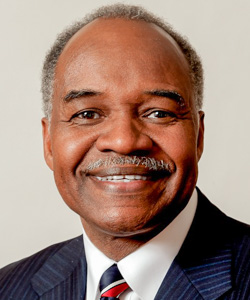
2025 Regular Session Introduced by Ben Brooks

Maryland SB 96/Ch. 548: Starting Oct 1, 2025, new construction and qualifying renovations must install at least one plumbed water bottle filling station to curb disposable bottles.

Approved by the Governor - Chapter 548
0
WeVote Research Nonpartisan
Bill Summary · SB 96

Summary — SB 96 (Ch. 548, 2025): Environment — Water Bottle Filling Stations — Requirement (Maryland)

Status: Approved by the Governor (Chapter 548).
Introduced: January 8 / 23, 2025. Effective date of the Act: July 1, 2025. Installation requirement applies beginning October 1, 2025 (see details below).

Purpose

Require the installation of at least one plumbed “water bottle filling station” (or a combined filling station + drinking fountain) in certain new building construction and in certain renovation projects, to expand access to potable chilled/filtered water for reusable bottles and reduce reliance on single‑use bottled water.

Key provisions

  • Adds Subtitle 27 (Sections 9‑2701 — 9‑2703) to the Environment Article of the Maryland Code.
  • Definition: “Water bottle filling station” = a plumbing fixture connected to the potable water distribution and sanitary drainage systems, designed to fill personal bottles/containers ≥10 inches tall. Includes separate or integral units with optional interior filters and chillers.
  • Installation requirements (apply prospectively):
    • Beginning October 1, 2025, at least one water bottle filling station (or combined station + drinking fountain) must be:
    • Installed in all new construction at each location where the International Plumbing Code (IPC) or state/local law requires a drinking fountain; and
    • Installed in buildings undergoing renovations when installation of a drinking fountain is required by the current IPC; and
    • Used to replace a drinking fountain when a renovation includes replacing that fountain.
  • Exceptions:
    • Does not apply where only a drinking fountain in a commercial/industrial building is being replaced with no other renovations; or
    • If a commercial/industrial building already has potable water available by another source (e.g., a kitchen).
  • Regulations: Maryland Department of Labor must adopt implementing regulations.
  • Prospectivity: The Act is explicitly prospective — it does not apply to new construction already under contract prior to the Act’s effective date (July 1, 2025).

Who is affected

  • Building owners, architects, contractors, plumbing/code officials for new construction and qualifying renovations where IPC requires drinking fountains (examples: many educational and business occupancy types).
  • State and local code enforcement and permitting authorities.
  • Users and the public benefit from easier access to potable water for refillable bottles.

Fiscal / practical impact

  • Maryland fiscal analysis indicated no significant state or local expenditure impact; MD Labor can promulgate regulations within existing resources.
  • Upfront installation costs for some projects (costs depend on number/location of required stations and whether chilled/filtered units are selected).
  • Benefits: increased access to potable water, potential public‑health and environmental gains (reduced single‑use plastic bottles).
  • Note: MD Labor raised a question in analysis whether non‑plumbed water dispensers (not connected to potable distribution/drainage) qualify as substitutes — that point may be clarified in implementing regulations.

Timeline / procedural notes

  • Act effective July 1, 2025. Installation requirement is framed to begin October 1, 2025 (statutory text).
  • MD Department of Labor to write and adopt regulations to implement the law.
  • Applies only to projects prospectively; existing contracts predating the effective date are exempt.

Compiled from official sources — confirm details with the bill’s official record.

Sign in to ask a question.